Online Reporter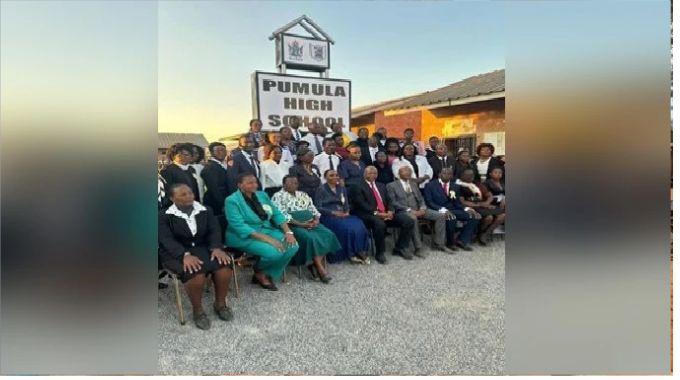
Thandiwe Chidzungu
A week ago I wrote about the remarkable leadership journey of Mrs Linda Ncube, Head of Pumula High School. As I reflected further on the transformation taking place at the school, it became clear that one article could not capture the full story. Today we continue that story, because the success of Pumula High is not about one person, but about a community rising together.
Behind the accolades and the growing reputation of Pumula High School as a centre of excellence in Bulawayo’s western suburbs is a dedicated team of 80 teachers and 14 non-teaching staff whose commitment, teamwork and unwavering support have turned vision into measurable results.
As Head, Mrs Ncube has embraced a hands-on and collaborative leadership style shaped by the mentors who guided her own professional journey. Her approach places teamwork, accountability and shared responsibility at the heart of the school’s success, and it is yielding results that are now being recognised at national level.
A National Acknowledgement of Excellence

That commitment was formally recognised in June 2026 when the Permanent Secretary for Primary and Secondary Education, Mr Moses Mhike, presided over the Secretary’s Merit Awards ceremony at Centenary Primary School. Pumula High School emerged among the top-performing schools and received the prestigious Secretary’s Merit Award for outstanding academic and institutional excellence.
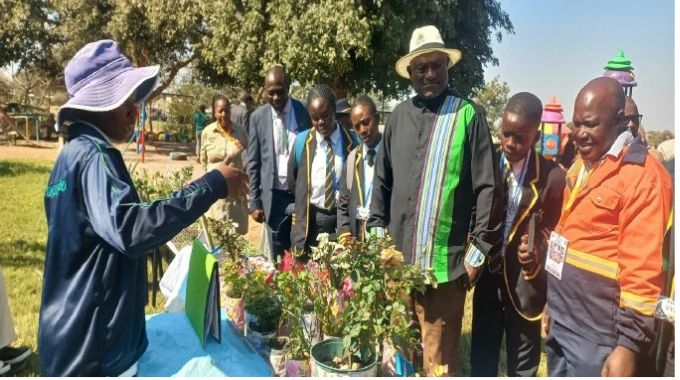
Mr Mhike later visited the school to unveil the award in a ceremony attended by staff, learners, parents and the wider Pumula community. It was a proud and memorable occasion that affirmed what the school community already knew: that discipline, hard work and unity produce excellence.
What the Secretary’s merit award represents
The Secretary’s Merit Award is one of the Ministry of Primary and Secondary Education’s flagship initiatives for promoting excellence, accountability and quality service delivery. Introduced as part of the Ministry’s supervision and quality assurance framework, the award recognises schools that demonstrate outstanding performance in both academic and non-academic areas.
More than a celebration, it is a reminder that effective education is holistic. Success is measured not only by examination results, but also by leadership, teamwork, discipline, innovation and the all-round development of learners.
The people who shaped a leader
Mrs Ncube is quick to acknowledge that her journey has been shaped by others.
“My parents have been pillars of strength throughout my upbringing. My mother, in particular, always wished for her children to achieve far more than she had been able to achieve herself. Her aspirations and sacrifices continue to inspire me,” she said.
Her husband, a seasoned Head who has served in school leadership since 1997, has also been central to her growth.
“My husband has been a fountain of knowledge, support, and encouragement throughout my career. His guidance has contributed greatly to my success, and I pray that our dear Lord continues to bless him abundantly.”
She also remembers the late Samukeliso Dlamini, a longtime friend and former District Schools Inspector in Gwanda, with whom she rose through the ranks. “Our friendship and professional journey remain a significant part of my story.”
Her foundation in administration was laid at Masotsha High, where the late Madam U. Ndebele mentored her as Acting Deputy Head.
“She taught me the fundamentals of administration, particularly the importance of teamwork and accountability. Her wisdom left an enduring impression on me. May her soul rest in peace.”
Collaboration: The foundation of success
For Mrs Ncube, sustainable success in education requires more than two people. It requires parents, teachers, learners, and stakeholders working towards a common goal.
“When different ideas, experiences and strengths are brought together in pursuit of a common purpose, schools become stronger, and learners benefit. Collaboration is not an option. It is essential.”
Recognising girls without limiting their potential
On the subject of the girl child, Mrs Ncube believes support must empower, not create dependency.
“I do not necessarily believe that gender-specific awards are the answer. Instead, there should be a deliberate and sustained effort to identify and remove the barriers that prevent women and girls from progressing in education,” she said.
She points to child marriage, early pregnancies, inadequate resources and cultural norms as key barriers that must be addressed. “Encouragement should be the key, while the ultimate goal should remain merit rather than gender. Girls must be encouraged to stand up and compete on an equal footing with everyone else.”
A Message to the Next Generation
To young women in education, her advice is simple and firm: “Develop an inquisitive mind and remain consistent in your everyday endeavours. Be willing to learn, ask questions, and seek out leaders you can emulate. Leadership begins long before you are given a title. Be an example to those behind you, and ensure your progress creates opportunities for others to rise.”
To female leaders, she adds: “Lead with competence and character. Good leadership requires courage, honesty and accountability. Surround yourself with women you can mentor and empower.
Leadership becomes more meaningful when it creates pathways for others to succeed.”
Rise to serve
For Mrs Ncube, leadership is not about being seen. It is about serving. “Rise to serve, not merely to be seen,” she said.
When girls are educated and women lead effectively, entire communities are transformed. As she continues to lead, mentor, and inspire at Pumula High, her message remains clear: success should never end with the individual.
True leadership is not about rising above others, but rising with them, and most importantly, rising to serve.