Chronicle Editor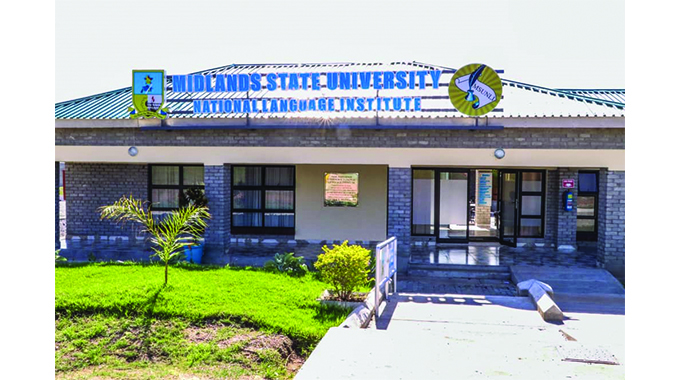
Mashudu Netsianda and Patrick Chitumba, Chronicle Writers
THE High Court has blocked the Midlands State University (MSU) from demanding fees solely in United States dollars and directed the institution to allow students to have the option to pay in the local currency at the prevailing interbank rate.
The ruling by Harare High Court judge Justice Davison Foroma followed an urgent chamber applicant by three MSU students, Sabelo Saimano, Solomon Goredema, and Simbarashe Muzorori. The trio, which is studying towards a Master’s in Business Administration (MBA), through their lawyers Wintertons Legal Practitioners, applied on an urgent basis at the High Court seeking an order compelling the university to allow them the option to pay the US component of their fees and levies in local currency at the prevailing interbank rate.
In papers before the court, MSU and Higher and Tertiary Education, Innovation, Science and Technology Development Minister, Professor Amon Murwira were cited as respondents.
Justice Foroma granted the order in favour of the applicants. He gave the trio 48 hours to deposit their fees in the local currency at the prevailing interbank rate to enable them to register for the semester which began last month.
“Pending determination of this matter, the first respondent (MSU) should desist from demanding payment of fees and any other levies or payments due from the applicants exclusively in United States Dollars without the option of payment in local currency at the prevailing interbank rate,” ruled the judge.
“The applicants are granted 48 hours, within which to deposit with the first respondent the local currency equivalent of their academic fees and other related payments, to enable them to register for the semester which began on the 9th of February 2024.”
The total fees per semester for the MBA degree programme is US$1 738.
The respondents have 10 days within which they can oppose the confirmation of the provisional order failure of which the order would be final.
In his founding affidavit deposed on behalf of the applicants, Saimano said they were due to register for level 2.2 with classes having begun on February 19.
Registration was opened on February 2 and closed last Friday.
“We took issue with the charging of fees exclusively in US dollars and we had several engagements with our Harare campus director and the chairman of the department on the issue. On 28 February, the first respondent called for a meeting with MBA students, but nothing materialised,” said Saimano.
“On 29 February, we enlisted the services of a counsel who on 1 March 2024 wrote to the first respondent ascertaining our rights to settle the fees in local currency. The respondent has not responded to our letter nor extended to us the option to settle our fees in local currency.”
Saimano said on March 4, he noticed developments on his portal where it was stated that they were required to pay 60 percent in US dollars and 40 percent in local currency at the rate of 15 672, 71. “Our law on the currency has taken several twists and turns but at the moment every person, including the first respondent is bound by Section 7 (1) of the Exchange Control Regulations of 2019, SI 212/19 as amended by Section 2 of the Exchange Control Regulations of 2020 (No.3) SI 185/2020,” said Saimano.
“It provides that any person who provides goods or services in Zimbabwe shall display, quote or offer the price for such goods and services in both Zimbabwean dollar and foreign currency at the ruling exchange rate.”
Saimano argued that MSU is acting in flagrant violation of the law by demanding fees exclusively in US dollars.
“I am advised that demanding fees in US dollars is also contrary to Section 3(1) (a) of the Administrative Justice Act, which requires administrative officials to act lawfully and reasonably. This should read with Section 68 (1) of the Constitution which requires administrative authorities to act lawfully,” he said.
“In the premises, I have no option but to approach this honourable court for redress on an urgent basis. Efforts to engage the first respondent as a class through our counsel were futile.”
Last August, the Government — through the Ministry of Higher and Tertiary Education — gave universities and colleges the green light to peg tuition fees in US dollars.
However, the students maintain that being allowed to peg academic and tuition fees in US dollars does not “give universities the right to demand US dollar payments”.
Earlier in January, High Court judge Justice Gladys Mhuri ordered Harare Polytechnic to stop demanding payment of tuition and other levies exclusively in US dollars and to accept payments from students in the local currency, at the prevailing interbank rate.
This was after Harare Polytechnic students filed an application on January 25, in response to a January 12 circular by the college demanding payment of fees exclusively in US dollars.



 Online Reporter