admin
admin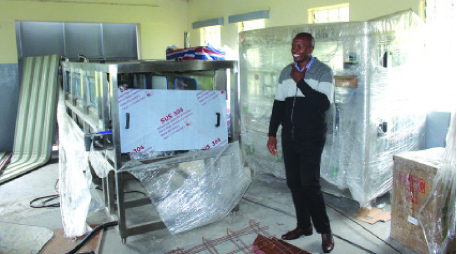
Senior Reporter
The establishment of baobab manufacturing juice plant at Mutare Teachers College is 65 percent complete, with the plant already on site awaiting installation, Post Business has learnt.
The baobab juice manufacturing plant — an investment that dovetails with the country Education 5.0 policy — will equip students with practical skills.
It is also expected to improve rural livelihoods as raw materials will be sourced locally.
The project intends to tap into the availability of different varieties of fruits in Manicaland and add value to them within the province.
Early this week, Cabinet received reports on progress made in the implementation of priority projects under Government’s 100-Day Cycle work plan and the MTC Juice production plant was listed among many others.
Reads part of this week’s Cabinet report: “The establishment of the baobab juice plant at Mutare Teachers College in Manicaland Province is 65 percent complete, and the plant equipment has been procured. The project will improve livelihoods through rural industrialisation.”
The college, which has been championing several income generating projects that include a piggery, fishery, and poultry, among others, is set to become the first teacher training institution to establish a juice production plant.
The juice manufacturing plant was imported from China at a cost of US$126 000 and is already on site awaiting installation anytime soon.
Apart from the baobab juice which is the main product earmarked for the project, the hybrid plant is also expected to process other fruit juices that include loquat, mango and pineapple, as well as mineral water.
The 2 000-litre per hour versatile production plant has a cooling section, an automated filling and capping section that operates without human interference, a bottle blowing machine, a cap sorter, buffer tanks, water storage tanks, purifying components, an inverted conveyor, mixing tanks and laminating sections at the exit points.



 Online Reporter