Chronicle Editor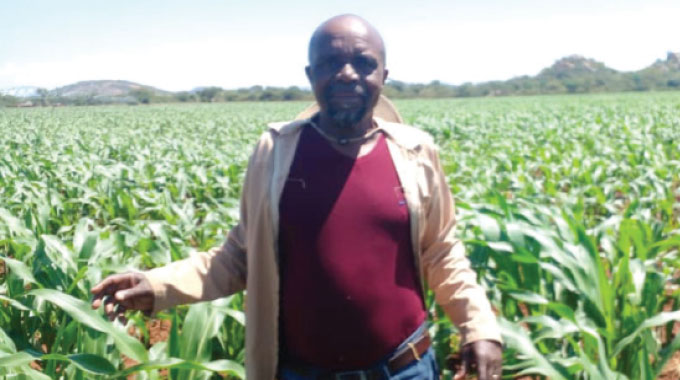
Sukulwenkosi Dube-Matutu, [email protected]
FOLLOWING the prolonged dry-spell that has resulted in crop failure across the country due to the El Nino weather patterns, the Mtshazo community in Gwanda District says it is pinning its hope for food production on the Mtshabezi Irrigation Scheme.
The irrigation scheme has 20 hectares of a good maize crop this season and the process is underway to plant an additional 30 hectares of sugar beans.
With about 200ha of arable land, Mtshabezi Irrigation Scheme became operational in 2021 under the Second Republic after remaining in limbo for many years.
The scheme is being managed by the Agricultural Rural Development Authority (Arda) and is set to transform subsistence agriculture at the household level into commercial farming as part of the rural development and industrialisation drive.

It is part of an integrated business model that is being replicated across all provinces in the country ,under the National Food Security Strategy that was launched by President Mnangagwa at the Bubi-Lupane Irrigation Scheme in 2021.
So far, the Mtshabezi Irrigation Scheme has 157 farmers from six villages in Ward 6. The chairperson of the scheme, Mr Ndabezinhle Nyoni, said farmers have shown huge commitment and unity towards making the project a success.
“We planted 20 hectares of maize from 22 to 26 January and our crop is doing well, although we failed to meet our target of 45 hectares, as we planted late. The 20 hectares that we have will go a long way,” he said.
“We have also planted sugar beans on 23 hectares and we are left with seven hectares as our target is 30 hectares. We are going to fill in a portion of the irrigation scheme, which has gullies so that it’s ready for planting come winter season.
“The rains were very poor this farming season and people have given up on their fields because the crop is bad. We hope to send some of our produce to the GMB and as members of the scheme hope to benefit from this harvest and also assist the community.”
Mr Nyoni, said they were targeting to harvest their maize in May and quickly shift to plant wheat with a target of putting 50 hectares.
He said the irrigation scheme has also partnered with locals, who have assisted with resources to assist in the farming process such as diesel and tractors.
One of the scheme members, Ms Margaret Ndlovu, said the irrigation project has become a source of hope after their rain-fed crop succumbed to moisture stress due to poor rains this season.

“The irrigation scheme is now playing a crucial role in our community. This year’s crop in our fields has failed, which means that we will turn to irrigation for food,” she said.
“This scheme will not benefit us only as members but the entire community. This time around, people are working with vigour as they want to record a successful farming season.”
Mtshazo village head, Mr Roy Mayisa, said the Mtshabezi Irrigation Scheme has helped improve the livelihoods of community members.
Government is working with various partners in rehabilitating irrigation schemes that have been lying idle in Matabeleland South Province and establishing new ones, in order to improve food and nutrition security and ensure the attainment of Vision 2030.
Under this drive, the country is targeting to rehabilitate and develop 350 000 hectares of land by 2025 across the country, to mitigate the negative effects of climate change and ensure food security.

A number of irrigations that had been lying idle in the province have been revived while some that were being underutilised have been capacitated and expanded.
Government has also rolled out various agricultural schemes meant to transform subsistence agriculture at the household level into commercial agriculture.
Managers have also been deployed to irrigation schemes across the country, to maximise production thereby ensuring food security and nutrition. —@DubeMatutu



 Online Reporter