admin
admin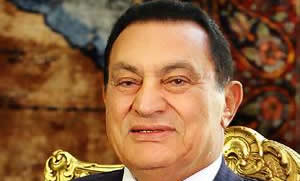
and bowing to relentless pressure from a popular upri-sing after his military support evaporated.
Vice President Omar Suleiman said a military council would run the affairs of the Arab world’s most populous nation.
A free and fair presidential election has been promised for September after a momentous 18 days that rocked Egypt.
A speaker made the announcement in Cairo’s central Tahrir Square where hundreds of thousands broke down in tears, celebrated and hugged each other chanting: “The people have brought down the regime.” Others shouted: “Allahu Akbar (God is greatest)”. Sobbing women in Tahrir (Liberation) Square ululated in jubilation.
“This is the greatest day of my life,” said opposition activist and Nobel Peace laureate Mohamed El Baradei, welcoming a period of sharing of po-wer between the army and the people.
He told reporters that running for president was not on his mind.
Egypt’s powerful military gave guarantees earlier yesterday that promised democratic reforms would be carried out, but angry protesters intensified an uprising against Mubarak, marching on the presidential palace and the state television tower.
It was an effort by the army to defuse the revolt but, in disregarding protesters’ key demand for Mubarak’s ouster now, it failed to calm the turmoil that has disrupted the economy and rattled the volatile Middle East.
The tumult over Mubarak’s refusal to resign had tested the loyalties of the armed forces, which had to choose whether to protect their supreme commander or ditch him.
The sharpening confrontation had raised fear of uncontrolled violence in Egypt, a linchpin US ally in an oil-rich region.
Washington has called for a prompt democratic transition to restore stability in Egypt, America’s only real ally in supporting Israel in the Middle East.
The army statement noted that Mubarak had handed powers to govern the country of 80 million people to his deputy the previous day — perhaps signalling that this should satisfy demonstrators, reformists and opposition figures.
Mubarak had on Thursday said he would remain in office until elections scheduled for September.
The Muslim Brotherhood, an Islamist opposition group, urged protesters to keep up mass nationwide street protests.
Hundreds of thousands of protesters rallied ac-ross Egypt, including in the industrial city of Suez, earlier the scene of some of the fiercest violence in the crisis, and the second city of Alexandria, as well as in Tanta and other Nile Delta centres.
The army had said it “confirms the lifting of the state of emergency as soon as the current circumstances end”, a pledge that would remove a law imposed after Mubarak became president following Anwar Sadat’s assassination in 1981.
It further promised to guarantee free and fair elections and other concessions made by Mubarak to protesters.
But none of this was enough for many hundreds of thousands of protesters who rallied across the Arab world’s most influential country on yesterday, fed up with high unemployment, a corrupt elite and police repression.
Since the fall of Tunisia’s long-time leader Zine al-Abidine Ben Ali, which triggered protests around the region, Egyptians have been demonstrating in huge numbers against rising prices, poverty and unemployment.
Mubarak (82) was thrust into office when Islamists gunned down his predecessor Sadat at a military parade.
The burly former air force commander proved a far more durable leader than anyone imagined at the time, governing under emergency laws.
He promoted Middle East peace abroad and more recently backed economic reforms at home led by his cabinet under Prime Minister Ahmed Nazif. Mubarak was backed by billions of dollars of US military and other aid. — Reuters-Online.


 Online Reporter