Online Reporter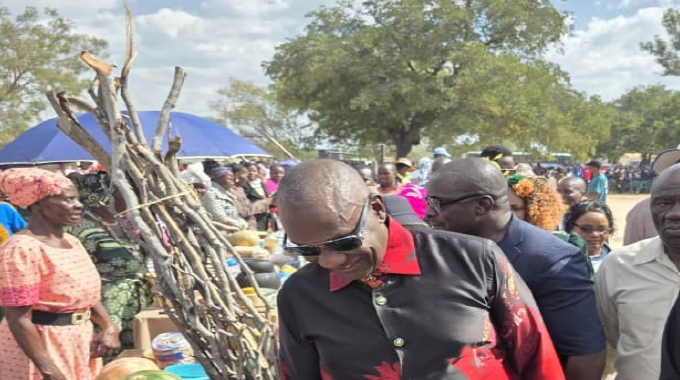
Patrick Chitumba, [email protected]
FROM early morning, smoke rose steadily into the sky at Muchakata Business Centre as women gathered around open fires, preparing traditional meals that would later bring the community together in celebration.
Large black pots simmered with sadza/isitshwala and vegetables, while tins of popcorn and groundnuts crackled over glowing embers. What began as routine food preparation soon grew into something bigger — a celebration of identity, heritage and community.
People from across Gweru District streamed into the business centre to mark the recent Culture Month commemorations. For a day, Muchakata turned into a lively display of Zimbabwe’s cultural diversity, where language, food, music, dance and traditional knowledge united different generations and strengthened a shared sense of pride.
As the food cooked, others focused on their appearance. By mid-morning, the usually quiet grounds were filled with colour as villagers arrived in their finest attire. Bright reds, deep blacks and ochre yellows stood out, reflecting the richness of Zimbabwe’s cultural heritage.
Some men wore beaded headwear that caught the light as they moved, while others dressed in garments made from national fabric. The smell of firewood smoke mixed with the aroma of traditional dishes, giving the gathering a familiar and distinctly African feel.
Around the edges of the grounds, tables were neatly arranged, displaying a variety of traditional foods, hairstyles and handwoven garments. Baskets were stacked high, beadwork glittered in the sun, and each stall told a story of culture and clan identity. Nearby, elders demonstrated skills such as basket weaving and grain grinding, their hands moving with the ease of long practice.
The arrival of the guest of honour, Minister of State for Midlands Provincial Affairs and Devolution Owen Ncube, was met with ululations and song. Rather than remain on the podium, he moved through the crowds, stopping at different stands, tasting maputi, watching braiding demonstrations and clapping along to poetry recited in Shona and Ndebele.
His approach drew smiles and surprise from many, who said they did not expect a minister to interact so closely with ordinary people, especially weavers and cooks.
The open space soon became a stage for cultural performances. Traditional mbira music filled the air, with rhythmic melodies holding the crowd’s attention. Dance groups from across the district performed energetically, their movements in sync as skirts and headwear swayed with each beat. Spectators joined in, clapping and singing along.
Addressing the gathering, Minister Ncube spoke with appreciation for the occasion.
“We are gathered here to celebrate Zimbabwe’s rich heritage that promotes unity through diversity,” he said.
Minister Ncube said the event plays a key role in preserving and promoting Zimbabwe’s diverse communities, languages, national dress, food and artistic expression. He said these elements are central to national identity, social cohesion and economic development as the country moves towards becoming an upper-middle-income economy by 2030.
“Our gathering today comes after the National Culture Month launch by President Mnangagwa at Barbourfields Stadium in Bulawayo. In his address, the Head of State and Government and Commander-in-Chief of the Zimbabwe Defence Forces urged the nation to safeguard traditional norms and values, uphold cultural pride and embrace heritage-based modernisation and industrialisation,” he noted.
He said the 2026 theme, “Cultural Diversity: Advancing Vision 2030”, is aligned with national development goals, particularly National Development Strategy 2. He highlighted the importance of arts education and youth centres in nurturing talent from an early age.
Minister Ncube also commended efforts to strengthen the role of traditional leaders, saying they remain central to preserving values and guiding rural development. He said initiatives such as the National Fabric Initiative are linking tradition with national progress.
“I therefore commend the New Dispensation for entrenching culture and heritage in the national development trajectory, safeguarding indigenous knowledge systems and promoting unity and peaceful coexistence among communities and across generations. In view of the foregoing, Midlands Province appreciates the Second Republic’s public and private sector-funded arts and culture programmes and projects,” he said.
He pointed to a number of cultural initiatives, including the Shangwe Culture Village Project at Nembudziya, Baradzanwa Culture Village in Mazowe, the Museum of African Liberation, and the preservation of historic sites such as Pupu Battlefield in Matabeleland North, Ratanyana Battle Site in Matobo and the Mbuya Nehanda Statue in Harare.
Minister Ncube also expressed appreciation to Cultural Ambassador and First Lady, Dr Auxillia Mnangagwa, for programmes that promote culture and social values.
He mentioned initiatives such as Nhanga/Gota, Africana Family Humanism, Zviperengo Cultural Quiz, Traditional Cookout Competitions, the Farm to Market Arts Festival, and programmes aimed at tackling drug and substance abuse.
He urged communities to embrace unity and development.
For many in Chiwundura, the event carried deep meaning.
“We thank President Mnangagwa and his Government for remembering us this Culture Month,” said Mai Tariro Moyo, a weaver from the women’s cooperative. “Before, we would only see these celebrations on television from
Bulawayo or Harare. Today the drums came to Muchakata. Our children saw their culture on their own soil, and that gives them pride.”
Mr Jabulani Ndlovu, an elder who demonstrated grain grinding, shared similar views.
“The Second Republic led by President Mnangagwa has put traditional leaders and culture back at the centre. By bringing Culture Month here, the Government has shown that rural communities are not forgotten. This will help our young people respect their heritage while they work towards Vision 2030,” he said.
As the sun began to set, the music and dancing continued. Groups gathered under trees and along shop verandas, sharing stories and laughter, while others relaxed over drinks. For a moment, Muchakata felt less like a business centre and more like a close-knit home.