Online Reporter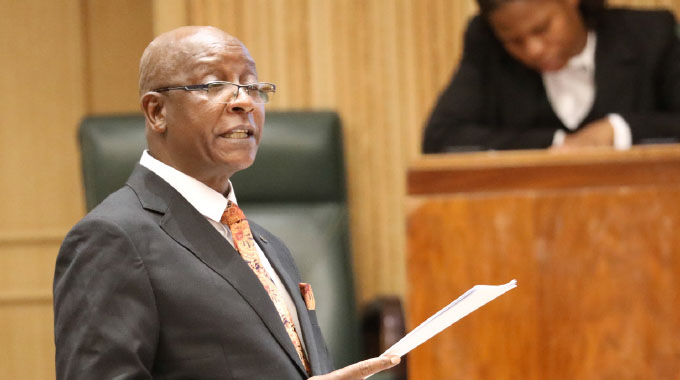
Gibson Mhaka, [email protected]
AS the National Assembly resumes its deliberations on the Constitutional Amendment (No. 3) Bill (CAB3) today, all indications point to a comfortable — perhaps even overwhelming — endorsement of the proposed constitutional changes when voting eventually takes place.
Far from exposing deep political divisions, the debate has instead revealed an emerging parliamentary consensus around the Bill, with support coming not only from the ruling Zanu-PF benches but also from several opposition legislators who have taken the floor during the Second Reading stage.
The numbers tell a compelling story.
By the time Parliament adjourned on Friday last week, about 110 Members of Parliament had contributed to the debate, making CAB3 one of the most extensively discussed pieces of legislation in recent parliamentary history.
The sheer scale of participation has provided a useful barometer of parliamentary sentiment and, more importantly, a glimpse into the likely outcome when legislators finally cast their votes.
What has stood out throughout the debate is not merely the high level of participation, but the general tenor of the contributions.
While some MPs have raised concerns over specific clauses and suggested refinements, the overwhelming majority of speakers have signalled support for the Bill’s broad objectives.
This trend has cut across political lines, with a number of opposition legislators expressing support for the proposed amendments while reserving the right to seek improvements during the committee stage.
From a political standpoint, this is perhaps the clearest indication yet that CAB3 is heading towards approval with a comfortable margin.
Justice, Legal and Parliamentary Affairs Minister Ziyambi Ziyambi has described CAB3 as the most debated Bill in recent parliamentary history, a characterisation that is difficult to dispute given the level of engagement witnessed over recent weeks.
More importantly, the Minister’s observations point to a legislative process that has moved beyond partisan political contestation.
“You can notice that the majority of our MPs, when they stand up to debate, they will emphasise that I am speaking on behalf of those that I represent and they will cite proceedings of the public consultation,” he said.
His remarks provide insight into a key factor that may ultimately explain the broad support the Bill is receiving in Parliament.
Many legislators appear to be anchoring their contributions in feedback gathered during public consultations, a development that has given the debate a constituency-driven character rather than a purely party-political one.
In many respects, the ongoing discussions have become a test of representative democracy in action.
Members from different provinces and constituencies have consistently framed their positions around the views expressed by citizens during outreach programmes.
Whether one agrees or disagrees with specific provisions of CAB3, it is difficult to ignore the extent to which MPs have sought to demonstrate that their positions are informed by consultations with the electorate.
This is significant because constitutional amendments often attract criticism as elite-driven exercises conducted without sufficient public involvement.
The CAB3 process, however, appears to have unfolded differently.
The high number of legislators participating in the debate suggests that MPs have felt compelled to articulate the views of their constituencies, thereby enriching parliamentary deliberations and strengthening the legitimacy of the legislative process.
Politically, the extensive debate has also weakened arguments that the Bill is being rushed through Parliament.
Opponents of constitutional amendments frequently argue that changes to the supreme law should be subjected to rigorous scrutiny. In the case of CAB3, Parliament has provided precisely that opportunity.
More than 100 legislators have examined the Bill clause by clause, raising questions, proposing alternatives and expressing support or reservations where necessary.
Such engagement has afforded the Bill a level of scrutiny rarely seen in ordinary legislation.
Indeed, Minister Ziyambi’s assertion that the process has been healthy for constitutional democracy reflects a broader reality.
“We think it is healthy for constitutional democracy. It is healthy for the law-making process because it allows us to refine the legislation and come up with a Bill that has been scrutinised thoroughly by Members of Parliament,” he said.
His comments underscore an important constitutional principle: that robust debate strengthens legislation rather than weakens it.
As Parliament enters the next phase, attention will inevitably shift from general debate to the committee stage, where MPs will have an opportunity to propose amendments to specific provisions.
Historically, this stage often provides legislators with a platform to fine-tune legislation without necessarily rejecting it outright.
Political observers note that the committee stage is unlikely to fundamentally alter the trajectory of CAB3.
Instead, it is expected to focus on clarifying provisions and accommodating suggestions emerging from the Second Reading debate.
The key political question, therefore, is no longer whether the Bill will pass, but rather what refinements may be incorporated before the final vote.
The arithmetic in Parliament further reinforces expectations of passage.
The ruling party enjoys a strong presence in the National Assembly and has consistently demonstrated internal cohesion on major legislative matters.
Coupled with indications of support from some opposition MPs, the likelihood of CAB3 failing to secure the necessary backing appears increasingly remote.
What remains uncertain is the size of the eventual majority. Should voting patterns mirror the sentiments expressed during debate, the Bill could secure a resounding endorsement that extends beyond traditional party lines.
Such an outcome would carry considerable political significance.
It would suggest that the amendments have attracted support based on their merits rather than on partisan considerations alone.
For the Government, a strong parliamentary endorsement would also represent validation of the consultation process that preceded the Bill’s introduction.
For Parliament, it would reinforce its role as a forum where competing views can be aired, scrutinised and ultimately reconciled through democratic procedures.
After the committee stage and voting in the National Assembly, the Bill will proceed to the Senate, where it will undergo a similar legislative process.
Given the emerging pattern in the lower House, there is little indication at present that the Bill will encounter insurmountable obstacles in the upper chamber.
Should it secure Senate approval, the legislation will then be transmitted to President Mnangagwa for assent before being gazetted into law.
For now, however, the spotlight remains firmly on Parliament as legislators return to continue deliberations.
What began as a potentially contentious constitutional exercise is increasingly taking the shape of a broad parliamentary endorsement.
The lengthy debate, extensive participation and generally favourable contributions from MPs across the political divide have combined to generate momentum that appears difficult to reverse.
As the final stages approach, the political signals emanating from the National Assembly are becoming clearer.
Barring unforeseen developments, CAB3 looks set to clear the remaining parliamentary hurdles and secure approval.
After weeks of scrutiny, consultation and debate, the final whistle appears to be approaching — and all signs suggest that the Constitutional Amendment (No. 3) Bill is heading for a decisive and resounding victory in Parliament.