admin
admin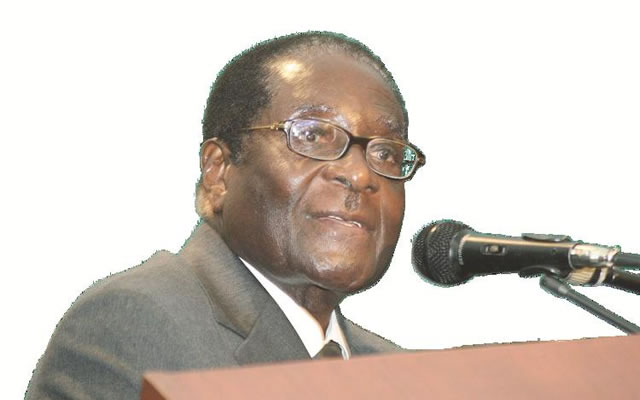
 Mabasa Sasa in Tshwane
PRESIDENT Robert Mugabe has thanked South Africa for its patience in dealing with the problem of illegal Zimbabwean immigrants in that country, while also calling for the recognition of their contributions in making that country Africa’s second-largest economy.
President Mugabe, on a State Visit to South Africa, said dialogue was always the best way for countries to resolve problems relating to immigration.
“Naturally, that must be resolved, people moving without passports into South Africa, some jumping our borders thinking there is lots of work in Johannesburg,” President Mugabe said during a joint Press conference with President Jacob Zuma.
“We must find ways of controlling movement of people which is not sanctioned. I want to say to South Africa ‘thank you for the hospitality that you have had, you looked after many . . . and we owe you not just a gesture of thankfulness which we must express, we owe you that thankfulness for the tolerance on the part of the government as our people have really offended your systems’.
“We say, however, that these matters must be discussed and our relations must be strengthened as much as possible, that is as strongly as ever.
“We want peace and peace does not mean you must have a lion’s share and others have a baboon’s share, no.
“You’re all together, let’s be equal (because) inequality can breed other problems in the future.
“We thank our ministers for the good work they have done. I’m sure they have laid the basis, sound basis for greater integration.”
Home Affairs Minister Kembo Mohadi was part of President Mugabe’s delegation on the State visit.
Zulu King Goodwill Zwelithini recently torched a storm by calling for South Africa to deport foreigners.
Historically, Zimbabweans — as well Mozambicans, Zambians and Malawians — have flocked to South Africa’s mines in search of work. The number of Zimbabweans in South Africa spiked at the turn of the millennium as Western sanctions took a toll on the local economy as part of a broad and intensive push to effect illegal regime change in Harare.
Immigration is a sore issue on this side of the Limpopo River, with the 2008 xenophobic attacks in particular showing how bad things are as 68 foreigners were massacred.
Last week, 250 foreigners — mostly from the DRC — fled their homes and businesses in Isipingo, Durban, after being viciously attacked by locals.
Violence has rocked Soweto and spread to KwaZulu-Natal, claiming at least three lives.
And three weeks ago, a Zimbabwean woman wrongly accused of killing a boy was lynched by a mob in a shanty township near South Africa’s capital, Pretoria.
President Zuma, through his spokesperson, this week apologised for the attacks, as did Home Affairs Minister Malusi Gigaba and Inkatha Freedom Party leader Chief Mangosuthu Buthelezi.
In a bid to document Zimbabweans living in South Africa — legally and illegally — South Africa launched a special dispensation scheme allowing those in gainful employment to come forward and formalise their stay. Over a quarter of a million responded and were granted four-year work permits.
That scheme has been replaced by the Zimbabwe Special Permit (ZSP) which aims to renew the permits of the 2009 first beneficiaries. As at March 13, 2015, South African authorities had received 208,967 online applications. Of these, the home affairs department said it had by the end of last month adjudicated 8,009 applications, amid indications that the process should be complete by August.
The permits are valid to December 31, 2017.


 Bongani Ndlovu