

 Online Reporter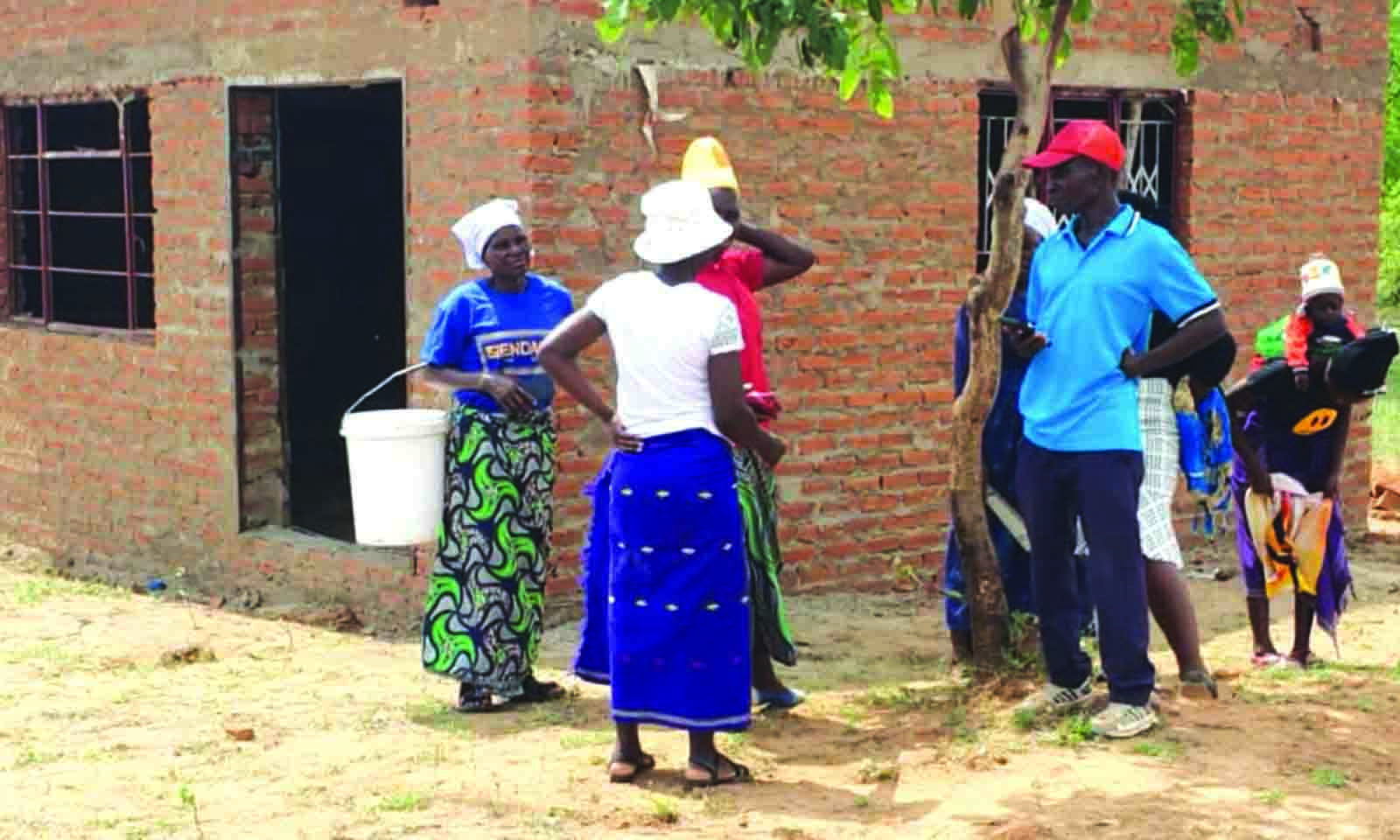
Ivan Zhakata in Hakwata, Chipinge
A FINANCIAL transformation is taking root in Hakwata Village, deep in the rural heart of Chipinge, where women and men have turned an age-old savings practice, mukando, into a powerful driver of local development.
Just a year after President Mnangagwa commissioned a 200-kilowatt solar mini-grid that brought electricity to the village for the first time since independence, the community is now illuminating a new path — one of financial independence, entrepreneurship and shared prosperity.
The establishment of the mini-grid was implemented by Government and the United Nations Development Programme (UNDP), with financial support from the United Kingdom’s Foreign, Commonwealth and Development Office.
Once characterised by poverty, limited access to banking services and dependence on external aid, Hakwata is transforming into a model of rural self-reliance.
The spark?
A simple but effective system of saving together, lending to each other and reinvesting in the community. At the centre of this transformation are women who have long been the backbone of family life but often lacked the means to turn their ideas into income.
Twenty-five-year-old Mrs Privilege Sithole is among the women rewriting the story of rural Zimbabwe.
Sitting behind the counter of her small grocery shop, which now stocks an impressive range of household goods, Mrs Sithole said the mukando has changed her life.
“Before joining the group, I relied entirely on my husband’s income,” she said.
“Through mukando, I managed to borrow a small amount that helped me start this shop. I can now contribute to our household income and I am planning to expand into poultry farming.”
Her story is one of many in Hakwata, where groups of villagers, mostly women, meet weekly to contribute small sums of money to a communal fund.
The pooled savings are then loaned out to members on a rotational basis, often with modest interest. The model, also known as an Internal Savings and Lending Association (ISLA), is reshaping livelihoods in areas where formal banking institutions are either too far or too costly to access.
The scheme has also given rise to a new generation of rural entrepreneurs, many of them young and ambitious.
Mrs Cloudia Dhliwayo (26), a tailor, beams with pride as she shows the garments hanging neatly in her small workshop.
Electricity from the solar mini-grid powers her sewing machines and capital from mukando keeps her business running.
“Electricity gave us light, but mukando gave us capital,” she said.
“With my savings and a small loan from the group, I bought a second sewing machine. Now I am training other young women in tailoring so they can also earn a living.”
Mrs Dhliwayo’s cooperative has become a symbol of what community-driven finance can achieve.
Her team now produces school uniforms and traditional dresses for nearby schools and households. The group has even begun exploring the idea of bulk buying fabric to reduce costs and increase profits.
Traditionally dominated by women, mukando in Hakwata has also attracted men eager to tap into its benefits.
Among them is Mr Misheck Mhlanga, a 45-year-old builder who has used the scheme to expand his small construction business.
“I used to struggle to buy cement and tools,” he said.
“When I joined mukando, I accessed a loan that allowed me to purchase materials and hire two young people from the village. I am now completing more projects and helping others find work.”
Another beneficiary, Mr Lovemore Hakwata, a local welder, said access to electricity and affordable loans has helped him sustain his welding business.
“Before electricity came, welding was impossible here,” he said.
“Now, I can buy rods and spare parts through mukando. My business is thriving, and I am even saving to buy a generator for backup power.”
Their experiences show how the traditional savings model, once viewed as a women’s social activity, is evolving into a community-wide financial system that supports both households and small-scale industries.
Ward 25 Councillor Mr Pioneer Gavhumendi of the Chipinge Rural District Council said the villagers’ initiative aligned perfectly with Government’s drive to industrialise rural areas and empower citizens at grassroots level.
“The solar mini-grid brought physical light, but mukando brought financial illumination,” he said.
“We are seeing families grow their businesses, children being supported through school and new trades emerging. It is a clear example of how empowerment can start from the bottom up.”
He said the success of the model reflects the Second Republic’s philosophy of leaving no one and no place behind. “This is what President Mnangagwa means by inclusive development,” Cllr Gavhumendi said.
“Government provided infrastructure and the people provided initiative. Together, that is sustainable development in action.”
Informal savings groups like mukando have long played a critical role in promoting financial inclusion in rural communities.
By encouraging saving, accountability and reinvestment, they help households accumulate assets, manage risk and fund income-generating ventures without relying on external credit.
The synergy between the solar project and mukando has been especially powerful.
Access to clean energy has made it possible for villagers to engage in trades such as welding, tailoring, baking, carpentry and phone charging — all businesses that need both power and capital to thrive.
But beyond economics, villagers said the initiative has restored dignity and unity.
Weekly meetings are not just for collecting money; they are a space for sharing ideas, supporting each other and solving problems collectively.
As dusk falls over Hakwata, the sound of sewing machines hums softly in the background while young men hammer metal frames under the glow of solar-powered lights.
Children do homework in homes that once went dark after sunset, and shopkeepers tally the day’s sales on solar-charged phones.
In every corner, there is evidence of progress — not imported or donated, but built by the people themselves.
From the first spark of electricity to the growing hum of small businesses, Hakwata Village stands as proof that empowerment begins when people take charge of their own development.
“The Government lit the bulbs but the people lit their future,” Cllr Gavhumendi said.



