Online Reporter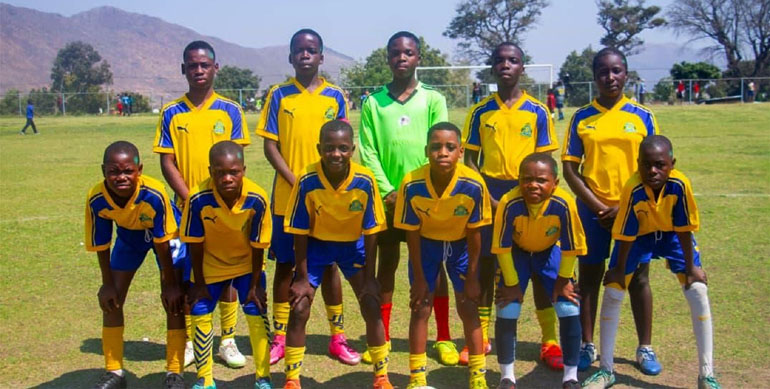
Ray Bande
Senior Reporter
FOOTBALL teams across Manicaland province affiliated to ZIFA – including junior, elite and area zone sides for both men and women – are preparing for the Munhumutapa Cup and BancABC Roots Impact Programme, expected to give the once-marginalised talent a rare chance to shine on a bigger stage.
The Munhumutapa Cup, a nationwide annual knockout competition, kicking off this weekend, is designed to promote development, competitiveness and inclusivity at every level of the game.
With sponsorship totalling US$25 million over the next five years, the tournament seeks to reset and modernise football development in Zimbabwe during the 2026–2030 cycle, catering for boys and girls Under-14 and Under-16 sides, including those from academies.
More than 1 000 teams from the lower divisions, area zones and the Premiership are expected to take part across men’s and women’s football, futsal, beach soccer and junior competitions nationwide.
Together with the BancABC Roots Impact Programme for junior football, the Munhumutapa Cup has placed ZIFA on a transformative path for domestic football development.
The draw for the lower tiers will be conducted today (Friday) across the country, marking a significant week for ZIFA leadership, which will culminate in the long-awaited congress, where the association will take stock of progress made over the past year. The tournament, the biggest and most inclusive in Zimbabwean football history, was launched by President Emmerson Mnangagwa last month.
ZIFA announced that the draws for the preliminary rounds will be conducted today across all the provinces, regions and area zones, with matches expected to kick off nationwide this weekend.
The association’s competitions manager, Kudzai Chitima, this week outlined the competition’s framework, format, rules and regulations at a Press conference attended by ZIFA president, Nqobile Magwizi, acting chief executive, Norman Gwangwadza, technical director, Dominique Niyonzima and executive committee member, Thomas Marambanyika.
Chitima said the competition will be played on a knockout basis, with clear qualification pathways for all participating teams.
“We are saying teams are drawn, and the team drawn first will play at home; the defeated team is eliminated, and we proceed to the next round. It will be a single-elimination knockout format.
“We will start with the regions. For example, Zimbabwe has four regions — Central, Eastern, Southern and Northern — each with a different number of teams. The Northern Region has 22 teams, Eastern 20, Southern 18 and Central 18. We will use the knockout format, and where the numbers are unequal we will apply a bye system, all through a draw of lots to ensure fairness,” said Chitima.
From the preliminary rounds, each region is expected to produce four teams, which will be joined by 10 provincial teams — one from each province — in the men’s competition. This will leave 26 teams advancing to the second knockout round. The field will then be reduced to 14 teams — 13 winners and the best-placed runner-up — who will progress to the third knockout round, where they will be joined by the 18 Premier Soccer League clubs in the round of 32 in June or July.
The competition will then proceed through the round of 16, quarter-finals and semi-finals before culminating in the final.
The winners will receive US$1 million and earn the right to represent Zimbabwe in the CAF Confederation Cup.
A similar process will be followed for women’s football.
Magwizi emphasised the importance of collective effort in achieving the programme’s objectives.
“It needs every one of us to work together, to give input so that we build a strong football ecosystem that we can look back and be proud of as we go into the future. So, I am very excited because this is a landmark development in terms of the processes from the launch, now we’re doing the update, then the draws, then the matches start.”
Magwizi also noted that the tournament will be preceded by congress, with the football parliament scheduled to convene to review developments over the past 15 months since his election.
“I think the team here is also looking to keep the week with the congress that will be happening on Friday, which again allows members of congress to review the work that has been done by ZIFA over the past year. Things that have been planned, things that were accomplished, and things that we intend to do going into the future. So, it is a very important week,” said Magwizi.
Acting Zifa chief executive officer, Gwangwadza, said the two competitions are central to the association’s football development agenda.
“These two competitions form part of our broader strategy to strengthen domestic football and to enhance competitiveness in all our football structures. ZIFA remains committed to a structured development and professionalisation of football in Zimbabwe. The introduction of these two competitions is deliberate and meant to achieve a couple of objectives.
“Number one, to broaden participation across leagues, regions and provinces. Number two, to provide a competitive platform for talent identification and development. Number three, to strengthen football beyond the traditional league formats and to enhance stakeholder and commercial partner engagement.
“We are placing strong emphasis on governance, transparency and compliance in the organisations of these two programmes. As such, there will be clear rules, there will be clear eligibility criteria and there will be fairness and integrity throughout the tournaments. We are not viewing these tournaments or these programmes as mere tournaments but strategic vehicles to drive growth, visibility and long sustainability of football in the country,” said Gwangwadza.