Online Reporter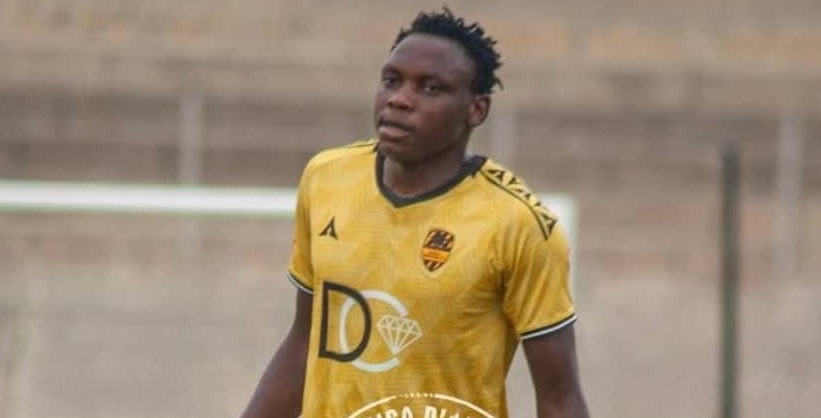
Veronica Gwaze
Zimpapers Sports Hub
WHEN Tinotenda Musariranwa walked off the pitch that afternoon, he did not just leave behind a red card he left with a shattered spirit, a tormented mind and fear that he might have destroyed another footballer’s career forever.
Matchday 13 at Gibbo Stadium buzzed with the kind of nervous tension that only football relegation battles can conjure.
Triangle United, buried deep in the drop zone, were hosting high-flying Manica Diamonds.
For the home side, this was not just another fixture; it was a fight for survival, a bid to avoid yet another fall after bouncing back from Division One just last season.
Every pass and every tackle carried the weight of an entire community.
Triangle goalkeeper Hamilton Makainganwa stood tall in goal, focused, alert and determined to repel every attack. But just four minutes into the game, it all came crashing down.
As he rushed forward to intercept a through ball, Makainganwa collided heavily with Manica striker Musariranwa.
A piercing snap rang out. The stadium fell silent.
“I broke down. I couldn’t control my emotions, I felt like I’d just destroyed a fellow player’s career,” said Musariranwa, still haunted by the memory.
“His wailing pierced my heart. Even when everyone crowded around him, I couldn’t hear what they were saying. I was just . . . lost.”
Makainganwa’s leg was fractured.
In agony, he lay motionless before being stretchered off and rushed to hospital, while Musariranwa was immediately shown a straight red card.
But that moment meant far more than just a dismissal. It triggered an emotional spiral that left the 22-year-old striker on the brink.
In the dressing room after the match, Musariranwa was a shell of himself.
“I don’t even remember if I showered. All I remember is weeping. And silence. My phone rang and rang, my mom, my family, but I just couldn’t talk. I couldn’t explain what I was feeling,” he said.
For two full days, he went mute. No phone calls. No interaction. No rest. Only a feeling of guilt.
“The sound of the cracking bones . . . it wouldn’t stop. I battled with guilt, anxiety and I honestly thought of quitting football altogether,” he admitted.
“I thought, what if I’ve ended someone’s career before mine has even taken off?”
Meanwhile, the football community focused on Makainganwa’s recovery. Musariranwa was physically present yet emotionally in exile.
“Everything was just too much. The guilt overshadowed my passion. The images of that fractured leg haunted me,” he said. “It’s not something I like to revisit. It was a difficult time for me, let alone the victim.”
What eventually shifted his mental state was a visit to Makainganwa’s hospital room. He expected anger, but found empathy.
“To my surprise, he didn’t blame me. He said it was part of the game, and that these things happen,” said Musariranwa.
That single moment, where forgiveness met remorse, was a turning point.
It did not erase the pain, but it opened a door to healing.
“The fact that he could say that to me . . . it helped. I could start healing. That’s when I began thinking of football again, not as a burden, but something I still loved,” said Musariranwa.
Support from his new club, Manica Diamonds, also proved crucial.
Though he had only joined the Mutare-based side at the start of the year after a long stay at Ngezi Platinum Stars, he said the dressing room became his sanctuary.
“Adjusting to Manica wasn’t easy. I had spent years at Ngezi and it took time for me to settle into this new environment.
“Just when I was finally feeling at home, the accident happened,” he said.
“For days, my family was panicking, calling nonstop after seeing reports in the media. But I was broken. I couldn’t face them, I couldn’t speak.”
But Manica gave him space. They also gave him help.
“They got me into psychological therapy, and it made a difference. They helped me navigate the fog. I’ll always owe them for that,” he said.
Now, weeks later, Makainganwa is still recovering, and Musariranwa is finding his rhythm again. But something in him has changed.
“I play differently now. I’m still aggressive, still competitive, but more mindful. One moment really can change everything,” he said.
And he knows, more than most, that football is as much about confronting the game’s brutal truths as it is about chasing its beauty.


 Online Reporter