daniel chigunwe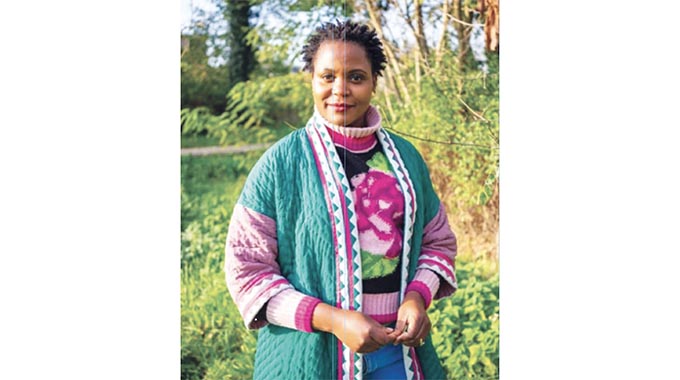
Johnson Siamachira
Correspondent
Thirty-eight-year-old Chido Govera’s journey is of resilience, perseverance and a steadfast commitment to empowering her country’s resource-constrained women mushroom farmers.
Born in 1986 in Marange communal lands of Mutare in Manicaland, Govera’s life sounds like a fairy tale as it was marked by unimaginable hardships of losing her mother, leaving her an orphan at just seven years old.
But, instead of succumbing to the challenges that lay before her, Govera embarked on a remarkable path that has transformed her into a globally recognised advocate for oyster mushroom production and women’s economic empowerment.
Now, she is a social entrepreneur, farmer, campaigner, educator and founder of The Future of Hope Foundation.
The foundation, focuses on orphans and women, and works to help lift vulnerable clients out of poverty through entrepreneurial and self-help initiatives.
Govera’s long journey begins in the rural village of Chirunga, where she was raised by her grandmother after the passing on of her mother.
As a young girl, she was tasked with the responsibility of fending for her grandmother and young brother, a heavy burden that would mould the course of her life.
“I had to take care of my grandmother and my younger brother,’’ Govera recalls vividly.
“I had to find food, firewood and water, and I had to do it all on my own.’’
When she was 10, one of her mother’s sisters suggested marriage to a man 30 years her senior, but Govera refused, afraid to leave her grandmother and younger brother. In 1998 at 11 years of age, with the help of a woman from the local United Methodist Church, she enrolled in a week-long microbiology oyster mushrooom (Pleurotus ostreatus) production programme at Africa University in Mutare, financed by Gunter Pauli and the ZERI Foundation.
There, she learnt how to colonise oyster mushrooms using maize stalk waste products. This opportunity proved to be a turning point in Govera’s life, as she gained the valuable knowledge and skills to transform her passion for mushrooms into a viable agro-business venture.
Upon graduating, Govera returned to her village and set out to share her newfound expertise with her community. She was later to establish the Future of Hope Foundation, a non-profit organisation dedicated to empowering women and youth through mushroom production. According to a Food and Agriculture Organisation(FAO) report on “The Role of Women in Agriculture’’ published in 2020, women in Zimbabwe play a significant role in agricultural initiatives, including mushroom farming. Part of the attraction in mushroom production is the quick turnaround.
Mushrooms can be harvested 20-30 days after planting the first spawn, and the crop is not restricted to seasons.
“With mushrooms you start earning after just three weeks”, said one outgrower and The Future of Hope Foundation beneficiary, Sethukhile Moyo.
She invested US$500 but recouped the sum within three months.
“I don’t encounter any losses. I can sell mushrooms fresh or sun-dried. When I dry them, they can last for at least three years, she said. Govera’s approach was rooted in the belief that mushroom production could be a powerful tool for social and economic transformation. The impact of Govera’s work was swift and profound.
Within a few years, the Future of Hope Foundation had trained more than 10 000 women and youth in mushroom cultivation. Govera has taught people on using maize stalk residues as mushroom culture. Her educational efforts have also included use of coffee waste, and have reached people in Australia, Tanzania, Democratic Republic of Congo, Ghana, Cameroon, South Africa, India, Colombia, Serbia and China.
One of Govera’s most significant achievements was her collaboration with the FAO. In 2016, she was invited to be a key-note speaker at the organisation’s World Food Day, where she shared her vision for using mushroom cultivation as a tool for poverty alleviation.



 Online Reporter