daniel chigunwe
Elita Chikwati
Features Editor
In the face of adversity, many people struggle to meet their basic needs. Traditional forms of aid, such as food and material donations, sometimes fall short of addressing the complex and varied needs of those in crisis.
However, a simple yet powerful solution has emerged: cash-based transfers.
By providing individuals with direct access to cash, the vulnerable can be empowered to purchase what they need most.
This approach being used by World Food Programme (WFP) and LEAD, working with Government, has proved to improve not only financial stability but also the dignity and overall well-being for some beneficiaries in Chinhoyi urban areas.
Cash transfers are provided through remittance-based modalities, with beneficiaries receiving a monthly cash entitlement of US$13 per person. The WFP’s urban cash transfers and resilience building projects seek to meet the urgent food needs of those most vulnerable to food insecurity, including people who are unemployed and those suffering from chronic illness or disability.
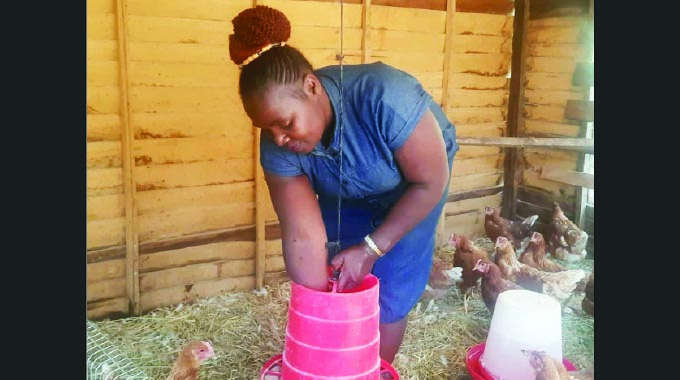
The beneficiaries have used the cash to buy food, subsidise school fees and others have been innovative to start micro income generating projects, that can sustain them even after the completion of the project. One of the beneficiaries of the cash-based transfer programme and was supported with a layer-production under the urban resilience programme, Ms Tambudzai Madondo, said she had been economically empowered.
Before the intervention, Ms Madondo had challenges providing for the family, which has five members, but after receiving the cash she invested part of the money for broiler production project.
“When the programme started in February, each family member received US$13 and we pooled resources together to set aside US$30, which I used to buy broiler chicks, feed and chemicals. I sold the chickens and got US$138. I was encouraged and wanted to invest more so I could sustain myself even after the programme.
“Using the money and March proceeds, I bought 100 chicks. The cash I am getting has enabled me to start income generating projects and also provide a balanced diet for my family,” she said.
Ms Madondo now supplies chickens to a local caterer and eggs to local shops. She has since diversified and is now also selling roasted fish and this has improved her life.
“I am now also into group savings clubs, popularly known as Mukando.
“Using the proceeds, I managed to buy a water tank and my poultry now has enough water,” she said.
Ms Madondo received training from the Ministry of Youth Empowerment, Development and Vocational Training and Ministry of Women Affairs, Community Small and Medium Enterprise Development.
“I was trained on layers and broiler production. When I started I did not have adequate knowledge. I am now also assisting fellow beneficiaries to invest using the cash we are receiving,” she said.
She added that her only challenge was that she had no land where she could produce some feeds for the poultry.
“We rely on buying food and this year, because of the drought, there has been some slight increase in the prices of feeds and this impacts on production costs,” she said.
Through the training, Ms Madondo can now keep records for her projects and this is helping her manage the businesses effectively.
“I can now track the performance of the business, monitor income, expenses and profits to make informed decisions. The ministry of youth helped us a lot, even on handling customers. I was also taught to diversify and not rely on a single enterprise. I can sustain myself even if the project is withdrawn,” she said.
Another beneficiary, Mrs Plaxedes Madzikatire, who has four children and is widowed, said she was struggling to provide basics for the family.
“I would go and work as part-time house helper and raised some money, which I then used to buy scrap metal to make hoes and I started selling the hoes. After benefiting from the cash transfer, I can now provide for the family.
“I am getting US$65 per month with my four children. I also use the money towards settling outstanding school fees. The Ministry of Youth also taught us to run our small-scale businesses and market our wares. I now can negotiate with customers. The Ministry of Women Affairs helped us to register our projects so we can operate legally,” she said.
Another beneficiary from Hunyani section, Mrs Annah Mangwanza, said the programme had enabled her to look after her orphaned grandchildren.
“Now I can provide decent meals for my grandchildren. I suffer from diabetes and I also use the money to buy medication,” she said.
To complement emergency cash-based transfers, the WFP, with support from USAID, also helps urban communities through sustainable resilience livelihood creation and socio economic empowerment activities. In Alaska, Chinhoyi, WFP and LEAD assisted a group of six community members with a greenhouse, a solarised borehole and sponsored a layers production project, situated at Alaska High School.
One of the beneficiaries, Mr Benard Chambo, said they had acquired skills and were producing different crops in the greenhouse, for sale.
“We share proceeds after six months. We now have separate projects at home and this has improved our livelihoods,” he said.
The group has also diversified into layers production.
The project is also benefiting the agriculture students at the school, who also go for practicals at the greenhouse. Chinhoyi District Development Coordinator, Mr Benjamin Zivanai, said the programmes being implemented by WFP and LEAD were complementing Government’s efforts in ensuring food security and economic empowerment of the vulnerable.
“The project has helped many people, including the training of youths in mushroom and poultry production, while other beneficiaries are getting cash.
“We have 15 000 people benefiting from the cash transfers and this programme has improved livelihoods,” he said.
WFP head of Harare field office, Ms Bianca Dzvairo, said the urban cash-based transfer programme was supporting 15 000 people in Chinhoyi.
“This is a multi-purpose disbursement, which is used for various purposes by households. The programme has been running for six months and so far we have been working well with Government. As the WFP, SDG17 on partnership is something that we uphold and we have noted that we cannot work alone,” she said.
Ms Dzvairo added that they had worked closely with various stakeholders also operating in Chinhoyi and Government had also come in and provided additional support through training on various aspects needed by the beneficiaries.
“We also have another set of activities we have integrated. Where some of these households, which are labour-endowed, are able to take part in resilience building activities. These activities seek to ensure they have a diversified livelihood base, where they are able to generate household income and supplement their various needs.
“This is like a sustainability plan, which will be a graduation from the cash-based transfers to something more long-term and more meaningful. Some beneficiaries have taken part in the vocational skills training, where we have partnered with the Ministry of Women Affairs and they have organised workshops at Chinhoyi University of Technology. Others have trained in cake baking, welding, carpentry and production of small livestock among others,” she said.
Government has also come up with a drought mitigation programme, which will see 3,3 million people benefit from grain and cash transfers.


 Online Reporter