Online Reporter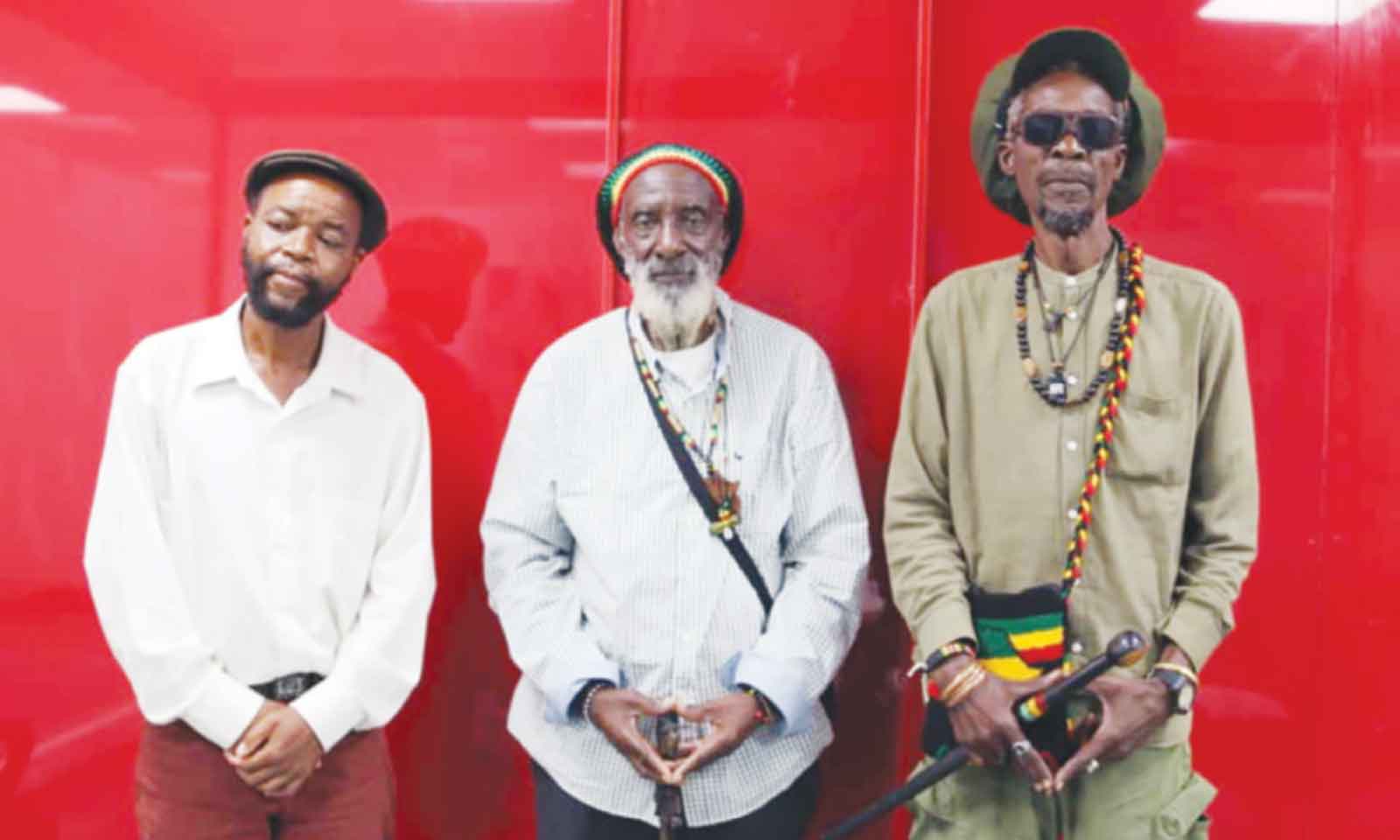
Trust Khosa
Zimpapers Arts and Entertainment Hub
Historian and musician Hebron Mashengwe has collaborated with Trevor “Ras Jabulani” Hall, Benjamin “Sekuru Tozi” Kazuru, and Clive “Mono” Mukundu to record a Chigiyo sonicity in honour of the First Chimurenga spiritual leader, Mbuya Nehanda Nyakasikana.
Titled, “Chigiyo Chesoro RaNehanda,” this unique composition serves as a call for the return of the first Chimurenga heroine’s head, which is currently housed in a museum in the United Kingdom.
To deliver their message effectively, the quartet meticulously produced this piece at Monolio Studios, where high-quality sound is guaranteed.
A sonicity delves into the deeper aspects of sound, exploring its core temporal dimensions, its interaction with technology (such as electronics and recording), and its role in shaping perception, distinguishing it from mere acoustic sound.
This concept has been woven into their new work dedicated to Mbuya Nehanda, who was killed on December 28, 1897 — a death anniversary commemorated just yesterday.
In an interview with Zimpapers Arts and Entertainment Hub, Mashengwe emphasised that their campaign supports the Government’s efforts to secure the return of Mbuya Nehanda’s head, along with those of other heroes’ that remain as trophies of conquest by Europeans.
“We would like to thank the Government of Zimbabwe for the sterling effort currently underway to secure the repatriation of the decapitated head of our fallen matriarch and heroine, Nehanda Nyakasikana,” he stressed.
“For over 30 years, the Government of Zimbabwe has been pushing relentlessly for the return of Mbuya Nehanda’s head, alongside those of other fallen First Chimurenga heroes such as Chief Makoni Chingaira, Chief Chinengundu Mashayamombe, Sekuru Kaguvi, and Chief Chiwashira Chikowero, among others.
“In total, there are 13 heads being kept overseas that we want to be returned for decent burial back home. The Government of Zimbabwe deserves a patriotic standing ovation for undertaking such a noble and honourable endeavour.
“Our Government has remembered the sterling, revolutionary, patriotic efforts of a heroic matriarch whose blood was shed for the liberation of the country.”
Mashengwe stated that Mbuya Nehanda was a spiritual leader who gave the whites a torrid time trying to kill her, even after capturing her.
“Having captured her, they could not easily hang her until a sell-out informed them that only if they got rid of her snuff box could they kill her. They disposed of the aforementioned snuff box, upon the advice of the sell-out; only then were they able to hang her — not before she uttered the prophecy that her bones would rise again, and they did in the Second Chimurenga, which brought political independence from British colonial rule.
“This marked the beginning of the onslaught against the spiritual power of African spirituality, the demonisation of the mbira instrument, and the unending demonisation of the snuff box (Nhekwe) by the crusading missionary religions,” he pointed out. He noted that his concept of sonic texts was not new to Zimbabweans who religiously follow their culture. Since the days of the liberation struggle, sonic texts extolling Mbuya Nehanda and our ancient heroes have been composed and performed. These songs fired up the morale of the liberation fighters fighting in the hills and valleys of Zimbabwe. Songs such as ‘Mbuya Nehanda Kufa Vachitaura’ became timeless classics,” he pointed out.
Similar sentiments were echoed by Ras Jabu, who firmly believes Mbuya Nehanda should be returned.
“Of course, the campaign has been going on for years with no action being taken by the overseas keepers of the remains, but we will amplify the calls as artists. We are not stopping, and one day we will be heard,” he shared.
Sekuru Tozi, who interjected during the interview, also called for resilience.
“We have been making the calls, and it’s time that we continue making noise about this case. Our Government has been leading from the front through various campaigns, and it’s now up to us to make that call. We are going to do our best to ensure that the heads are returned to Zimbabwe,” he stated.
However, it should be mentioned that Mashengwe, who has been researching this issue, is backed by capable people.
A gifted composer who has been promoting Chigiyo music, a mixture of roots reggae and Zimbabwean traditional sounds, Mashengwe believes that his stint in Mazowe Valley opened his eyes.
“Mazowe Valley is the place where Mbuya Nehanda led the resistance against colonial powers. It is also a place where I was born, and having released my first album ‘Chauya Chigiyo’ in 2013, which carries songs such as ‘Zimbabwe’, ‘Ngaarumbidzwe’, ‘Musikavanhu’, and ‘Oh Jah’, I then took a sabbatical to research more about Mbuya Nehanda.
“During my eight-year sabbatical in Mazowe, I would often visit the Shavarunzvi Mountains, from where Mbuya Nehanda led the First Chimurenga resistance war; I would meditate alone,” he explained.
After “Chigiyo Chesoro RaNehanda,” which is out, he is working towards a full album with the help of Mukundu.“There is no greater honour than this: to compose and sonicate the valiant exploits of this timeless ancient matriarch and eminent ancient heroes whose heads were decapitated and taken to Europe by the colonialists,” he stated.