

 Online Reporter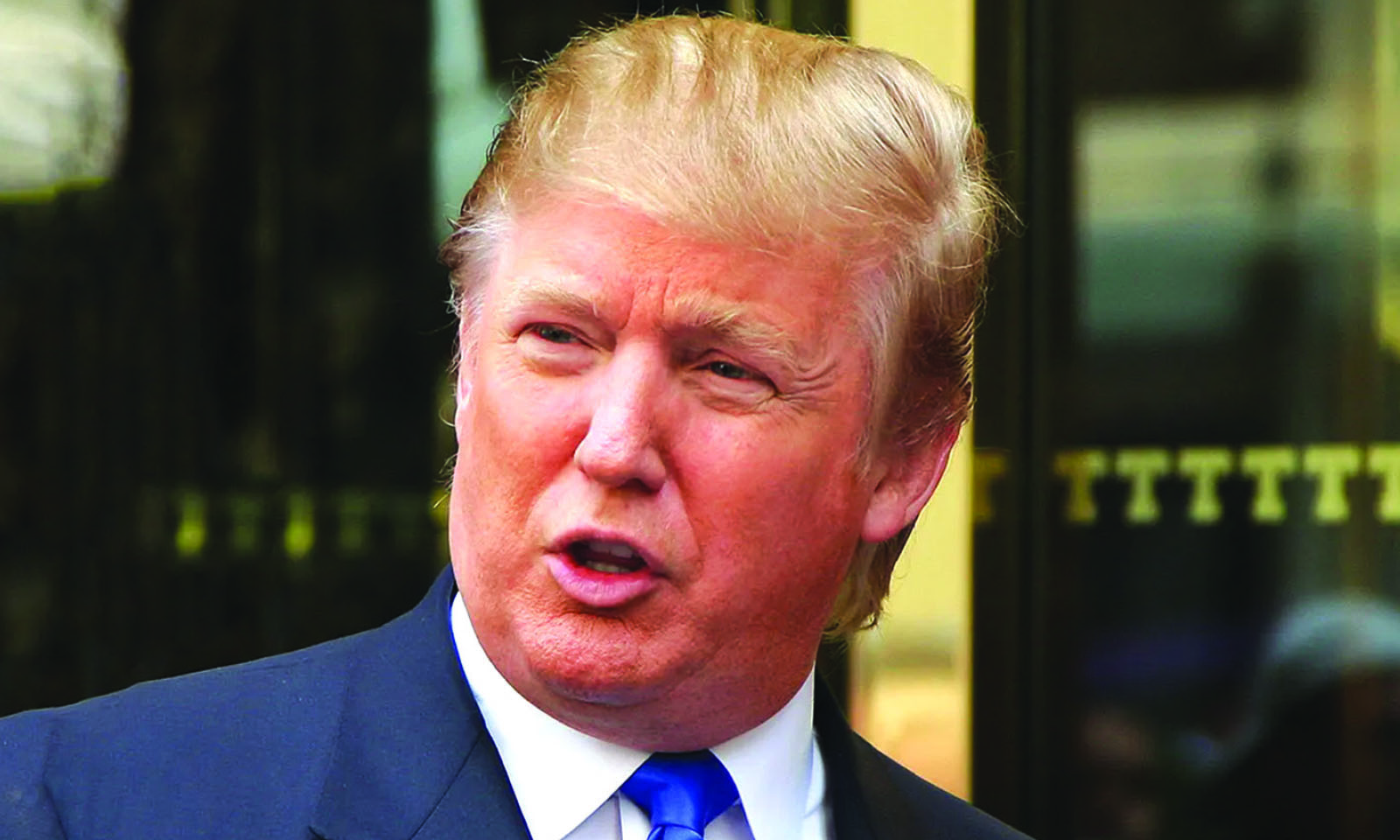
Gibson Nyikadzino
Zimpapers Politics Hub
IN 2026, Africans should not be living in pretence and escapism.
The most difficult person to awaken is the one who is pretending to be asleep. The time window for that is closing.
Picture this scenario! The US, on Christmas Day, bombed what it termed ISIS targets in Nigeria’s Sokoto State to protect the Christian minority being indiscriminately killed by Islamist extremists.
Ironically, the ISIS leader is Syria’s current president, Ahmed al-Sharaa, whom US President Donald Trump hosted on November 10 in the Oval Office.
Al-Sharaa has gone from being on the White House’s wanted terrorist list to its guest list. Since coming to power in December 2024, Christian minorities in Syria have been indiscriminately killed by ISIS terrorists, now running the government, and the US has turned a blind eye to this.
It has not even claimed any moral position to defend the targeted Syrian Christian minorities.
When has the US been concerned about sincerely ending or addressing security challenges in Africa?
Why has it not done the same with the conflicts in Sudan and South Sudan, or the conflict in the English-speaking regions of Cameroon?
There are many people being killed, and it raises questions as to why the US has only been specific about targeting ISIS camps in Nigeria.
Events in Nigeria have nothing to do with protecting Christian minorities, nor do events in Syria have anything to do with ending terrorism.
These are all the hallmarks of well-calculated and choreographed geopolitical manoeuvring and the reincarnation of imperial conquest in which Nigeria is also participating.
The Nigerian military’s director of defence information, Major General Samaila Uba, confirmed Abuja’s involvement in the bombing of ISIS targets.
He said the country’s armed forces “in conjunction with” the US carried out the strike based on “credible intelligence and careful operational planning” that reported no civilian or terrorist casualties.
Nigeria also confirmed that the 16 GPS-guided precision munitions had been fired from platforms in the Gulf of Guinea.
The strikes, the Nigerian military said, neutralised ISIS elements that sought to penetrate its territory from neighbouring countries in the Sahel, namely Burkina Faso, Mali, and Niger.
This is not about Christians in Nigeria. Victimhood to terrorism cannot be ascribed to any religious group.
At least 90 percent of Sokoto State’s population are Muslims, while 10 percent are Christians. Both groups have been victims of kidnapping and murder.
In fact, Muslims have been the biggest victims.
Framing a Narrative
Mali, Niger, and Burkina Faso held their second summit of the Alliance of Sahel States (AES) on December 20 after finalising their exit from the Economic Community of West African States (ECOWAS) in March this year.
The three countries have no presence of foreign forces after expelling French officers and shutting down their bases in their territories.
Two years ago, Niger closed the US drone base in that country, closing the door on American forces on its soil.
Earlier this year, US General Michael Langley accused Burkina Faso’s Captain Ibrahim Traore of using the gold reserves he nationalised “to protect his junta.”
A few weeks later, Traore survived an assassination attempt on his life. The verbal war and accusations from General Langley against Captain Traore served as a symbol of Western paternalistic attitudes against Traore’s representation as a new hope for African leadership, one able to stand against Western machinations and manipulations.
Unwanted Independence
To bolster their Sahelian sovereignty, Burkina Faso, Mali, and Niger have unified their military forces, pledged to support each other, discarded colonial legacies, emphasised Pan-African solidarity, and embraced anti-imperial values and mores.
Besides a joint military force of 5 000 that will conduct operations to combat Islamist insurgencies, the AES established its financial arm, the Confederal Investment and Development Bank (BCID-AES), to fund its development.
This means the alliance is eliminating reliance on loans from the International Monetary Fund (IMF) and the World Bank (WB). It is now bypassing institutions of Western dominance, whose architectural designers cannot fathom an African alliance becoming independent in all aspects.
This frustrates and infuriates neo-colonialism and imperialism. As a result, terrorist attacks have intensified in Mali, now targeting the economy by destroying fuel tanks and attacking electricity installations to bring the country to its knees.
Therefore, strikes by the US inside Nigeria, and closer to the border with Niger, a member of the AES confederation, should not be interpreted as targeting ISIS camps, but as an attempt to force ECOWAS to act against three “belligerent” former members.
Also, Niger possesses significant mineral wealth, including being a leading global producer of uranium and oil; Mali is Africa’s third largest gold producer with significant reserves of lithium and uranium; and Burkina Faso has rare earths and critical minerals for the energy transition.
Niger and Mali’s uranium are crucial for nuclear technology, and in the age of military competition and the re-emergence of an arms race among global powers, these countries are pivotal to the interests of foreign powers.
Thus, President Trump is geopolitically targeting Sokoto State in Northern Nigeria to strategically justify the stationing of American troops as a threat to AES countries.
What Happens Next?
Africans need to open their eyes. Things are not what they seem. The choice of Sokoto in fighting ISIS terrorism in Nigeria is highly questionable.
This is a false flag that should be seen in all geopolitical dimensions. Soon, there will be reports that ISIS terrorists fled their bases in Nigeria and are now in Niger, to create a pretext to further destabilise Niger.
The Trump administration’s military efforts in Africa have predominantly centred on Somalia, where over 100 airstrikes have been conducted since February against suspected Islamist militants.
Shifting focus to Nigeria is becoming increasingly dramatic, claiming concern over Christians in Nigeria. It is clear the Western establishment is not pleased with the path the AES alliance has taken.
The US does not care about either Christians or Muslims in Nigeria, but about its own interests. Why is the US concerned about Christians in Nigeria, and not about Black Americans being killed in cases of police violence?
While many may think the US is fighting terrorism, numerous other factors suggest that the US may end up stationing its troops in Nigeria. It should be expected that some West African countries will act as instruments that will be carefully or carelessly controlled to advance US interests by contributing to the undermining of the AES states.



There are quite a number of African states that will go into bed with the USA. Nigeria and Gabon in the West, Morocco and Egypt in the north, Kenya and Tanzania in the East and Zambia and Botswana in the South. These are the likely states to assist the USA regime establish a strong military foothold on the African continent.