Online Reporter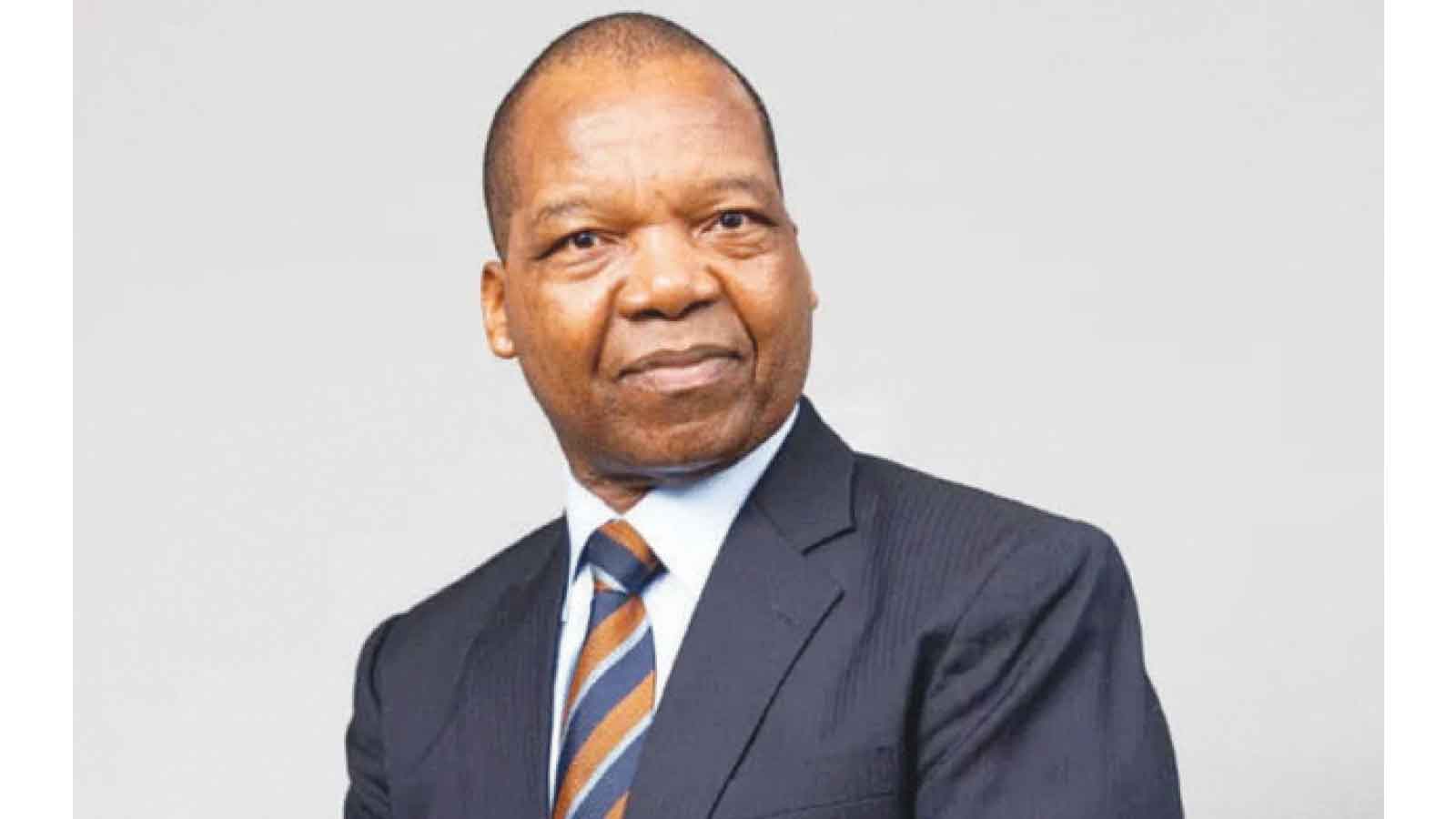
Africa Moyo
GOVERNMENT has unveiled a US$121 million package that is set to transform the National Railways of Zimbabwe (NRZ), restore confidence in rail freight services and strengthen the country’s position as a regional logistics hub.
The package, spearheaded by the Mutapa Investment Fund (MIF), combines fresh financing, rolling stock acquisition, infrastructure rehabilitation and strategic partnerships aimed at reversing years of underinvestment in the sector.
The announcement came as NRZ last week took delivery of three refurbished locomotives and 100 wagons under a public-private partnership (PPP) with ferrochrome producer Zimasco.
Under the programme, MIF is finalising a US$6 million facility for the refurbishment of 520 wagons and acquisition of maintenance equipment, while negotiations are underway with the African Export-Import Bank (Afreximbank) for a US$115 million facility to procure 10 new locomotives, 315 wagons and rehabilitate key rail infrastructure.
MIF chief executive officer Dr John Mangudya said the latest developments signal the beginning of a broader transformation programme.
“What we are witnessing on the tracks today is more than steel and equipment. It is the visible manifestation of a revitalised national backbone,” he said.
“For a couple of years now, the growth in the mining and agricultural sectors has outpaced our logistics capabilities, largely due to the limited capitalisation of the NRZ. With this initiative, we are gradually closing the rolling stock gap as we work to transform the fortunes of NRZ.”
Rail central to Vision 2030
NRZ, which was transferred to MIF as part of Government’s strategic reforms of State-owned enterprises, is expected to play a pivotal role in supporting economic growth under the National Development Strategy 2 (NDS2) and Vision 2030.
Dr Mangudya said revitalising rail transport was critical to improving the efficiency of key productive sectors such as mining, agriculture and manufacturing.
“Our message has been consistent and clear that we need to complement equity injection and debt finance with PPPs, like what we are witnessing today, to revitalise Zimbabwe’s rail sector,” he said.
He said restoring rail transport would generate significant savings by reducing congestion on roads and lowering maintenance costs on highways damaged by heavy trucks.
“Every locomotive restored and every wagon returned to service advances the nation’s aspirations under the National Development Strategy 2 and Vision 2030.
“Rail remains the most cost-effective and environmentally friendly mode for the inward and outward movement of bulk products.
“By shifting minerals and commodities back to rail, we save financial resources in road maintenance costs, reduce transit times and strengthen our national corridors’ performance.”
Local skills drive turnaround
One of the notable features of the latest refurbishment programme is that much of the work was carried out locally by NRZ engineers and technicians.
Dr Mangudya said the achievement demonstrated the country’s technical capabilities and the potential of local industry to support national development.
“The technical skills displayed in executing these refurbishments locally demonstrates that Zimbabwe possesses the human capital to turnaround the fortunes of the national economy. Local refurbishment creates engineering jobs and fosters technological self-reliance,” he said.
He challenged NRZ management and staff to maintain high standards of efficiency, accountability and customer service.
“The shareholder expects absolute transparency, customer focus, optimal resource utilisation and strict maintenance protocols.
“Preventative maintenance and faster turnaround times must be your daily key focus areas.”
Beyond domestic freight movement, the rail revival programme is also intended to strengthen Zimbabwe’s role in regional trade and transport.
Dr Mangudya said the country’s geographical location places it at the centre of Southern African trade flows, making a functional rail system a strategic national asset.
“Our ambition extends beyond our borders. Zimbabwe sits at the geographical heart of the Southern African Development Community,” he said.
Dr Mangudya highlighted the rehabilitation of the Machipanda-Harare railway line and the Chicualacuala-Dabuka-Plumtree corridor under a US$10 million tripartite arrangement involving Zimbabwe, Botswana and Mozambique.
The projects are expected to improve regional connectivity and facilitate the movement of goods across key transport corridors linking the Indian Ocean and inland markets.
Bigger investments on the horizon
While the latest handover marks an important milestone, authorities say it represents only the first phase of a much larger recapitalisation programme.
As part of efforts to address immediate operational challenges, MIF has facilitated the leasing of four Sheltam locomotives and plans to add nine more units to the fleet.
“The Fund facilitated leasing of four Sheltam locomotives to ease immediate traction constraints and is planning to add nine more locomotives to the fleet to support the increase in business,” Dr Mangudya said.
He added that the US$121 million financing package would significantly improve fleet availability and operational efficiency.
“Collectively, these initiatives will improve the availability of locomotives and wagons that are required to enhance network reliability and increase freight capacity,” he said.
In the medium to long term, NRZ will require additional structured financing to modernise infrastructure, acquire new rolling stock and upgrade workshops to international standards.
Dr Mangudya expressed gratitude to Zimasco for partnering NRZ through the PPP arrangement and encouraged other bulk cargo producers to support the railway’s renewal.
“We thank our corporate partner Zimasco, who trusted our capabilities and joined us in building a better future for NRZ,” he said.
“We would like to encourage other players with bulk cargo to join or partner us on this NRZ renewal journey and help us build our national pride of a reliable rail system in Zimbabwe.”
The NRZ-Zimasco partnership is increasingly being viewed as a model for leveraging private-sector investment to revive strategic State enterprises while easing pressure on the fiscus.
For miners, farmers and manufacturers, a revived rail network offers the prospect of cheaper, safer and more efficient transport, while for the economy, it represents another critical building block towards achieving an empowered upper middle-income society by 2030.