Ray Bande
Senior Reporter
IN high-density suburbs where every cubic metre counts, the first bucket will still cost nothing.
That single line in Mutare City Council’s proposed 2027 budget explains why officials are calling the plan pro-poor — a tariff structure that protects low-income households, while trying to keep a city running without donor grants, devolution funds and adequate road allocations.
Pro-poor refers to economic policies, growth strategies or development programmes that directly benefit low-income populations and aim to reduce poverty.
In basic political studies, core elements of pro-poor policies entail economic inclusion marked by expanding access to productive assets, credit, land rights and markets for low-income households.
It entails access to basic services and ensuring subsidised or universal access to essential public goods like health care, education, clean water and sanitation.
Social protection is a factor. Pro-poor policies implement safety nets, micro-insurance or transfer programs to protect vulnerable groups from economic shocks and natural disasters.
In a nutshell, this is what Mutare City Council has endeavoured to achieve in its proposed 2027 budget.
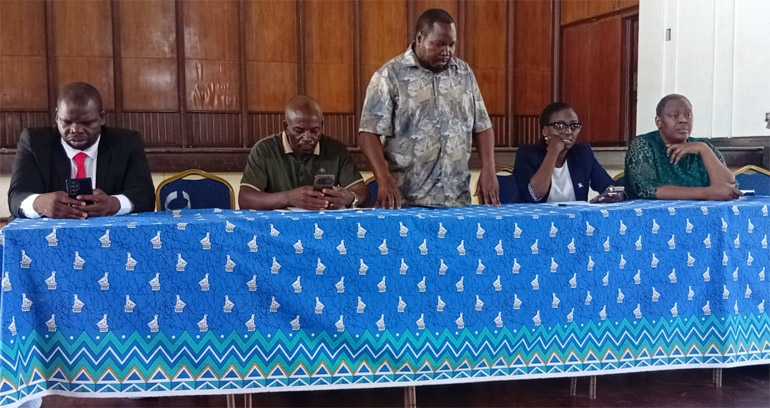
Mr Phibeon Ngorima, the managing trustee of Confederation Federation of Manicaland Trust, said after all is said and done, participation of residents in the budget consultation process is key.
“I want to urge all residents and stakeholders to attend the budget consultation sessions that are going on around the City of Mutare. It is better to attend and later complain that I objected to this, but my objection was not considered, then remedial action can be taken accordingly. Remember, when this budget sails through, it becomes law. Therefore, it is key for everyone to spare a moment to attend to the consultations,” said Mr Ngorima.
United Mutare Residents and Ratepayers Trust (UMRRT) programmes director, Mr Edmore Dube, echoed Mr Ngorima’s sentiments, saying participation in the budget consultation processes is key.
“This is an opportunity for residents to take charge and shape the budget they want for the city. Participation is the only way residents can use to get their voices and inputs heard,” said Mr Dube.
However, a cursory look at the proposed 2027 budget clearly reveals its pro-poor nature, especially for high-density areas where the first band for water tariffs is entirely free.
As if that was not enough, the local authority has not adjusted special rates for education and special roads rates, all in an effort to make the tariff inclusive of low-income earners.
In its strategic highlights, the proposed 2027 Mutare City Council budget document reads: “Service Delivery First: Over 62 percent of the capital budget directly targets core infrastructure deficits — roads, water, sanitation and public lighting. Workforce Stability: Moving critical contract workers and locum nurses into permanent positions to secure essential healthcare and civic operations.
“Public Health Protection: Extending clean water access to informal settlements via dedicated water kiosks to stop cholera and waterborne epidemics at the source. Pro-Poor Tariff Structure: Protecting lower-income households through progressive tiering, maintaining free basic water thresholds and freezing key municipal levies.
“Partnership-Driven Growth: Leveraging a ‘Whole-of-Government’ strategy alongside institutional partners (SEDCO, NSSA, local universities) to co-fund major economic and social hubs.”
In the executive overview, the local authority proposed budget notes: “The 2027 City of Mutare budget prioritises sustainable, community-first service delivery. Facing steep declines in donor grants, two consecutive years without devolution disbursements and constrained ZINARA road allocations, the local authority is pivoting toward self-sustenance and full cost recovery.
“Capital and operating expenditures are heavily targeted toward addressing council’s widest gaps under statutory Minimum Service Delivery Standards (MSDS) (SI 10 of 2025 and SI 69 of 2026), modernising infrastructure and transitioning critical frontline workers to permanent roles.”
Some of the key budget pillars include balanced tariff adjustments.
“Tariff revisions balance rising operational costs (up nine percent) against resident affordability: Headline Rate: General adjustment of five percent, pegged to average USD inflation and well below council’s cost drivers.
“Property Rates: A progressive increase averaging 14 percent (five percent in high-density suburbs, 15 percent in low/medium-density areas, and 20 percent to 25 percent for commercial properties). Reinvested directly into absorbing essential contract labour.
“Water: Expansion from three to six consumption tiers ensures heavy users pay more. High-density households retain two cubic metres free, the baseline rate shifts modestly from US$0,79 to US$0,90 per cubic metre [typical household impact about 10 percent], and fixed monthly charges remain unchanged.
“Refuse and Sewer: Refuse rates adjust by five percent. Sewer charges rise 9 percent for residential properties and 12 percent to 22 percent for commercial/industrial properties.
“Healthcare Fees: Clinic consultation, maternity and admission fees rise 20 percent to 27 percent to cover the total withdrawal of external donor funding (Health Resilience Fund, USAID and Global Fund). The adjustment directly finances 60 permanent clinic nursing posts and secures essential drug supplies. Family planning fees are reduced.
“Rate Freezes: Fees for roads/education special rates, market stalls, building inspections, fire certifications and council licenses remain frozen at 2026 levels,” the executive overview of the proposed budget reads.
The human face of the proposed budget also comes clearly in workforce regularization, whereby US$1.204 million has been committed to regularize critical frontline contract and casual personnel into permanent establishment posts.
This is tied to critical staff retention.
“Healthcare Staffing: Transitioning 60 locum and contract nurses to permanent establishment, advancing the 5-year goal of a fully permanent municipal nursing staff.
“Essential Operations: Committing US$1,204 million to regularise critical frontline contract and casual personnel into permanent establishment posts,” it reads.
Mutare City Council has also done well in trying to meet the Minimum Service Delivery Standards by investing in infrastructure and capital works.
“Allocating 62,7 percent of the capital programme to council’s most critical basic services: Roads and Mobility: Road rehabilitation (US$5.71 million), Street lights (US$470 000), High-mast tower lights (US$320 000), Traffic intersection signalisation (US$200 000), Water and Sanitation: Non-revenue water reduction (US$1,10 million), Sewer mains rehabilitation (US$906,000), Bulk water pipeline upgrades (US$700 000), Roll out of prepaid smart meters,” reads the key highlights of the budget.
There are also key healthcare infrastructure projects accommodated in the budget, including the completion of Hobhouse Clinic, delivery of the Provincial Drug Rehabilitation Centre as well as acquisition of a fully equipped municipal ambulance, further reads the key highlights of the budget.
Mutare goes for pro-poor tariff structure