Lovemore Kadzura
Post Reporter
ALONG the one-hectare patch in Ward 20, just off the Rusape-Nyanga Highway, 70 pairs of hands bend in unison.
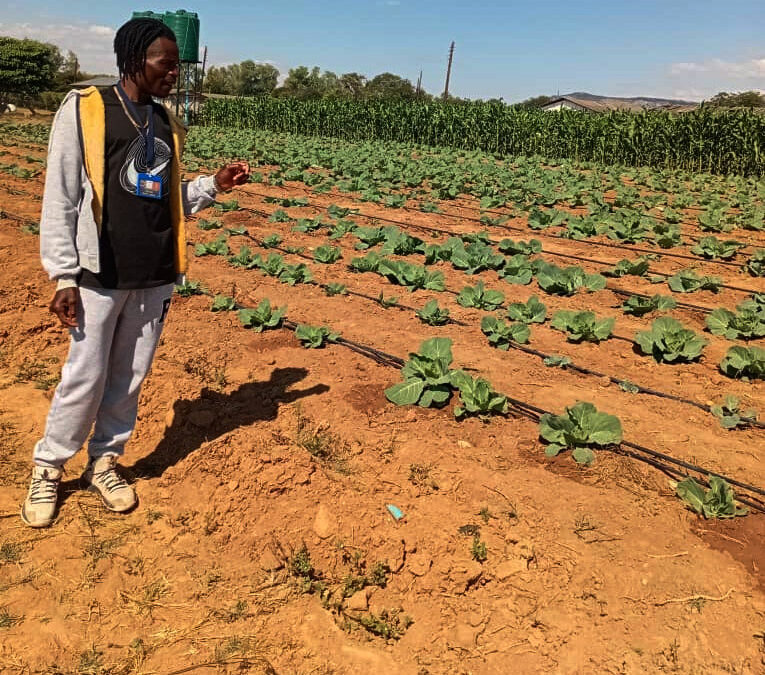
The young women tie back their headscarves, while young men roll up their sleeves, and together they work the damp soil where cabbage heads are tightening, bean pods are filling, and green mealies stand tassel-high.
The hum of a solar-powered borehole is the only machine in sight, pulling water from deep below ground. A year ago, this same ground was idle. So were many of the youths who now farm it.
For many young people in rural communities, the search for employment and a reliable source of income often comes with uncertainty. When days are long and empty, that vacuum is quickly filled with social challenges that have scarred peri-urban villages across the country – drug and substance abuse, early child marriages, unwanted pregnancies and other risky behaviours.
At Dumbamwe Youth Village Business Unit, agriculture is offering a different path. What started as a fenced garden has become a payroll, classroom and second chance.
The initiative is part of the Village Business Unit programme, a grassroots model aimed at fighting poverty at village level by turning smallholder farming into a collective enterprise.
In Makoni Central Constituency, its impact is no longer theoretical.
The Dumbamwe YBU, established last year with a solar-powered borehole irrigating one-hectare piece of land, now has 70 members, the majority of them youths.
It is proving that YBUs can transform rural livelihoods by bringing communities together around income-generating projects, and that young people can play a critical role in food production, while building sustainable livelihoods.
ZANU PF Dumbamwe district youth chairperson, Cde Gladys Zunidza, remembers what idleness looked like.
“We were idle as youths of this area. Now we are into fulltime farming,” she said, as she stood at the edge of her portion, surveying rows that are as uniform as they are intentional.
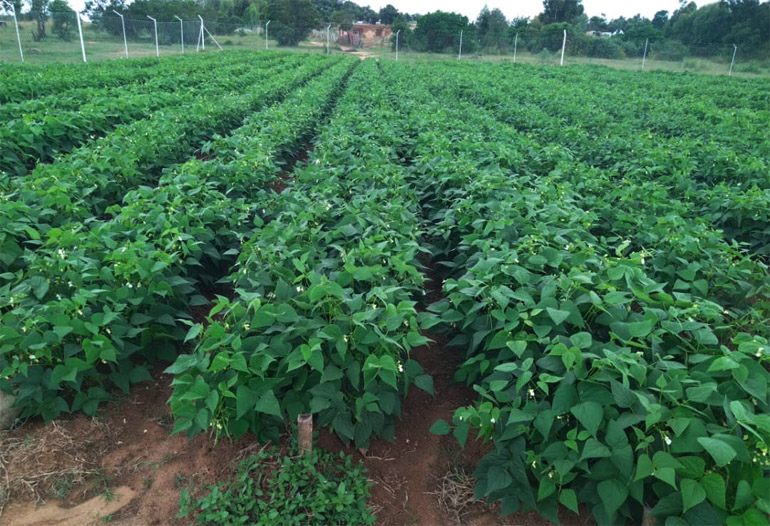
The model here is simple and disciplined – each beneficiary has their own portion, but grow the same crop variety at the same time. There is coordination in planting, weeding and harvesting.
“The garden has transformed the lives of youths in this village. We are grateful to President Emmerson Mnangagwa for coming up with such a programme targeting youths. From the crops we are producing, we are earning good financial returns and securing food and nutrition security for our families,” said Cde Zunidza.
The economics are already visible. The group grows beans, cabbage and green mealies. There is abundant market for the produce.
They have supplied two boarding schools with beans. Cabbages and green mealies are sold to community members. When there are functions in the community such as funerals and other gatherings, the garden supplies fresh relish.
Manicaland Youth Quota Member of House of Assembly, Honourable Stanley Sakupwanya, was credited for advocating for the establishment of the YBU and providing farming inputs to kick-start the project.
“There is a company that assisted us with fertiliser, and we also thank Honourable Stanley Sakupwanya for availing inputs to kick-start operations,” said Cde Zunidza, adding that the borehole has done more irrigating their crops.
In a summer season when shallower wells are drying up, this one runs deep and steady. The garden has become a source of clean water for the community as well.
For Mr David Gowere, a beneficiary, the value cannot be measured in dollars alone.
“The launch of the garden has positively impacted on us. All who embraced the idea are not regretting. Each beneficiary has their own portion, but we grow the same crop, variety and at the same time. There is good coordination among the beneficiaries. When selling we can sell as a group or separately,” he said.
Mr Gowere does not shy away from what Dumbamwe was before. Being peri-urban along the Rusape-Nyanga Road, the village was not spared the drug and substance abuse scourge that thrived because most youths were not engaged in worthwhile activities.
“We experienced cases of early marriages and unwanted pregnancies among youths. With the garden now fully functional, we now expect these cases to drop. An idle mind is the devil’s workshop, but a productive one saves one from temptations,” he boasted, as he admitted that his own perception of farming has changed.
“We used to view agriculture as an occupation reserved for older generations, but here we are demonstrating to others that farming is actually a viable income generating venture, which must be embraced by all youths. We still have the energy to work,” said Mr Gowere.
That shift in mindset is perhaps the most deliberate cultivation happening here.
The youths did not just plant vegetables – but a new definition of work. And in a nod to practical wisdom, they did not plant it alone.
“The garden was specifically established for youths, but we found it necessary to incorporate our elders for guidance and promoting inclusivity. We are working closely with the Agritex Extension officer who guides and directs us on how to operate the garden,” explained Cde Zunidza.
The elders walk the rows with them, offering timing, spacing, pest control – the kind of knowledge that does not come from a pamphlet.
It is an intergenerational contract – energy meets experience. Now, success is creating its own pressure.
Mr Patson Mauyasva, chairman of the Youth Business Unit, said they are looking beyond the current fence.
“We have notified authorities of the need to expand the garden and invite more villagers. The project has been a marvel and everyone wants to be part of it. We used to go to Rusape to buy horticultural produce like cabbages, but we now have the produce locally. We intend to embrace other produce such as tomatoes and potatoes to boost income,” he said.
The ambition is plainspoken. Saturate the local market, then move to the bigger market of Rusape.
As the afternoon heat settles, the solar pump keeps humming, and the young farmers wash their tools in water that, months ago, they did not have.
They count crates, not hours. They talk about inputs, school fees, and the price of cabbage at the growth point. The talk of handouts from parents – once the only income for many – has faded.
In Dumbamwe, hope is no longer an abstract word used in campaign speeches. It has leaves, roots and can be harvested, bagged, and sold.