admin
admin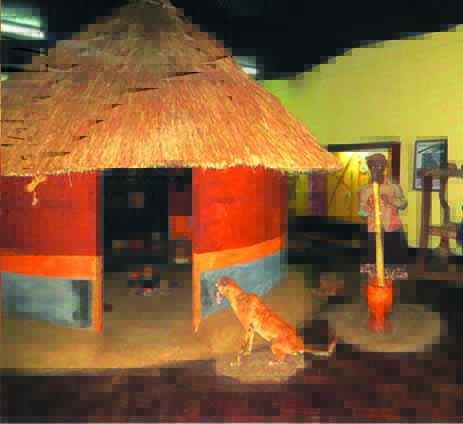
Liberty Dube
Tourism Correspondent
MUSEUMS across the world have over the years offered domestic and foreign tourist fascinating displays, exhibitions and memories of a lifetime
Mutare Museum has become a spectacular bastion for cultural and natural heritage of the Eastern Highlands as it houses a wide range of galleries that showcase different aspects of archaeology, ethnography, firearms, transport and traditional aspects of eastern Shona lifestyle.
It has become a tourism spectacle for local, regional and international tourists and has recorded a significant rise in the number of visitors, which is a sign of recovery in the province’s tourism sector.
The institution has made efforts to adapt to the expectations of the contemporary visitor and redress the derogatory imbalances in displays of its ethnographic collection as it continues to play a critical role in promoting cultural tourism.
Cultural tourism is a type of tourism activity in which the visitor’s essential motivation is to learn, discover, experience and consume the tangible and intangible cultural attractions and products in a tourism destination.
As key actors in their local communities, museums contribute to a wide variety of goals which include fostering the social economy and disseminating scientific information on environmental challenges.
A cabin containing a collage of pictures of the Utopia House Museum as well as tea sets, flasks and smoking pipes, among other things, welcome a visitor as he or she enters into the gallery.
Utopia was the home of Rhys and Roaslie Fairbridge.
Rhys is the surveyor who surveyed the current citing of Mutare city.
Utopia House Museum was built in 1897.
Situated in Murambi suburb, the house was constructed mainly from locally available material during that time.
There is also an illustration of ancient tourism facilities in Mutare such as the Central Hotel, now known as Mutare Club, which was built in 1898.
At one time, a few decades ago, the club hosted actor, director and producer, Denzel Washington.
One of the most fascinating galleries in the museum is the Beit Gallery which focuses on perceived traditional aspects of the eastern Shona people.
These include witchcraft, traditional healing and man-made lightning.
There is witchcraft paraphernalia such as a bottle with sticks and water which is a concoction to manufacture lightning.
There is also a skull of a hyena and that of a crocodile.
Despite being a spectacle to look at, the taxidermy of an owl looks scary, but the skulls and the owl are part of traditional healing paraphernalia.
Witches and wizards are believed to be evil people who use different forms of magic to bring harm to other people.
It is believed that they travel at night visiting the places and people whom they want to harm.
To travel, it is believed that witches usually ride on the backs of hyenas, sticks, owls and winnowing baskets and at times use ghosts (zvipoko) and goblins (zvidhoma) to harm and instil fear in their targets.
They use different types of medicines to lure their victims.
The Eastern Shona people also believe in traditional healers (n’anga).
Others are feared by people for bringing evil into people’s lives, for example lightning.
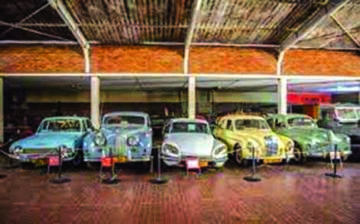
Another captivating and charming sight is that of the transport gallery where there is a showcase of vintage and classic vehicles.
The gallery shows the developments that happened within the transport revolution. Some of the vehicles on display include Chevrolet, Morris Minor, 1957 Jaguar.
The museum was established in 1954 by the then Umtali Museum Society in a wood and corrugated iron building.
The foundation stone of the present attractive building was laid by Sir Edgar Whitehead on April 7, 1962, and was officially opened by Sir Alfred Beit on September 13, 1964.
Since then, most of the exhibitions have not changed or have received small cosmetic changes.
The museum recently rebuilt and reorganised the Beit Gallery to respond to changing visitors’ needs.
This is the largest gallery re-display since the museum was officially opened 1964.
The project enabled the museum to present and re-evaluate histories and the environment while also responding to contemporary social shifts and new historiographies.
The institution’s marketing officer, Mr Lloyd Makonya said: “Museums are turning out to be innovative playing grounds where new technologies can be developed and applied to everyday life.
“Digital innovation can make museums more accessible and engaging, thereby helping audiences understand complex concepts. Through its collections and programmes, museums thread a social fabric that is essential in community building.
“By upholding democratic values and providing life-long learning opportunities to all, they contribute to shaping an informed and engaged society.
“It is imperative for museums to continue to do self-introspection and find ways to keep evolving so as to meet the changing visitor’s expectations,” said Mr Makonya.
The advent of the Covid-19 pandemic almost paralysed museums without technological capabilities, hence the need to evolve in remarkable ways and adapt to changes so as to continue providing valuable visitor experiences through digital means.


 Online Reporter