Online Reporter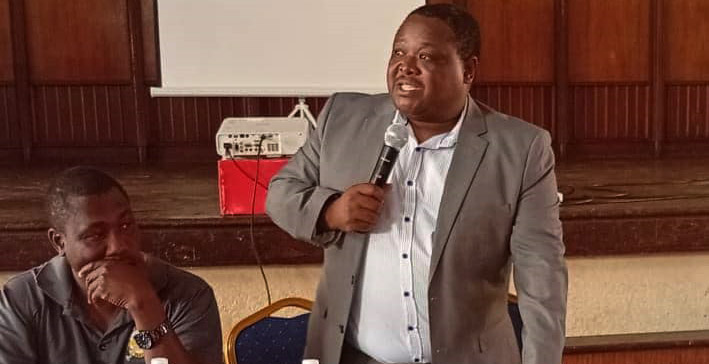
Tendai Gukutikwa
Post Reporter
FOR years, Mutare residents have been complaining that their voices were rarely heard in how their city was run.
Budget consultations came and went, often marked by poorly attended meetings, distant venues, and technical presentations that alienated ordinary residents. This year, City of Mutare, in partnership with different stakeholders, decided to change that narrative.
In a bold step towards inclusive governance, the council has taken the 2026 budget consultations directly to residents’ doorsteps, literally.
Enumerators now move from house-to-house, armed with tablets and questionnaires, beginning each visit with a simple, but powerful question — What do you want your city to look like in 2026?
The door-to-door approach marks a departure from the traditional method of gathering citizens in town halls.
It signals a new philosophy, one that treats residents, not as bystanders, but as partners in shaping the city’s development priorities.
In an interview recently, the Town Clerk, Mr Blessing Chafesuka, said the initiative is meant to turn budgeting from a bureaucratic exercise into a people-driven process.
“We are targeting at least 20 000 residents to have their say this year. In the past, participation was very low, about 4 000 to 5 000 residents at most.
We want to change that by bringing the consultation to people’s doorsteps,” he explained.
For decades, Mutare’s budget process was seen as distant and exclusive. This time, enumerators are collecting data digitally, transmitting residents’ views to the Civic Centre in real-time.
A check by The Manica Post this week showed palpable enthusiasm across the city.
Many residents said it was their first time to be directly asked what they want their money to do.In Sakubva, 62-year-old Mbuya Getrude Chendaka said she was surprised, but delighted when enumerators knocked at her door.
“Usually, it feels like Government decisions are made far away. But when someone comes to your home and asks what you think, it changes everything.
I spoke about the need for youth spaces and internet access in our area. These are the things that matter to us,” she said with a smile.
She added that the process made her feel included in the city’s future for the first time.
“I used to hear on radio that the city was doing budget consultations, but I never knew how to participate. When the ladies came and explained everything, I felt respected. Finally, someone wanted to hear what we think about our water and roads,” she said.
For Mbuya Chendaka, water remains her biggest worry.
“Being elderly, going for an hour without running water is a big deal. If they are planning to increase the water tariff, we must understand why and what it will fix. I told them that we want clean, consistent water before any increase,” she said.
Her concerns are shared across the city, where water has emerged as one of the most discussed issues. Mr Chafesuka confirmed that the proposed 2026 water tariff is guided by a model aimed at protecting vital water sources and infrastructure.
He noted that one of Mutare’s main sources, Nyakaunga River, has been severely damaged by illegal gold panning.
“The illegal activities are compromising water quality and threatening infrastructure along the Odzani-Mutare pipeline. The whole five-kilometre network needs protection,” he said.
Rising costs have also placed pressure on the council’s budget.
“Water treatment chemicals were increased by an average of 67 percent, fuel prices rose by three percent, water extraction by seven percent, and maintenance costs by about 30 percent. These escalations have forced us to review tariffs to sustain service delivery,” he said.
In Dangamvura, where new residential stands have mushroomed, residents were equally vocal, especially about the shortage of schools and poor road networks.
Mr Godfrey Nyamajo, who stays in Gimboki Phase 1, said his children who are in secondary school walk long distances to school.
“Some new suburbs do not have proper schools. If the city is introducing an education levy, that is fine, but we want to see that money building classrooms, not just going to reports and meetings,” he said.
His comments echoed one of the city’s new proposals, which is the introduction of a special education levy.
Mr Chafesuka explained that after the discontinuation of the education levy in 2025, school infrastructure development slowed dramatically.
“There is a growing gap between the number of learners and available facilities. We must mobilise resources to build more schools in 2026. The proposed education rate is in line with Section 273 of the Urban Councils Act,” he said.
In Chikanga’s high-density, residents’ frustrations are mainly about road maintenance, particularly the busy Magamba Road.Ms Grace Masukume, who runs a small salon along the busy strip, did not mince her words.
“The enumerators came just before lunchtime. I told them straight that the roads are terrible, especially now when it is dusty, my clients refuse to come here. If the council wants to keep the road levy, fine, but we must see the results. Otherwise, what are we paying for?” she said.
The city introduced a special road levy in 2025, which helped fund rehabilitation works, but suffered from poor collection efficiency, averaging just 26,65 percent in the first half of the year.
Mr Chafesuka said council will maintain the same tariff next year, but will improve billing and enforcement systems.
“The levy worked, but we need to make it more effective through better collection and community engagement. However, our residents should know that work on Magamba Road will begin soon. We are not waiting for the 2026 budget for that one,” he said.
Ultimately, he said, the door-to-door consultations are more than just gathering numbers; they are about rebuilding trust between the council and residents.
“This process belongs to the people of Mutare. We want residents to speak freely and honestly. The information collected will guide resource allocation and promote accountability. When people see their ideas reflected in council programmes, they begin to understand why paying rates matters,” said Mr Chafesuka.
As the consultation teams continue their rounds, the mood in Mutare feels more engaged and hopeful.
For once, residents say, the city is, not just talking about participation; it is practising it, one doorstep and one conversation at a time. Mr Chafesuka said when the consultations conclude next week, thousands of voices will have shaped the city’s financial priorities.
Their collective input will be compiled into a report feeding directly into Mutare’s 2026 budget.