Online Reporter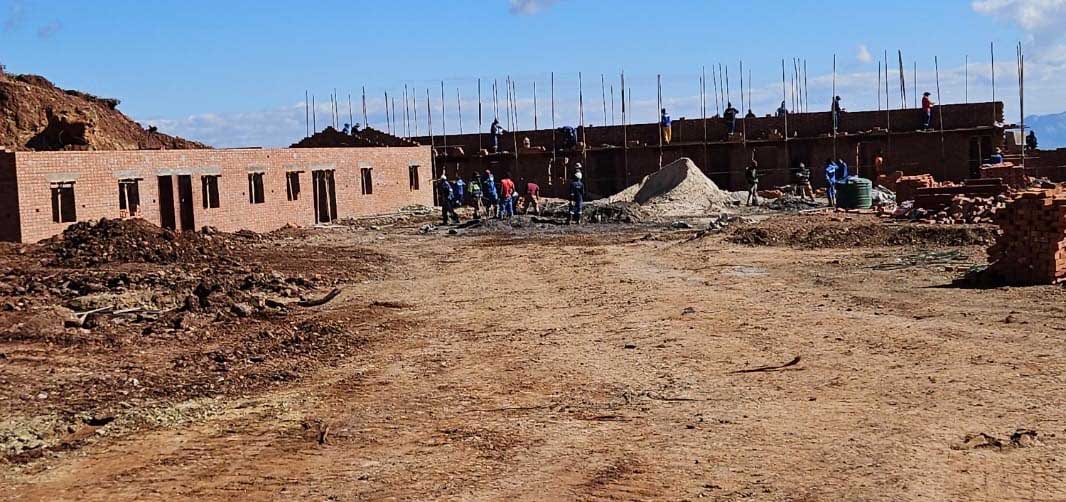
Samuel Kadungure
News Editor
AT 4.30am, the township still breathes in its sleep.
In Sakubva’s Chinyausunzi, a solar lamp flickers against a corrugated wall. The air is heavy with last night’s sadza, the metallic sting of cold water in a tin basin, and the hush of five girls folded into a room the size of a kombi.
Tariro Maseko’s alarm buzzes.
She kills it before it wakes the others. Her skirt, scrubbed by hand and dried in the dark, clings damp against her knees.
Her backpack carries three borrowed textbooks and an empty lunch box. No food. No fare.
Outside, the road to college stretches 10 kilometres of broken streetlights and dust.
“If I do not walk fast, I will miss the first lecture. If I run, I arrive with no brain left. By 8am, I am already tired,” said Tariro, her voice worn smooth by routine.
She is only 20, studying Accounts at a local college. And every morning, she is already losing.
This is the arithmetic Mutare’s students do before calculus: The sum of distance and dignity. The subtraction of sleep, safety, and choice.
For years, thousands of students at Mutare Polytechnic, Marymount Teachers’ College, Africa University, Manicaland State University of Applied Sciences (MSUAS), Magamba Vocational Training Centre, Mutare Teachers’ College, and countless private colleges have lived at the city’s edges — backyard shacks in Sakubva, single rooms in Tsvingwe, Dangamvura, Chikanga, or crowded flats in low-density suburbs where taps run dry and landlords knock at night.
Some live 15 metres from a desk. Others, 15 kilometres.
About 15 hours a week are spent walking, not reading. The gap between enrolment and graduation is measured, not in grades, but in rent, bus fare, and what students call three pieces of gold — a plate of sadza, a dollar for the kombi, and a night without a hand on your door.
It is the quiet crisis no prospectus prints.
Blessing Tandi is 21.
He studies Civil Engineering. He also sits on an upturned paint bucket in a windowless Sakubva room because there is nowhere else. The walls smell of damp cement and cooking oil.
“My cousin dropped out. She could not keep paying rent. An older man said he would help. Three months later she was pregnant. Now she sells airtime at the robots,” he said, his hands trembling, not from cold.
“That is what it costs. Three pieces of gold — a meal, bus fare, and a night without cold.”
The cost is not always money.
In 2021, Fortunate Mwenzva (29), in his final year at Marymount Teachers’ College, arrived late in Mutare from Harare, where he had been selling quelea birds — ngozha — to raise fees.
Searching for transport to Chakohwa before dawn, he was attacked in Sakubva by machete-wielding robbers. One blow to the head. One to the eye. He died at Victoria Chitepo Provincial Hospital.
In 2018, The Manica Post reported five men who ambushed two unsuspecting Mutare Polytechnic students, gang-raped them, and stole property worth US$1 200.
In 2025, two student teachers lodging in Chinyausunzi, Sakubva, were woken at 11.30 p.m. by a man wearing only a balaclava, holding a knife. He took US$36. Then he told them to undress.
“He masturbated and raped one of the complainants,” said acting Manicaland provincial police spokesperson, Assistant Inspector Wiseman Chinyoka. The man left bleeding.
The community whispered a word that does not appear in police dockets – ritual.
“We were scared,” said Mrs Clara Chiriseri, a neighbour who still lowers her voice when she talks about it.
“Naked with only a monkey hat. Bleeding during the act. Maybe he wanted to use the students for something. It is so scary,” she said.
Counsellors near the city’s three colleges do not use the word scary. They use numbers.
Sexually transmitted infections (STIs) spike each semester.
“We bury dreams in silence. When your body becomes a transaction, morals do not just slip. They fracture,” said one student health worker, who asked not to be named.
And on the slopes of Mount Sinia, 700 metres of steel and glass are being laid out like a counter-argument.
From the road, Mount Sinia looks wounded.
For seven years, the 50-hectare stretch in Ward 22, Mutasa South, was an open cut.
After the Infrastructure Development Bank of Zimbabwe (IBDZ) pulled funding in 2018 during a policy shift, about 800 illegal miners moved in.
They left trenches, rubble and rumours.
When engineers from Golden Cube Corporation arrived early this year, they found more vandalism than ground.
Two weeks ago, journalists were taken on a media tour.
They expected clandestine shafts. They found survey pegs and engineering drawings.
Soil and water samples taken on site came back clean — no gold ore, no mercury, no cyanide.
The heaps being moved were not for treasure. They were for foundations.
“People feared the worst because of the history,” said landowner, Mr Max Chard, standing beside a retaining wall that will shore up the north-facing slope.
“This property does not touch Christmas Pass Mountain, or Cecil Kop Nature Reserve, or the Hillcrest Group of Schools. It has been titled since 1945. The Department of Physical Planning has issued 18 subdivision permits. This is regulated. This is for students.”
Now the sound is different. Excavators growl where picks once chipped.
More than US$5 million in plant and equipment has been deployed. Gravel is being compacted. Access roads are being opened. Platforms are rising for 150 temporary employee housing units.
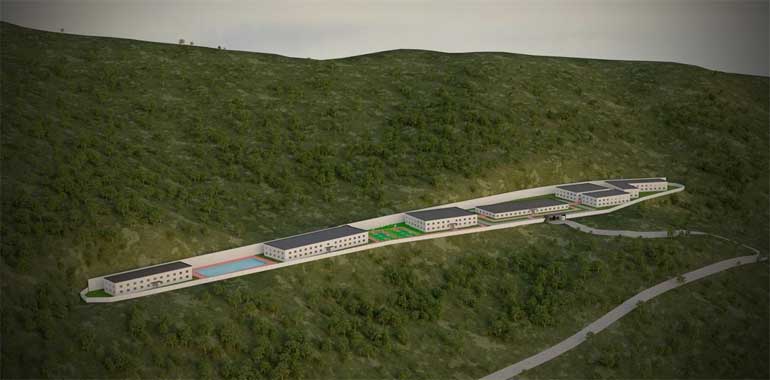
The plan is a US$15 million student village.
Within two years, 500 beds. Not just rooms, but a one-stop hub – solar-powered units, food courts, a library, pharmacy, laundromats, Wi-Fi that does not depend on a landlord’s mood. Commuting covered. Meals priced for a student loan, not a side deal. The design bends into the mountain instead of fighting it.
“Students from Mutare have been housed in poorly ventilated and squalid lodgings, and this is what the doctor has prescribed as a lasting solution: high-speed internet, clean water, uninterrupted power, safe rooms, beds, health facilities, and a library. All these create a convenient learning environment under one roof, at an affordable price, secure and inspiring,” he said.
Low, modular blocks in muted earth tones. Roofs angled for a solar farm. Bio-digesters to turn waste into heat. The structures are light, earthquake-resistant, fast to assemble – a deliberate choice in an area with a mining legacy and tremors that travel up from the Indian Ocean fault line.
Clean water will come from the Odzani pipeline, which cuts straight through the property en-route to Mutare. Trees will be replanted across the slope, stitching the scar closed with indigenous green.
For the Second Republic, it ticks boxes in Vision 2030 and National Development Strategy (NDS2).
For Mutare’s City master plan, it is a test case for smart, affordable housing and public-private partnerships.
Minister of State for Manicaland Provincial Affairs and Devolution, Advocate Misheck Mugadza said demand for student accommodation in Mutare, is high and requires urgent private and public investment.
He attributed the surge to new tertiary institutions built under President Emmerson Mnangagwa’s education drive, noting that colleges cannot house all enrolled students.
“The demand for student accommodation in Manicaland, and around Mutare in particular, is very high. We have tertiary institutions that have come up and been built as a result of the good work that President Mnangagwa is doing in the education sector.
The demand is high and tertiary institutions cannot accommodate all the students they enrol,” said Minister Mugadza, welcoming plans for a new student complex at Mount Sinai, describing the investment as a game-changer.
“We are grateful to any investors that come to put up student accommodation. We are glad with the developments that we have been told are taking place at Mount Sinia. The site is centrally located among the city’s five institutions of higher learning, all of which are struggling to house students on campus. Those who fail to secure places on campus will be accommodated there, which is not far from their learning centres,” said Minister Mugadza.
For Tariro, it is simpler. The hours she can get back. “If I stay there, I save three hours a day,” she said, counting on her fingers in the dark before dawn. “That is 15 hours a week. I could read. I could sleep. I could just be normal,” she added looking at her empty lunch box.
“I am tired of being brave all the time. We do not want luxury. We want a chance. If you know you have a bed, you can dream past tomorrow,” she added.
The village will not lecture students about morality. It will remove the price tag. It will replace a backyard shack where water is rationed and safety is luck with a door that locks and study desk with a lamp.
Construction will create hundreds of jobs, jolt local suppliers, and signal to other investors that Mutare can deliver. But the real metric is not concrete poured. It is measured in the space between a 4:30am alarm and the first lecture. In the distance between a squalid room and library. For years, Mutare’s students have been told to endure. On Mount Sinia, endurance is finally being engineered into something else – arrival.
What world are we creating when a child’s shelter is measured in flesh?
On this red soil, the city is trying to answer with bricks, not sermons. With a key, not a compromise. When the first 500 walk through those doors, Mutare will not just gain a complex.
It will get back the hours, the grades, but the young people it was losing to the night.