Lovemore Kadzura
Post Reporter
FOR 26 years, the fields that once sustained livelihoods at Mutema Irrigation Scheme in Chipinge District lay largely idle, their potential to support agricultural production and improve household incomes held back by the destruction caused by Cyclone Eline in 2000.
The devastating cyclone, which wreaked havoc across parts of Manicaland Province, damaged the irrigation infrastructure, leaving farmers unable to fully utilise the scheme for more than two decades.
For generations of farmers who depended on the scheme, the prolonged period of inactivity meant lost opportunities, reduced agricultural productions and uncertainty about their livelihoods.
However, the story is now changing, with the rehabilitation of the scheme breathing new life into the farming community, and restoring hope among farmers who almost gave up on seeing the infrastructure operational again. For farmers, the return of irrigation farming represents more than the restoration of damaged infrastructure. It offers an opportunity to move away from dependence on increasingly unpredictable rainfall and embrace year-round agricultural production.
Mrs Juliet Mafure said the revival of the scheme is expected to give farmers renewed confidence to invest their time and resources in farming knowing that they have access to a more reliable source of water.
“We are grateful for the revival of this scheme which has been idle for 26 years. The scheme had turned into a forest because of inactivity. This was the main source of our livelihoods. We can now get money and food from the scheme. We used to pay university tuition from tomatoes proceeds. We have been remembered.
“After the collapse of the scheme, we resorted to buying from other schemes, and selling the produces by the roadside to motorists and passersby. The earnings are not enough to sustain a better lifestyle,” she said.
Mr Rodden Dhliwayo said with the latest irrigation technology, they are poised for record production as they were known for before.
“This scheme started in 1932, and was a source of survival for the community. The scheme started with canal irrigation system, but the soil texture here does not favour such. In 1970, the sprinkler system was introduced, and it improved our yields especially tomatoes. Everything came to a halt in 2000.
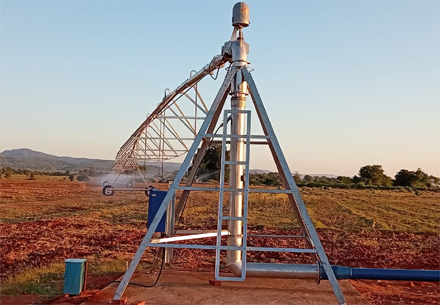
“Now the scheme has state-of-the-art centre pivots, and this is the real development we want. We can now produce abundantly and have cash. We are setting up committees to manage and protect this modern equipment against theft and vandalism. We want to take back Mutema back to its glory days of production,” said Mr Dhliwayo.
Manicaland Provincial Irrigation Engineer, Engineer Tendai Chimunhu, said the scheme was revamped with latest irrigation technology that ensure maximum and efficient use of water to achieve better yields per hectare. The farmers will be contracted by the Agricultural and Rural Development Authority (ARDA).
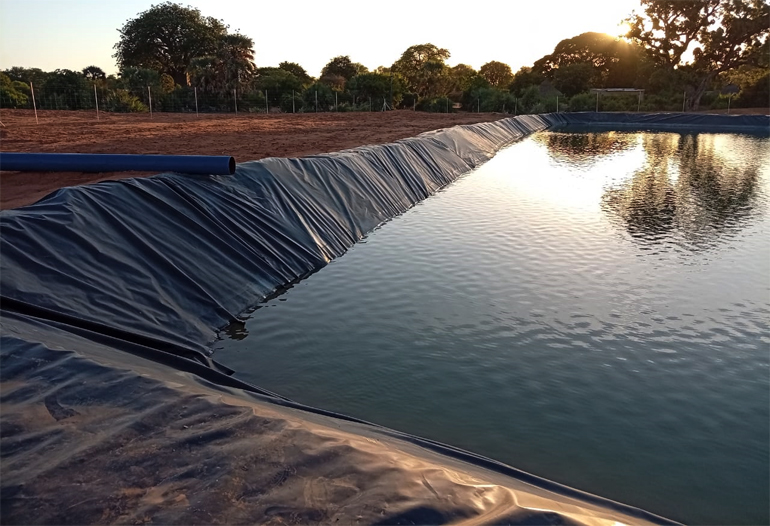
“Mutema Irrigation Scheme Block One was financed by the AMA. There was rehabilitation of two boreholes, installation of two transformers and an electricity line. A night storage dam was constructed where water pumped from the borehole is stored into. There is booster pump which picks the water from the dam to the two centre pivots.
“Apart from the centre pivots, there are semi portable sprinkler systems, and the whole block of 90 hectares is being irrigated. The scheme was affected by Cyclone Eline in 2000, two boreholes were swept away and attempts to resuscitate the project faced water challenges. Currently there are 142 farmers benefiting from the scheme.
“The land had been overgrown by vegetation because it was no longer being utilized, and farmers are now at 75 percent land clearance. Their crop is going to be supported by Agricultural and Rural Development Authority (ARDA) as per the Vision 30 Accelerator Model. ARDA is going to give them inputs that will cover 90 hectares,” said Engineer Chimunhu.
AMA administers the Grain Import Levy on behalf of the Government in accordance with Statutory Instrument 87 of 2025.
Proceeds from the levy are channelled into the Agricultural Marketing Fund to support strategic agricultural development initiatives, particularly irrigation development and rehabilitation.
To date, the Fund has supported the rehabilitation and development of 42 irrigation schemes covering a combined 2 720 hectares across the country.
Minister of State for Manicaland Provincial Affairs and Devolution, Advocate Misheck Mugadza, said the revival of the scheme and others is key in securing food and nutrition security especially as the country is now in the midst of a devastating El Nino-induced drought.
“The El Nino phenomenom has reminded us how vulnerable rain-fed agriculture can be. It is associated with periods of below-normal rainfall, prolonged dry spells and higher temperatures. These can compromise planting, reduces yields, deplete household food stocks and threaten livestock and incomes. The effects are felt far beyond the farm gate, food become expensive, local businesses lose activity and vulnerable households bear the greatest burden.
“We cannot control the weather, but we can strengthen our ability to withstand its shocks. That is why irrigation is not simply an agricultural investment, it is an investment in climate resilience, rural prosperity and the dignity of our people. With dependable water supply, efficient irrigation systems and sound water management, farmers can plan production with greater confidence, grow crops outside the traditional rainy season and improve the reliability of food supplies,” he said.
He called for the orderly operation of schemes with careful planning on crop selection, and encouraged a market-led production to avoid scenarios where famers suffer losses due to flooding of produce on the market.
“For Manicaland, this is especially important. Our province has diverse agricultural potential, but potential must be translated into actual harvests. Irrigation allows us to move from seasonal and uncertain production towards planned, commercially viable, and where conditions allow, year-round agriculture. Schemes such as Mutema must therefore be viewed, not merely as an infrastructure projects, but as productive centres that support households, stimulate local enterprise and strengthen provincial food systems.
“Meeting provincial needs requires deliberate planning. We must understand the demand for staple grains, horticultural produce and other priority commodities across our districts.
“We must align crop selection, irrigation schedules, extension services, aggregation, storage, transport and market linkages to that demand. We should measure success, not only by the hectares equipped for irrigation, but by hectares actually cultivated, yields achieved, tonnes delivered to market and incomes earned by farmers,” said Minister Mugadza.