admin
adminBulawayo Bureau
Mutendi High School from Masvingo province has won the National Business Case Competition organised by Emergination Africa.
Two schools from the Matabeleland region, Tongwe High School (Beitbridge) and Eveline Girls High School (Bulawayo), also showed their innovative acumen after coming out second and third respectively in the annual competition
Emergination Africa is an organisation that empowers learners and educators to turn their passion for entrepreneurship into valuable business ventures.
This is achieved through training programmes, venture accelerators, and communities that enable them to create economic opportunities and employment in their communities.
The event, which attracted a total of 10 schools from each of the country’s provinces, was held in Bulawayo yesterday.
The main objective is to help learners implement technology-enabled skills development programmes focused on identifying, nurturing, and channelling learners from the classroom to the national workforce in line with the Ministry of Primary and Secondary Education’s competency-based education.
Eveline High School learners designed a web which is meant to provide internships for learners so that they gain the necessary working experience which would come in handy upon completion of their studies.
Tongwe High School developed a sports application which when fully operational, will store statistical data for each athlete competing in any competition in the country.
This follows their observations that Zimbabwean athletes were continuously not attracting foreign interest largely because there was no database which could be used to track down an athlete’s performance, something which also affects local competitions like the Zimbabwe National Youth Games (ZNYG), a Sports and Recreation Commission brainchild.
For their efforts, the two schools’ participating learners received US$25 each and certificates while the schools received large printers.
Mutendi High School came up with a concept to develop biodegradable utensils which the judges felt was the best innovation. Their learners pocketed US$50 each.
Emergination Africa executive director, Mr Takudzwa Machirori said they will financially capacitate the winning schools with US$5 000 set aside as seed money for the school that comes first.
The competition is in its fifth year and since its inception, learners from various schools across the country have set up five companies which are either in full operation or at the final stages.
Milton Boys High School in Bulawayo has a breakfast cereal-making project that is at its advanced stages of production.
The headmaster, Mr Similo Ncube was also awarded a special prize for championing entrepreneurship education at his school.
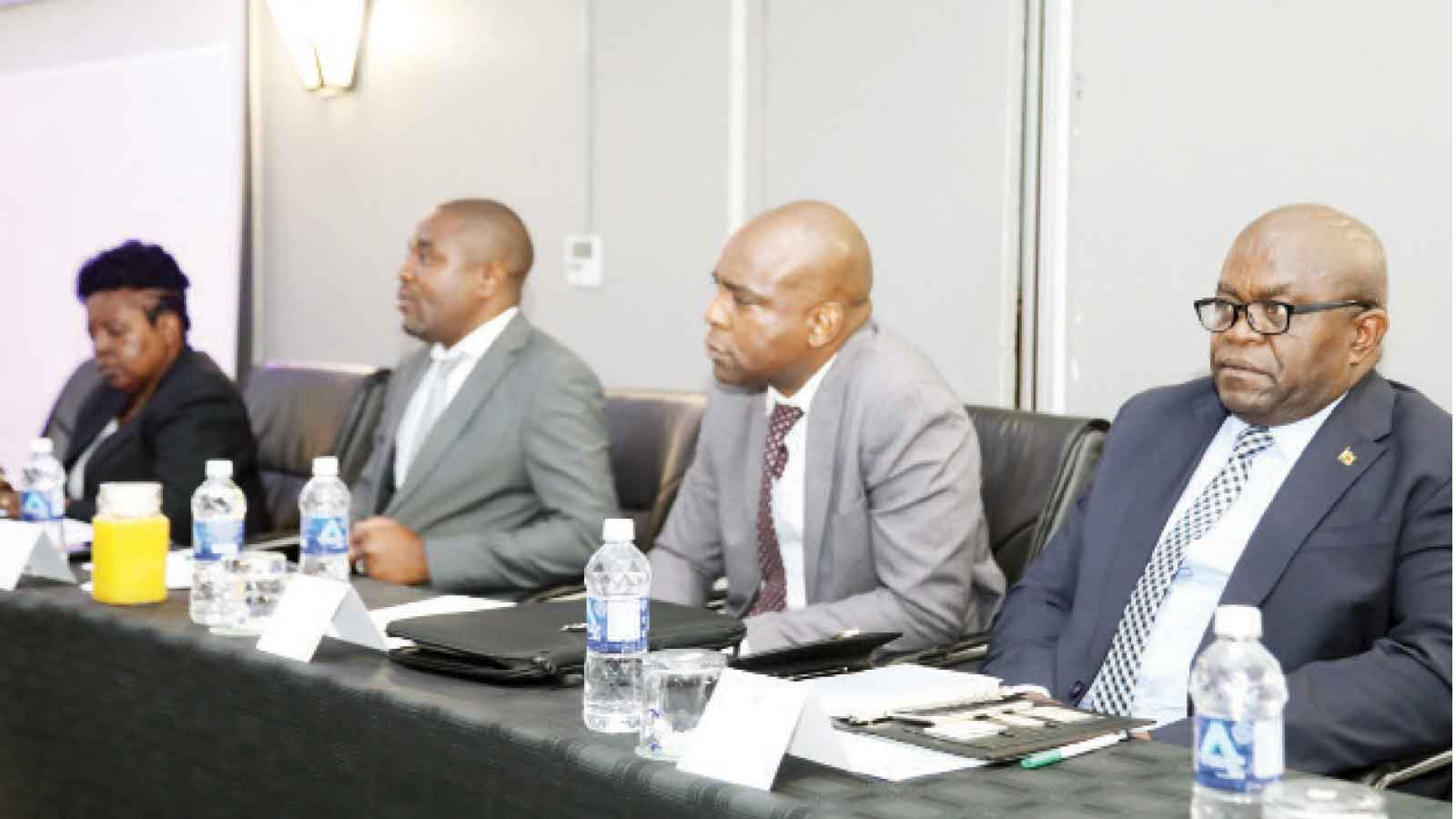
In her keynote address, acting Permanent Secretary in the Ministry of Primary and Secondary Education, Ms Kwadzanai Nyanungo, who was represented by the Provincial Education Director for Bulawayo Metropolitan Province, Mr Bernard Mazambani, said the country’s future will be characterised by its ability to develop a nationally and globally competitive workforce equipped with the critical skills.
“As learners let`s acquire and sharpen our skills for us to live a meaningful life after school as we contribute to the development of our country, Zimbabwe. As educators who operate in a hyperactive connected world, we have to continue to shift our mindset in view of our nation’s human capital development in contrast to global trends,” said Ms Nyanungo.
“We must refrain from merely developing our learners to harness opportunities that exist around them, but instead, we must develop them to harness opportunities on the global playing field while keeping our nation’s interests and sovereignty at heart.”
Ms Nyanungo said in line with the competency-based curriculum, the Ministry of Primary and Secondary Education, working with Emergination Africa will ensure that education transcends theory into practical competencies development.
“The future of Zimbabwe set out by His Excellency President Mnangagwa of becoming an upper-middle income nation by the year 2030 and beyond is implicitly hinged on the work of our Ministry,” she said.
“We must not take a short-term view of where Zimbabwe can be but instead look at the future of Zimbabwe in 2030, 2060 and beyond. For the very workforce and leaders that will be at the forefront of transcending our nation are currently in classes.”
Ms Nyanungo said the future workforce of Zimbabwe is directly under the purview of the Ministry of Primary and Secondary Education.
“We are one of the key ministries in the entire nation that has to continuously look forward and position the learners as job creators as well as for careers and opportunities of the future,” she said.


 Online Reporter