


 Online Reporter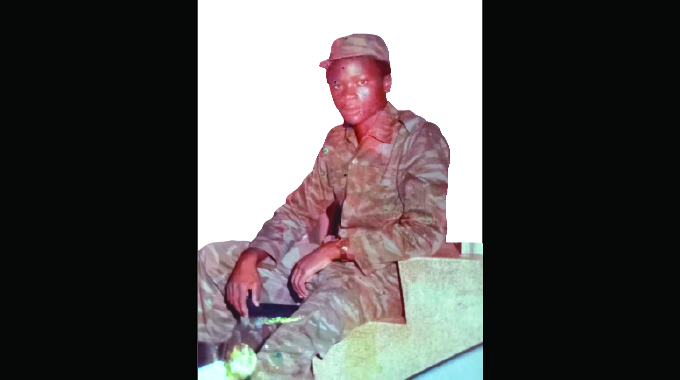
Chronicles from the 2nd Chimurenga
CDE CHARLES MAKHUYA developed a strong desire to liberate the country from colonial rule when he was still in primary school. However, his age and small stature proved to be a major stumbling block, as training instructors tried to discourage him from joining training. This week, the man who used the Chimurenga name Njabulo Moyo narrates his story to our Society Editor PRINCE MUSHAVEVATO.
**************************
Q: Could you begin by introducing yourself?
A: My name is Charles Makhuya. During the liberation struggle, I was known as Cde Njabulo Moyo. I was born on August 17, 1960, in Plumtree, into a family of six — four boys and two girls. Plumtree is where my mother comes from.
My father, originally from what he proudly referred to as Belgian Congo, Katanga province, belonged to the Lunda tribe and was a teacher by profession. He trained at Empandeni and taught in the surrounding communities. That is where he met my mother, who was originally from South Africa.
They got married in Plumtree and started a family. In 1966, they moved to Bulawayo after being transferred by the Roman Catholic Church to St Bernard’s Primary School. I began my education there, in Pumula. I started school in 1968 with Sub-A. At the time, if you failed Sub-A, you could not proceed to Sub-B, so I repeated the class in 1969. After that, I progressed through Grade One to Grade Seven at the same school.
Q: How were you introduced to African nationalism?
A: My introduction to African nationalism began when I was in Grade Six. We had a teacher at our school named Mr T.P. Ndlovu. He later became the principal of Hillside Teachers’ College and is now a doctor working in Harare under the education department.
I vividly remember an incident around 1973 when Mr Ndlovu, along with another teacher, addressed us, boys, in class 6C. He was happy that the Vietnam war had ended. At the time, we were fascinated by war stories and often played chikudo (horseplay), imitating battle moves we had learnt from stories mainly about German warfare.
Mr Ndlovu knew this and used the Vietnam war as a way to connect with us. He explained that the bombings and shootings in Vietnam had come to an end after a long, protracted struggle. That moment sparked something in me.
I was deeply inspired and began to develop ideas about war and resistance. I even fantasised about going to Vietnam or any part of the world experiencing conflict — I wanted to be part of something bigger. Little did I know that something was already brewing right here in Zimbabwe. After completing Grade Seven in 1976, I heard about the assassination of Jason Moyo. His death shook the community. The politicians and elders in our area were outraged and spoke passionately about avenging his death. They encouraged young people to rise up and join the liberation struggle. That was the turning point for me — the moment I truly understood what African nationalism meant and why it mattered.
Q: You can carry on.
A: They (politicians and elders) told us there were plenty of guns in Zambia and all we had to do was cross the border and use them to fight. I returned home (Plumtree) and left with some freedom fighters who had already inspired people in our village. I joined the liberation struggle via Botswana in April 1977, just before the Easter holiday. I travelled with my brother and two other young men. We crossed into Botswana and eventually made our way to Zambia. We stayed in Zambia from April until November.
I was very young at the time, but I quickly became known by everyone in one of the transit camps where Brigadier-General Ambrose Mutinhiri (Retired) was stationed. He was in charge of the entire camp, including the young recruits. He knew me by name and would often call out “Njabulo” to give instructions. During that time, another group arrived. They were heading to Mulungushi, and I nearly joined them. However, I was pulled out of that group because the commanders felt I was too young and did not qualify for training.
Q: How did you feel after that considering you were itching to join the war?
A: It hurt me deeply, but I never felt discouraged. I knew I had to be patient and find a way to convince them to let me go for training. If that did not happen, I was determined to find another route to join those heading for training. I was very small — arguably the youngest in our camp — so I understood their concerns. Eventually, I got my chance.
In November 1977, I became part of the first group of 400 recruits sent to Angola to replace the initial group of over 2 000 who had already gone for training. We were the first wave of a second group, also expected to reach over 2 000. We came from Nampulu and travelled via FC.
I nearly lost hope of going to Angola because Brigadier-General Mutinhiri kept insisting that young boys should not be sent for training. He always instructed us to join the regular main parade, at the transit camp, instead. But one day, something unexpected happened.
A Cuban driver ferrying comrades to Angola shouted at me, “Machito (little boy), come and join us!” I did not think twice. I ran to the truck, opened the door and hid inside until departure time. When the convoy finally left, I was still anxious. I feared they would at some point use a register to screen us again, but that did not happen. I successfully travelled with the group.
Next week, Cde Makhuya will share his experiences from his journey to Angola and the things that shaped his role in the liberation struggle.


 Bongani Ndlovu