Online Reporter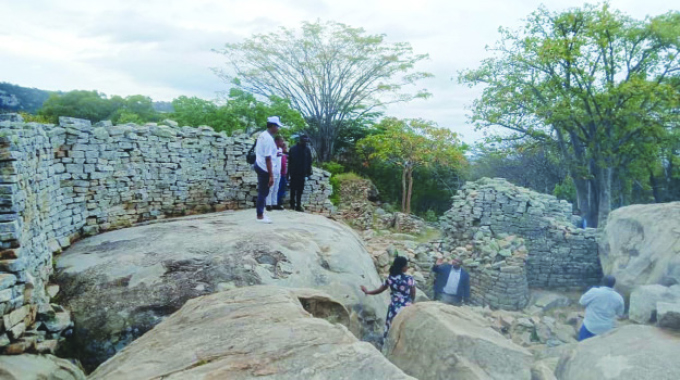
Victor Maphosa-Features Writer
Nestled 5km from Mutoko Centre in Mashonaland East Province, an ancient stone city lies in quiet dignity, its weathered walls whispering stories of pride, betrayal, and determination.
These are the Mutoko Ruins, a culturally significant but often overlooked heritage site that echoes the architectural brilliance and spiritual depth of a civilisation lost in the mists of time.
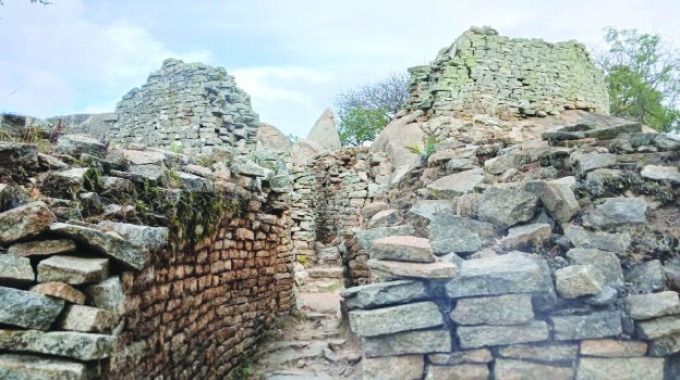
Like the iconic Great Zimbabwe Monument, the Mutoko Ruins are constructed entirely of dry stone. No mortar binds the stones, yet they have endured centuries of the vagaries of nature.
They remain intact, testifying to the ingenuity of Zimbabwe’s pre-colonial societies.
Much more than a cluster of relics, this forgotten stone settlement stands as Mashonaland East’s own “little Great Zimbabwe,” deeply embedded in Zimbabwe’s broader cultural narrative.
The ruins are believed to have been home to Chief Makate of the Soko totem, his extended family, and loyal subjects between 1400 and 1700 BC. His realm was not only a fortified settlement, but also a centre of spiritual and military power, characterised by strategic planning and cultural sophistication.
Chief Makate’s complex featured two main entrances: one for visitors to undergo vetting and another, more private, entrance leading directly to the chief’s residence.
A high hill to the west of the settlement served as a lookout point, manned by armed sentinels to guard against any surprise attacks. Here, the terrain offered both a vantage point and a line of defence, forming a crucial part of a tightly knit security system bolstered by traditional medicines.
According to oral history, Chief Makate’s people were adept hunters and gatherers, living in harmony with the land and the spirits that governed it. Therefore, the site was more than a residential area, for it was sacred ground.
Even today, spirit mediums pay pilgrimage to the ruins, seeking communion with ancestral forces that continue to guard its sanctity.
To truly understand the significance of the Mutoko Ruins, one must explore the legend surrounding the rivalry between Chief Makate and Chief Nehoreka; a narrative passed down through generations and fiercely protected by custodians like Mr Wonder Karumazondo.
“These ruins were built by Chief Makate,” Mr Karumazondo explains on a recent visit by this publication.
“He lived here with his many wives, children, and subjects. His settlement stretched eastward with beautifully crafted huts, now long vanished but remembered in oral traditions.”
The peace and prosperity of Chief Makate’s domain drew the attention of Chief Nehoreka, a rival leader from a drought-prone area near Mozambique.
Unable to sustain his people due to chronic water shortages, Chief Nehoreka sought refuge in the greener lands under Chief Makate’s stewardship. Accompanied by his younger brother Mapakwe, he approached Makate with a request for settlement.
Chief Makate, in a gesture of goodwill, granted them land. But soon, tensions flared. The piece of land was deemed insufficient by Chief Nehoreka, who began coveting more of Makate’s rich territory.
When diplomacy failed, he resorted to war, only to be soundly defeated and forced to retreat.
However, Nehoreka was not a man to accept defeat easily.
Humiliated and desperate, Chief Nehoreka hatched a plan that would exploit Makate’s greatest strength—his trust. His beautiful sister, Njapa, renowned for her beauty and intelligence, became the centrepiece of his strategy.
“Nehoreka returned with a peace offering,” Mr Karumazondo recounts. “He brought his sister Njapa to Chief Makate, proposing that the two unite in marriage and end their hostilities.”
Makate accepted, and Njapa became not just his wife, but a trusted confidante. Unbeknownst to him, she was also a spy.
The Mutoko Ruins are believed to have been home to Chief Makate of the Soko totem, his extended family, and loyal subjects between 1400 and 1700 BC.
With time, she gained access to Makate’s secrets; his traditional medicines, his military strategies, and even the locations of sacred items. Blinded by love, Makate shared all, unaware of the betrayal brewing beneath his own roof.
Eventually, Njapa vanished, taking the sacred medicines with her. She returned to her brother and revealed every detail he needed to conquer Makate’s realm.
The final assault
Armed with spiritual knowledge and an invigorated army, Chief Nehoreka launched his final assault. They approached Makate’s domain at dawn, accompanied by a rooster—a creature that played an unlikely but vital role in the story.
“In those days,” Mr Karumazondo explains, “a rooster’s crow was a territorial marker. There was only one permitted to crow in Makate’s realm. When the intruding Nehoreka’s rooster crowed in response to Makate’s, the chief knew something was terribly wrong.”
Rushing to retrieve his protective charms, Makate found them gone. Realising the imminent danger, he sounded the alarm for his people to flee. The escape route was a sacred cave within the ruins, still visible today, but partially sealed by a large boulder.
Makate and his followers escaped through the cave and fled eastward, reaching a place called Chidye near Chisambiro in Mutoko. There, legend says, a mystical event occurred.
He is said to have struck a rocky outcrop or dwala, with the tail of an unknown animal, causing the earth to split. A vast chasm opened, and Makate, along with his family, livestock, and treasures, vanished into its depths.
As Nehoreka’s army approached, Makate looked back and declared: “Hongu wandikunda nhasi, ino yava nyika yako, asi kwandava kuenda haukwanise kunditevera.” (Yes, you have defeated me today, this land is now yours. But where I am going, you will never follow me.)
He disappeared, and the earth closed behind him.
The sacred cave and its mystique
To this day, the cave believed to be Makate’s escape route is shrouded in taboo.
Entry is restricted. Only spirit mediums are permitted to enter, and only if they are authentic. Fakes, it is said, face dire consequences. There are chilling stories of individuals who entered the cave and were never seen again.
Mr Karumazondo warns: “This place is not for mischief. Some people have tried to use the site for unholy acts like intimacy or disrespectful conduct. They are often met by large snakes, only visible to them.”
This aura of mystery has helped preserve the sanctity of the ruins, but it has also stymied broader public engagement with the site. Nonetheless, the legend lives on: part cautionary tale, part national treasure.
A sleeping giant of cultural tourism
Despite its rich history and mystique, the Mutoko Ruins remain underdeveloped. Overgrown paths, lack of signage, and minimal tourist facilities speak to a site that has yet to receive the investment and attention it deserves.
Mr Bernard Kasekete, owner of Gohori Resort in Mutoko, sees tremendous potential.
“This is our heritage,” he insists. “Mutoko Ruins are as important as Great Zimbabwe or Khami. They reflect our rich culture, our past, and our strength as a people. What we need is restoration, marketing, and cultural programming.”
Mr Kasekete envisions a future where the ruins are the epicentre of cultural exchange programmes, guided tours, and spiritual retreats.
“We have sacred rivers, caves, and mountains all around Mutoko,” he adds. “These are beautiful. We say to people from across the globe, please visit Mutoko and enjoy every moment. We are proud of our Mutoko, and we will surely contribute to the tourism sector in a big way.”
Indeed, Mutoko has stories too—powerful, unforgettable ones.
In reclaiming such heritage sites, Zimbabwe strengthens its post-colonial narrative; one that acknowledges that civilisation did not arrive with white colonisers. Rather, it was already here, stone-upon-stone, spirit-upon-spirit, and story-upon-story.
The architectural style of the Mutoko Ruins aligns with that of Great Zimbabwe and Khami, reinforcing the argument that these were interconnected centres of power and commerce across the plateau.
The dry-stone technique—precise, calculated, and artistic—speaks volumes about the engineering skills of early Zimbabwean societies.
But more than engineering, these are spaces of memory. They are monuments to resistance, resilience, and the will to remain, even in spirit, on land under siege.
Toward a cultural renaissance
As the Zimpapers crew descends from the site, using a rocky path that calls for alertness and caution, collective memory lingers on.
As the sun sets behind the high ridges surrounding the Mutoko Ruins, the warm light washes over ancient stones, casting long shadows that seem to move like spirits of those who once called this place home.
The story of Chief Makate is not just a tale of loss, no! It jolts memory to what endures: identity, legacy, and the duty to remember.
For those who walk the rocky paths with reverence, who listen closely to the whispers of wind through the ruins, the message is crystal clear: Zimbabwe’s past is not buried. It is alive, waiting to be acknowledged, respected, and revived.
And so Mutoko stands, not in the shadow of Great Zimbabwe, but as a proud sentinel of its own greatness; a stone centre with a voice, calling its people to remember who they are.