Online Reporter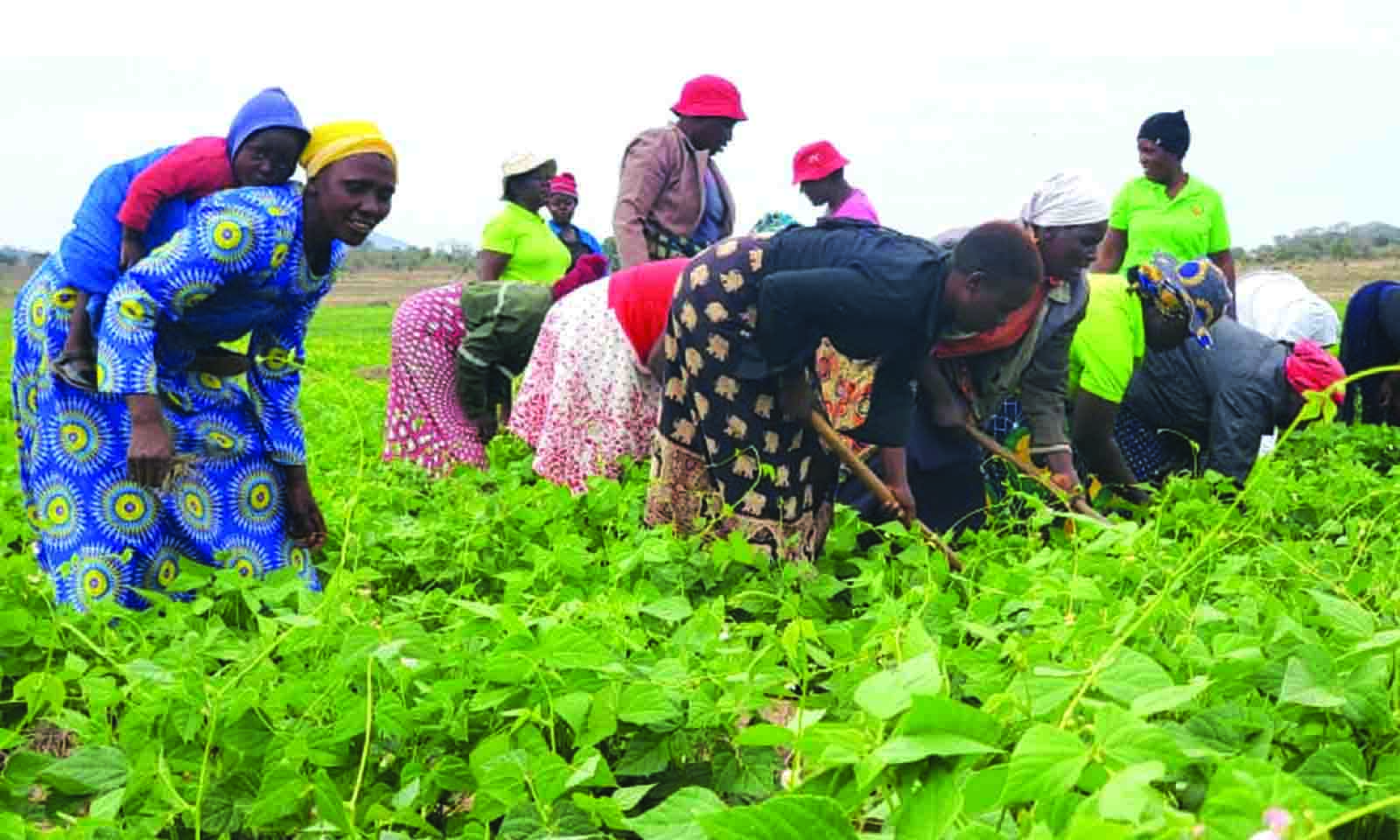
Theseus Shambare
Features Writer
BEFORE dawn, Mwenezi in Masvingo Province smells of wet earth and diesel.
In the faint half-light, Eurita Mahove bends beside the irrigation line, her gumboots sinking softly into the damp soil. She twists open a steel valve and water hums through the pipes — clear, cold and alive.
“This water is our miracle,” she recently shares with The Herald, smiling as the sprinklers come alive with a rhythmic hiss.
“We used to pray for rain. Now the rain comes from our own hands.”
Just a few years ago, Mwenezi District, one of Zimbabwe’s driest and most climate-vulnerable areas, was a place of brittle hopes and empty granaries.
Families survived on food aid and faith. The landscape was cracked, parched and silent, save for the whispers of wind through dry maize stalks.
Today, lush green fields stretch across what was once a dust bowl, thanks to the Pikinini-Jawanda Irrigation Scheme, a community-built project that has turned drought into opportunity.
Across Southern Africa, irrigation has become the heartbeat of a shared regional vision, a vision of food security without borders.
From Zimbabwe’s Mwenezi to Malawi’s Shire Valley and Zambia’s Luapula plains, governments and regional blocs are expanding irrigation as the surest path to climate resilience and trade-led growth.
Only seven percent of arable land in Southern Africa is currently irrigated, compared to over 40 percent in Asia, according to regional data.
Yet, this small fraction sustains millions and underpins agricultural exports across the COMESA region, where agriculture employs nearly 60 percent of the population.
Now, through the COMESA Regional Agricultural Investment Plan (RAIP) and the SADC Regional Water Policy (2018–2030), the region is determined to scale up irrigation coverage by 20 percent by 2030 — a goal that could redefine food systems across member states.
Speaking in Rome, Italy on the sidelines of the 53rd Session of the Committee on World Food Security (CFS) recently, Lands, Agriculture, Fisheries, Water and Rural Development Deputy Minister Vangelis Haritatos, underscored how irrigation remains central to Zimbabwe’s growth.
“Irrigation is no longer a luxury,” he said.
“It is a necessity for our national survival and regional integration. What we are seeing is that the challenges we face — droughts, erratic rainfall, water stress — are shared across borders. The solutions, too, must be shared.”
He added that Zimbabwe aims to have 500 000 hectares under irrigation by 2030, supported by both Government and private investment.
“So far, we have revived close to 220 000 hectares, and the productivity gains are clear — up to 35 percent higher yields compared to rain-fed systems,” he said.
The transformation is visible in places like Pikinini-Jawanda, where over 400 households now farm commercially, selling produce through markets in Beitbridge, Gwanda and Masvingo.
Pikinini-Jawanda relies on centre-pivot systems covering roughly 40–50 percent of the land, with semi-portable sprinklers irrigating the remainder.
Water is abstracted from Manyuchi Dam, built on the Mwenezi River, using an innovative floating pontoon pump that adjusts to water levels, ensuring reliable supply even during dry periods.
“This system allows us to irrigate our crops to maturity,” said Chairperson Chizivano Shava.
“Before, we prayed for rain. Now, we manage it ourselves.”
Supporting infrastructure includes a switch room, one kilometre power main and approximately 9 000 metres of irrigation pipeline, making the scheme a model of climate-smart agriculture.
Farmers’ success is now spilling across borders, one seed at a time.
Under contract with private seed companies like Seed Co, they grow certified sugar-beans destined for markets beyond Zimbabwe.
“We are told our beans could go to Zambia or Mozambique,” said Agnes Zhou, proudly holding up a handful of seeds. It feels good to know someone in another country might plant something we nurtured here.”
This cross-border trade is made possible through COMESA’s Seed Harmonisation Programme (COMSHIP), which standardises certification across member states.
According to Engineer Edwin Zimunga, chief director in the Ministry’s Department of Agricultural Engineering, Mechanisation and Farm Infrastructure Development, such programmes turn integration from talk into tangible progress.
“A seed grown in Mwenezi can be planted in Malawi under the same regional certification,” he said.
“That is how integration becomes real — one seed, many soils.”
Regionally, the COMSHIP framework has boosted cross-border seed trade by 12 percent since 2020, ensuring that improved varieties reach more farmers faster.
The Mwenezi River, on which Manyuchi Dam sits, is part of the Limpopo Basin, a river system shared by Zimbabwe, Mozambique, Botswana and South Africa.
What happens upstream echoes downstream.
“Water does not carry passports,” said Eng Zimunga. “When we use it wisely here, we honour our neighbours too.”
Through the Integrated Water Resources Management (IWRM) framework, COMESA and SADC countries are aligning irrigation policies, investing in joint water monitoring and preventing cross-border disputes.
Southern Africa shares 15 major transboundary river basins and about 70 percent of surface water resources flow across national borders.
Deputy Minister Haritatos said Zimbabwe is fully on board.
“We are developing systems that promote efficient abstraction and equitable sharing. Water cooperation is the truest form of regional solidarity.”
Beyond the sprinklers and pivots, integration lives on the road.
Zimbabwe’s surplus grain and pulses now find markets in Zambia, Mozambique, Malawi and the Democratic Republic of Congo — transported through the Beira and North–South Corridors, flagship trade routes championed by COMESA.
“When our beans leave Mwenezi and end up on a plate in Malawi, that is COMESA’s Free Trade Area in motion,” said Professor Obert Jiri, Permanent Secretary for Lands.
“Integration is not a slogan — it is a truck crossing a border with food that feeds another family.”
Earlier this year, Zimbabwe and Zambia agreed to establish a Common Agro-Industrial Park under COMESA’s Regional Industrialisation Strategy, a milestone that will process and add value to shared agricultural produce.
Mwenezi’s beans could one day be canned or packaged there for export across the region.
According to COMESA, intra-regional agricultural trade grew by nine percent between 2020 and 2024, driven by coordinated irrigation and logistics investments.
The heartbeat of this transformation belongs to women and youths.
Out of the 300 farmers at Pikinini-Jawanda, nearly half are women, many of them widows who once depended on aid.
Hungwe Chabata (53) walks between green rows with quiet confidence.
“Before this, I lived on piece jobs, now I sell vegetables and pay my own bills. I am no longer a beggar. I am a farmer.”
Young people are also stepping up; running pumps, maintaining sprinklers and managing cooperative sales.
“We used to dream of leaving for South Africa,” said Blessing Mupoperi, 24. “Now we want to stay and grow our own future here.”
Their participation reflects COMESA and SADC’s Gender and Youth Empowerment strategies, which seek to make regional growth inclusive.
Southern Africa is warming faster than the global average.
The region loses an estimated two to three percent of gross domestic product annually to droughts and climate shocks.
UNDP Resident Representative Dr Ayodele Odusola calls Pikinini-Jawanda “a model of how climate finance can turn vulnerability into self-reliance.”
“This is resilience built from the ground up,” he said. “Local innovation meeting regional ambition.”
In Rome, Deputy Minister Haritatos, said “Climate adaptation is not a luxury — it is an obligation. Every drop of water saved through irrigation efficiency contributes to regional stability.
“That is why we’re partnering with the United Nations Food and Agriculture Organisation (FAO), IFAD and the African Development Bank to scale such models across borders.”
Even miracles have obstacles as electricity cuts interrupt pumping schedules and input prices bite. Transport costs eat into profits as well.
“We need more fencing, better storage and more training,” said chairperson Shava. “But the hardest part is behind us. We have moved from hope to harvest.”
At regional level, implementation of trade and water-sharing protocols remains uneven.
Still, progress is steady.
“Integration takes time,” said Deputy Minister Haritatos. “But the direction is clear. Shared infrastructure, harmonised standards and open markets — that is where the future lies.”
When Zimbabwe launched its Accelerated Irrigation Rehabilitation and Development Plan, it declared irrigation the heartbeat of national food security.
Yet its rhythm extends beyond borders.
From the rice fields of Zambia’s Luapula to Mozambique’s sugar estates and Mwenezi’s maize fields, the same pulse beats — shared water, shared purpose, and shared destiny.
“Our story here is Africa’s story,” said Eurita Mahove, shading her eyes against the afternoon sun.
“If we can turn this dry land into green fields, then the whole region can feed itself.”
Her words echo COMESA’s mission statement to attain sustainable growth and development through cooperation and integration in all fields of economic activity.
As dusk falls over Pikinini-Jawanda, the fields glisten under the soft hiss of sprinklers.
The air smells of wet soil and hope. Children laugh among the green rows, and electric pumps hum low like a lullaby. For these villagers, irrigation is more than water. It is dignity, unity and life.
For Southern Africa, it is proof that integration works best when it starts from the soil upward. Water without borders, prosperity without walls, and hope without end.
As Mahove closes the valve, she looks toward the fading sun and says quietly, almost to herself: “When we share water, we share life.”