admin
admin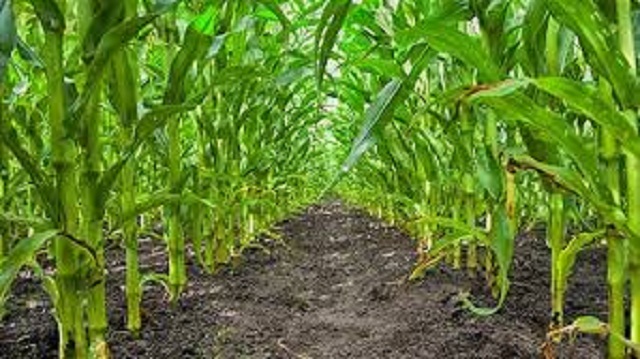

Dumisani Nsingo, Senior Farming Reporter
WHILE most farmers’ granaries will be empty this year because of the gloomy picture in the fields, it appears to be a different tale for Mzinyathini Irrigation Scheme farmers in Umzingwane District, Matabeleland South Province who are anticipating a bumper harvest from their thriving maize crop.
Most farmers, especially those that rely on rain-fed cropping, are unlikely to harvest anything owing to drought resulting from the ongoing El Nino that has led to erratic rainfall and dry spells.
What makes the prospects of a good yield for Mzinyathini Irrigation Scheme farmers rather unique is the fact that the agricultural enterprise is located in one of the country’s drought prone areas, Matabeleland South.
The feat by Mzinyathini farmers signifies the importance of investing in the development and rehabilitation irrigation schemes towards enhancing communities and the country’s food security.
The 32-hectare Mzinyathini Irrigation Scheme was established in 1964 and is home to 81 farmers, with an allocation of an acre each. The scheme gets its water supplies from Umzingwane Dam and farmers irrigate their crops using the canal irrigation system.
“This season we cropped three quarters of the irrigation scheme because of the shortage of our preferred seed varieties on the market. We usually prefer Pioneer’s 30B50 variety as it is easy to market but it wasn’t available at seed houses till late. We ended up getting seed which is mostly used by farmers in dry land,” said the scheme’s chairman, Mr Omrie Ncube.
Apart from cropping maize, the farmers also grow groundnuts and butternuts for consumption and for sale.
“Each one of us owns an acre and from that one is guaranteed of enough household food security and even surplus to sell,” Mr Ncube said.
He however, said prospects of increased cropping this year would be hampered by declining water levels at Umzingwane Dam, which is one of the dams that supplies water to the City of Bulawayo.
“The water levels at the dam are really bad and because of this we are unlikely to crop further this year as Bulawayo City Council will likely close supplies to the irrigation. Though we are irrigating at the moment, I think with a bit of rain our maize would be more flourishing than it is at the moment,” Mr Ncube said.
The irrigation scheme’s canals and fence also need rehabilitation.
“This scheme is very old and its canal irrigation system needs to be rehabilitated because it has outlived its lifespan and the fence is very old and getting worn out. The problem we have is that we are a community scheme and we rely mostly on donors who give us little, which barely caters for all the needs,” Mr Ncube said.
Lack of a proper fence has resulted in the destruction of farmers’ crops by wild animals, especially warthogs.
“Warthogs have been a menace at this irrigation scheme as they gain entry through the various worn out areas of the fence bordering the scheme. Of course World Vision managed to source a new fence for us but it only covered a small portion.
“World Vision had promised to assist us for three years but because the organisation covers the entire district, I think it ended up exhausting its funding thus we haven’t got any form of assistance of late,” Mr Ncube said.
The Government has recognised the role of irrigation development as a key drought mitigation measure. Tremendous strides have been made by the Government, the private sector and the donor community in the area of irrigation development since independence in 1980.
It is estimated that 120 000 hectares are under irrigation of which only 11 percent are on smallholder and out-grower schemes.
The development of smallholder schemes has been followed by a number of socio-economic studies during the last two decades in order to help policy makers in formulating sound policies for future development. However, more studies are needed and at a regular interval since the whole process of policy formulation changes with time. The importance of socio-economic evaluation to fully equip policy makers cannot be over-emphasised.
Agriculture is a dominant sector of the Zimbabwe economy. Being heavily dependent on rainfall, years of drought have resulted in increased food shortages, hunger and malnutrition, an adverse balance of payment and inflation (as exports decrease) as well as a reduction in economic growth.



 derick.khumalo