Chronicles of the 2nd Chimurenga
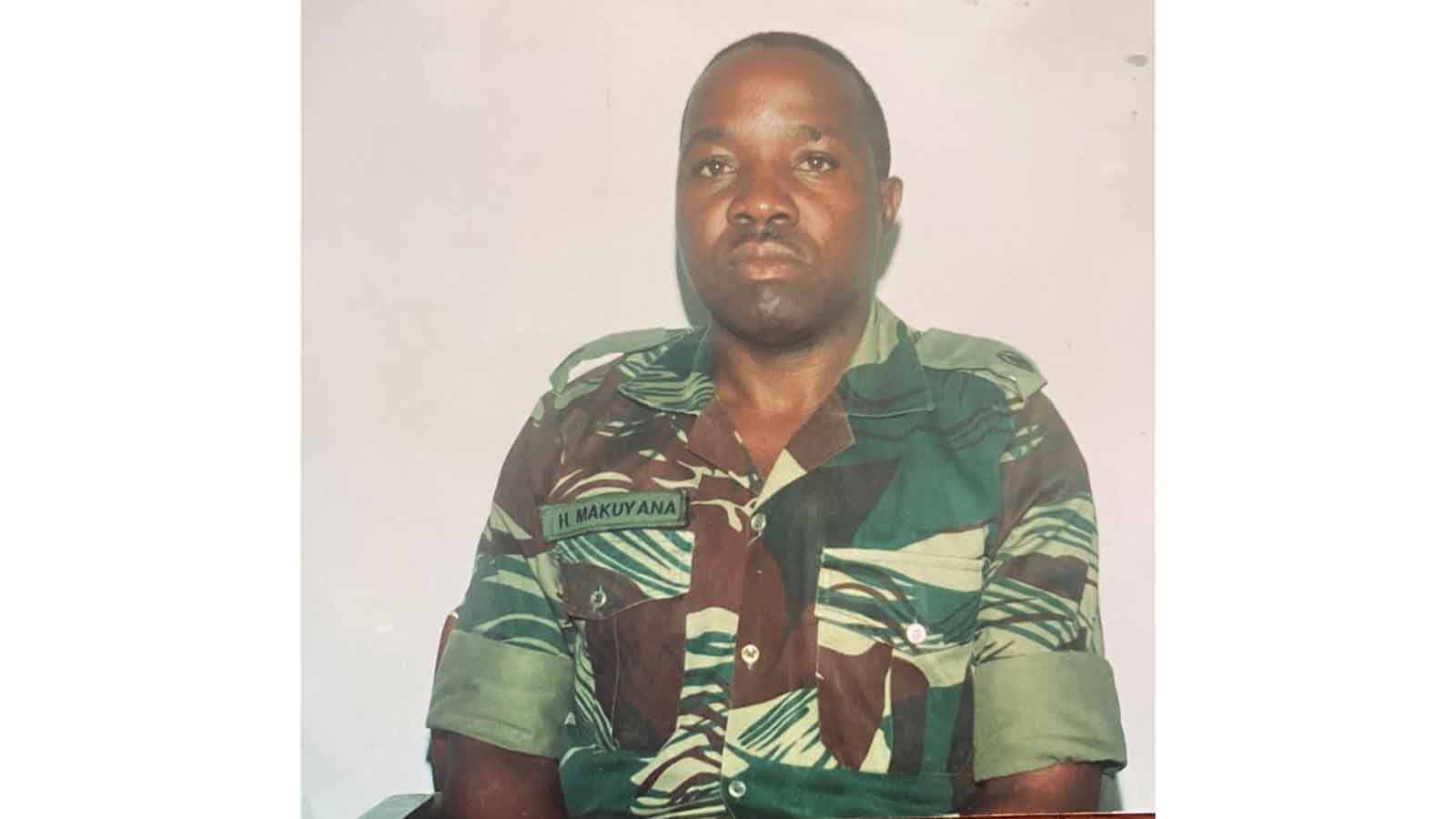
This week, CDE HUMPHREY MAKUYANA, whose nom de guerre was Kidd Kanyau, reflects on his successful tenure as a military instructor based in Tanzania. He explains to our Society Editor PRINCE MUSHAVEVATO the strategic importance of the rear. He details why logistical and training bases served as the vital backbone of Zimbabwe’s journey towards liberation.
************
Q: Could you please tell us what happened after you passed your assessment to become an instructor?
A: The assessment was brief but rigorous, covering everything within a single month. Once I qualified, I began training a significant number of soldiers. Many high-ranking officers and fighters — both currently serving and retired — passed through my instruction.
I am a deeply satisfied ex-combatant. I believe I fulfilled my role as an instructor effectively; it was not necessarily a path I sought out, but rather one by design — perhaps even God’s plan. I trained two intakes, including the group code-named Fanya Haraka (meaning do it quickly).
Halfway through their training, as they moved into phase two, I was selected to join the regular officer cadet training. This was the only Zimbabwe African National Liberation Army (ZANLA) group to undergo such a programme. That group consisted of 109 male officers who formed the nucleus of the Zimbabwe National Army and Air Force at independence. We trained from late 1978 to September 1979.
If you look at the army, air force and police today, many were trained in Tanzania. For professional reasons, I cannot name some of the senior Government officials I instructed, but there is a profound mutual respect between us. I respect them as my seniors and generals, and they respect me as their former instructor.
While some comrades such as Generals Nyikayaramba and Lifa have since passed away, I can safely say that most of those I trained reached the ranks of field officers and generals, and are still serving. I am incredibly proud of that legacy; I did my part for this country.
Q: Regarding that period, did you maintain your role as an instructor when the Zimbabwe People’s Army (ZIPA) was formed?
A: Politics played a major role then. Following the détente debacle of 1974-1975, the political parties with armed wings — Zimbabwe People’s Revolutionary Army (ZIPRA) and ZANLA — were directed to unite under ZIPA. The Organisation of African Unity (OAU) established a Liberation Committee led by Colonel (Hashim) Mbita of Tanzania. The instruction was clear: “We will not arm you as individual groups. If you want equipment, you must collect it as ZIPA, not as ZANLA or ZIPRA.”
The mandate was for us to fight the enemy as a single, unified force, leaving the issue of party separation until we returned home. This led to the formation of the Patriotic Front, an alliance between ZAPU and ZANU. Consequently, all diplomatic talks and material aid were channelled through the Patriotic Front and ZIPA, even though internal politics persisted as fighters crossed into Zimbabwe via Zambia and Mozambique.
Q: This seems like an opportune time to discuss Nachingwea. How critical was this base to Zimbabwe’s liberation struggle?
A: The opening of the Nachingwea Training Garrison in Tanzania to ZANLA marked a decisive turning point in the struggle. More than a mere training facility, Nachingwea became the strategic engine of ZANLA, producing the highest volume of recruits and some of the most proficient fighters of the war. Testimonies from field commanders consistently affirm that the professionalism, discipline and ideological clarity imparted at Nachingwea fundamentally shifted the balance of power in favour of the liberation movement.
Crucially, the effectiveness of these forces was complemented by ZIPRA cadres, who were trained in Angola and the Soviet Union, and deployed primarily to the north-western regions of Rhodesia. Together, these parallel training pipelines transformed the war into a multi-front, multi-doctrinal struggle that the Rhodesian regime could no longer contain.
Q: What was the situation on the ground before the camp was established?
A: Prior to Nachingwea, ZANLA’s training efforts were fragmented, small-scale and constrained by limited infrastructure. While early cadres were driven by revolutionary fervour, the escalating intensity of the war in the early 1970s demanded a more systematic, large-scale approach. Tanzania, under the leadership of President Julius Nyerere, played a pivotal role by providing territory, security and political solidarity.
Within this Pan-African context, Nachingwea was established as a purpose-built garrison capable of mass training and sustained military production. Its most significant contribution was its sheer scale. The facility enabled ZANLA to train at least 5 000 recruits per intake in a continuous, organised manner. This ensured a steady flow of fighters into operational zones. Field commanders later noted that the late-1970s surge in ZANLA’s presence across rural and semi-urban areas was directly linked to this increased capacity.
Q: Beyond the increase in numbers, what other advantages did this massive training camp provide?
A: Nachingwea was distinguished by the quality and depth of its instruction. Recruits underwent rigorous training in infantry tactics, weapons handling, reconnaissance, intelligence gathering, sabotage and survival skills tailored for protracted guerrilla warfare. Equally vital was political education, which emphasised nationalism, Pan-Africanism and socialist-oriented ideology.
This fusion of military skill and political consciousness produced disciplined fighters who understood both the how and the why of the struggle. However, Nachingwea did not operate in isolation. Other Tanzanian camps, notably Mgagao and Morogoro, played complementary roles. Mgagao became renowned for producing senior commanders and specialists, while Morogoro functioned as a critical political and strategic centre. Many of the highest-ranking ZANLA officers at independence traced their military and political foundations back to these Tanzanian institutions.
Q: Can you elaborate on how the combination of ZANLA and ZIPRA forces effectively dismantled colonial rule?
A: ZIPRA’s contribution significantly enhanced the overall liberation effort. Trained primarily in Angola and the Soviet Union, ZIPRA cadres brought a strategically vital military orientation that emphasised conventional warfare, heavy weaponry, mechanised operations and advanced logistics. By deploying mainly to the north-western regions of Rhodesia, ZIPRA forced the Rhodesian security apparatus to prepare for a conventional military escalation.
This capability stretched enemy resources thin and perfectly complemented ZANLA’s guerrilla-based strategy in the eastern, southern and central regions.
The combined impact of ZANLA’s mass guerrilla force — shaped by Nachingwea and other Tanzanian camps — and ZIPRA’s conventionally trained units created a complex, multi-front conflict. This strategic duality increased military pressure while reinforcing the political case that the war could not be won militarily by the Rhodesian regime.
Leaders and commanders within the Patriotic Front later acknowledged that this combination of guerrilla persistence and conventional threat was a decisive factor in pushing the conflict towards a negotiated settlement that resulted in the Lancaster House Agreement.
Q: You can carry on.
A: The enduring legacy of Nachingwea and its complementary training systems became most evident at independence in 1980. Former ZANLA and ZIPRA fighters formed the backbone of Zimbabwe’s new security sector. While the rank and file were largely drawn from guerrillas trained at Nachingwea, many senior officers brought advanced expertise from Tanzania, Angola and the Soviet Union.
Despite the complexities of integration, this convergence endowed the post-independence military with a broad skill set and a shared liberation ethos.
In short, the opening of the Nachingwea Training Garrison was a genuine game-changer. It transformed ZANLA into a disciplined, politically grounded fighting force, whose impact was amplified by the professional contribution of ZIPRA.
Together, these forces secured victory and laid the foundations for Zimbabwe’s post-independence institutions. Nachingwea, alongside Mgagao, Morogoro and ZIPRA’s Soviet and Angolan routes, stands as a symbol of strategic planning and international solidarity. We must never forget those who built and led these vital institutions.
Next week, Cde Makuyana will explain how the success of Nachingwea as a premier liberation training centre was deeply rooted in the pivotal support of the Tanzania People’s Defence Force.