admin
admin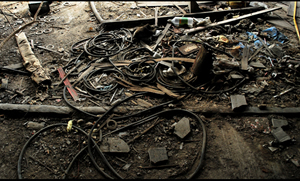
mean people in Harare are at high risk of electrocution or getting seriously burnt.
A significant proportion of Zesa’s underground cables have outlived their lifespan of 25 years.
Some of the cables are 50-years-old and when there is a fault they are repaired with temporary joints, some of which have killed or injured people.
There are several spots with naked cables, which were left exposed after Zesa staff dug them up to carry out repairs.
Recently, a commuter omnibus conductor was electrocuted and a pregnant passenger was severely burnt by naked power cables following an altercation over US50 cents change in Mbare.
The two slipped into the ditch as they fought at the corner of Harare South and Cripps roads, triggering a huge explosion.
The conductor died on the spot while the woman was taken to Harare Central Hospital, where she was in critical condition.
The woman has threatened to sue Zesa for US$1 million for the injuries and possible loss of the unborn child.
This is not the first time that people have been involved in fatal or near fatal contact with live power cables.
Reports of electrocution by naked cables left behind by Zesa workers after repair work have become common.
Police spokesperson Inspector James Sabau this week told The Herald that although statistics were not immediately available, there had been a steady stream of electrocution-related incidents over the years.
This has seen the public questioning Zesa’s commitment to efficient service delivery.
“The problem is that Zesa workers leave the cables exposed,” complained Kuwadzana resident Mr Sam Matura.
“Sometimes when they dig trenches to do underground work they poorly cover the ditches and the cables and people come into contact with the high voltages.”
A Chitungwiza resident, Mrs Getty Mupfumi, accused workers at the power utility of laziness.
“When I tried to report a case (of exposed cables) to authorities in Makoni, their phones went unanswered for long periods and when they picked them they promised to rectify the problem but never came.
“This is a danger to pedestrians, particularly children who might want to tamper with the wires innocently.”
Mr Farai Gore added: “When a live cable touches the ground, especially during the wet season, the surrounding ground becomes charged and dangerous.
“Although such cases have often been swiftly attended to by Zesa, I have heard a case in which someone died after contacting such a cable.”
A woman from Kuwadzana Extension said what she believed was faulty wiring was putting them at risk of electrocution.
“Our area has been having erratic power supplies for sometime now. But sometimes when we do not have electricity, all the appliances and water taps are ‘live’.
“You can’t open the tap with bare hands or use the water, you will be shocked. You have to use a wooden spoon and tell the children to keep off.”
In February, 17-year-old Richard Kevin Rugube was electrocuted in a bathtub at his home in Greendale.
Several streetlight poles also have naked wires as a result of vandalism, poor workmanship or traffic accidents.
Zesa communications chief Mr Fullard Gwasira this week admitted that temporary joints on underground cables posed a significant danger to people.
He, however, blamed the undesirable situation on resource constraints caused by non-payment of bills by clients.
“What happens is that in the absence of full kits, we use temporary joints and we do not cover the trenches completely,” he said.
He revealed that as the repairs were temporary, they had to follow up on them expeditiously and hence they could not properly cover ditches and trenches.
Mr Gwasira further explained: “The problem is that most of the cables are as old as 25, 30, 35 up to 50 years when the industrial standard is 25 years.
“We have not been able to replace them as people have not been paying their dues to Zesa.”
On overhead cables falling to the ground, the Zesa spokesman said this was a rare occurrence and the utility always tried to promptly rectify such problems.
“We have fault teams in all areas,” he assured the public, adding: “And if this happens people should report immediately.
“Overhead cables fall due to interference from trees which fall or when poles are old and rotten.
“We always tell our customers to clear trees around cables but some of them are not co-operative,” he said.
Mr Gwasira urged members of the public to report any faults, saying Zesa valued such feedback.
He said in instances where residents complained of electric shocks in the home, the problem could be poor wiring.
Each home builder is responsible for his/her internal wiring and it is believed many people opt for cheap electricians who do a sub-standard job.
Zesa’s liability on electricity infrastructure ends with the meter installed outside the house.



 Online Reporter