


 Chronicle Editor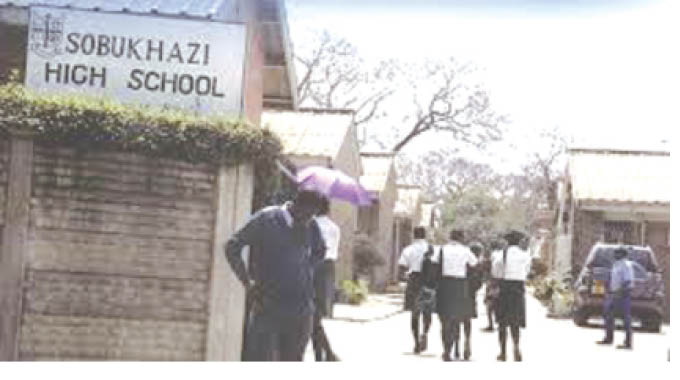
Pathisa Nyathi
LAST week we took a look at the names of two of Jimmy Nhlanhla Mabhena’s children. The chosen names were Bhekenhla and Nzuza. Today we shall look at yet another son’s name after which we shall turn to the name of one man after whom a secondary school in Bulawayo is named. The man, Sobukhazi, had his forebears living at eNdubazi alongside the Mabhenas. Manala is the son whose name we are unpacking today.
Manala was Musi’s eldest son after Nzuza, Sikhosana and Dlomo. The same name has been given to cattle of a particular colour combination. A close scrutiny of the three names, inala (given twice and Manala) seem to share something in common. The word inala refers to the colour pattern found on a cow. The word also applies when the harvest in a given year is bountiful (ukutshaya inala). Manala may thus be a name that expresses the idea of fullness or completeness as is the case with regard to the colours of an ox or cow. In many other instances this very idea is embraced in the Mabhena clan praises. There are two possible reasons why such a name was chosen and given to a son. As crop farmers, son Manala’s parents may have had a bumper harvest when the son was born.
Given the background that Nhlanhla Jimmy Mabhena was in the habit of giving names with a historical meaning and relevance, the name was drawn from history of the aManala people. Another of their son was named Nqagu and that name, once again, is captured in the clan praises of the Mabhenas. We are thus persuaded that Manala was named after the original Manala, the son of Musi who lived near Tshwane (Pretoria) before Nzuza, after usurping Manala’s right to succession, removed to Ndubazi (Tubatse, Steelpoort River). Through naming his sons, Nhlanhla Jimmy Mabhena documented the history of his forebears. Interestingly, one of the younger son’s name does capture the times of the liberation struggle. He was named Advance.
What become apparent is that our history does reside in our names, some of which have found their places in the clan and/or individuals’ praises. Prior to colonisation, African names were, in the main, if not exclusively, in the mother language. This means one who is not conversant with the people’s language may not fully fathom the history of that particular group. This explains why the name Bulawayo was given by whites who were not au fait with IsiNdebele. They gave a wrong version of the name KoBulawayo. Out of convenient mischief, they interpreted “Bulawayo” as meaning a place of slaughter. Ironically, it was King Lobengula Khumalo who guaranteed the safety of the last three whites when he escaped from KoBulawayo: James Fairbairn, William Usher and James Dawson.
We now turn to a related name, that of Sobukhazi High School in Mzilikazi Township. When there was overstaffing at St Columba’s Secondary School, I offered to transfer to Sobukazi Secondary School. I hope you have observed the two spellings, that they are different. When I taught there in 1983 it was Sobukazi and today the school’s billboard gives the name as Sobukhazi High School. “Kha” and “ka” are pronounced differently according to Ndebele orthography. “Kha” is explosive while “ka” is implosive.
When “ka” was rendered in the name of the school, the meaning of the name was lost completely. Sobukhazi is the correct rendition of the name, given after Sobukhazi Masuku whose forebears lived at eNdubazi alongside Manala, Nzuza, Sikhosana and Dlomo. These are the people that were in the past referred to as the Transvaal Ndebele. In ethnic terms, they are Nguni, having descended from the man known as Ndebele whose father was Mnguni. These people were then generally referred to as amaNtungwa. About the 15th century AD, they migrated from an area east of the Drakensberg Mountains (Izintaba Zokhahlamba) and ventured into the central plateau which was inhabited by the Sotho-Tswana peoples. As indicated above, they settled near Tshwane and only removed to eNdubazi following the quarrel between the two over the succession issue.
The people who settled at eNdubazi are today found within the Mpumalanga Province of South Africa. There are some of them who ventured further north-west and are today domiciled in the Limpopo Province. Yet others went farther west and settled in Botswana. The Balete, a Khumalo/Nare/Nyathi people at Lobatse are a good example. Unlike aManala and amaNzuza, they acculturated more fully into Sotho-Tswana people in terms of culture and language. A queen leads the ethnic group in Botswana.
The Sotho-ised descendants of Ndebele are identifiable through various surnames: Mabhena, Mahlangu, Sikhosana, Masombuka, Lusinga, Tshili, Mkhwananzi (Gawu, Makhwentaba as opposed to Gagisa, Mpandeyamadoda) Masuku (Phenyane as opposed to Nqamakazi, Mlondo), Mgutshini, Msimanga/Songo), Ndimande, inter alia. These Nguni people, through sojourn among the Sotho-Tswana peoples, acquired some of the cultural traits and some Sotho-Tswana words in their language. The Ntungwa-led followers of King Mzilikazi kaMatshobana regarded these people as Sotho-ised and therefore different from them. Indeed, in terms of marriage between the two groups was not encouraged before colonisation. Inspection of the genealogies of the abeNhla reveals how they kept within the socially defined boundaries.
Mabhena married Lusinga, Lusinga married Tshili, Mahlangu married Mabhena. Jubane married Mgutshini while Songo married Sikhosana. The social boundaries were well known. The King did not marry women from the abeNhla group. For now, though, our interest is in the name of the high school. The school was named after Sobukhazi Masuku, (the Phenyane, Dungandaba section). He walked with a limp and was the famed traditional doctor who attended to the booty and soldiers that were brought after a raid, what was termed intundu kaSobukhazi.
There was belief among the Ndebele in what they termed ingwendela or uzimu. Where an individual was killed, the spirit of the dead sought redress by haunting and even killing members who share blood in common with the perpetrator. A man’s wife was not included in those who were afflicted with death. In a normal situation husband and wife did not share common blood (the Babirwa are an exception together with other Sotho-Tswana groups). It was this mortal fear of ingwendela that led Chief Maqhekeni Sithole to avoid going on a royal errand to Chief Chivi’s people on the pretext he had run out of provisions. Nketha, short for Nkethabetshabi, lives today as a reminder of that incident which took place during the tenure of King Mzilikazi kaMatshobana.
In order to deal with the possibility of being afflicted with ingwendela, traditional herbal formulations were used. Sobukhazi Masuku’s role was to doctor the captured cattle and humans and the returning soldiers before proceeding to the royal capital where booty was shared according to known rules. When the head of Sobukhazi High School, Mrs Sikhosana, approached me several years ago in connection with the meaning and interpretation of the name, I told her just what I have written in this column. A Masuku man also went to the school and gave exactly the same interpretation that I had proffered.
From then the school began using the correct version of the name of the famed traditional doctor, Sobukhazi Masuku. Plans are now afoot to artistically render the correct version of the name in a manner that endures into eternity. The man was Sobukhazi on account of his lighter complexion. Khazi expresses brightness of colour. Intermarriage between the Nguni and the Sotho-Tswana introduced a lighter complexion which contrasted with that of the purer Nguni who remained east of the Drakensberg Mountains.


 Online Reporter