admin
admin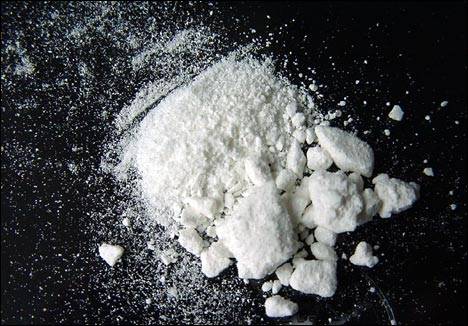
KATHMANDU — More than a hundred of non-digestible plastic coated capsules seized in Nepal’s record cocaine haul were showed to Xinhua on Monday. The Narcotics Control Bureau said it took about five days to eject the capsules filled with cocaine from the stomach of a Namibian citizen arrested with 2.67 kg cocaine hidden in his luggage and stomach at the Tribhuvan International Airport in Kathmandu.
In the biggest ever cocaine haul in Nepal, the police found 45 capsules of cocaine in Raymond Zungu Oppel’s luggage, and 112 of more than 5 centimeters long concealed in his body having an estimated value of US$534,000 on the black market.
“After the Namibian got through checking at the airport, we found his movements suspicious. Our special team followed him and we first found 765 grams of cocaine in his bag,” Niraj B. Shahi, superintendent of Narcotic Control Bureau told Xinhua.
The forty-year-old Namibian national said he was promised US$20, 000 for smuggling the cocaine to Nepal.
The Narcotics Control Bureau said cocaine does not sell in the Himalayan nation as many cannot afford it. Drug traffickers usually use Nepal as a transit point to smuggle cocaine produced in South America principally into Europe and the US.
“We are trying to discover Oppel’s contact person in Kathmandu but we do not expect him to talk,” Shahi told Xinhua.
“In the underground world it’s all about trust. Blood in, blood out this is how it works. So if Oppel reveals anything he will put his life at risk,” he said.
Oppel started his journey from Brazil and landed in Kathmandu via Dubai on a FlyDubai plane on February 18.
His passport details show that it was his first visit to Nepal. He was here with a two-week tourist visa. In the past he had traveled to Brazil, South Africa, Mozambique and Swaziland.
This is the first time that the Nepali police have seized such a big amount of cocaine. The previous record cocaine haul was the seizure of 1 kg of cocaine stuffed in a fish-can in 2011.
A Thai woman was arrested and she is now serving a jail sentence.
Despite the increasing number of foreigners arrested for possessing and trafficking drugs in Nepal, Shahi believes that it’s reductive to label Nepal as a “drug hub”.
“The problem is not local but global. Traffickers just want to get from the producing to the consuming country. Drug routes constantly change and this is neither the first nor the last time that Nepal will be used as a transit point,” Shahi explained. – Xinhua.



 Online Reporter