daniel chigunwe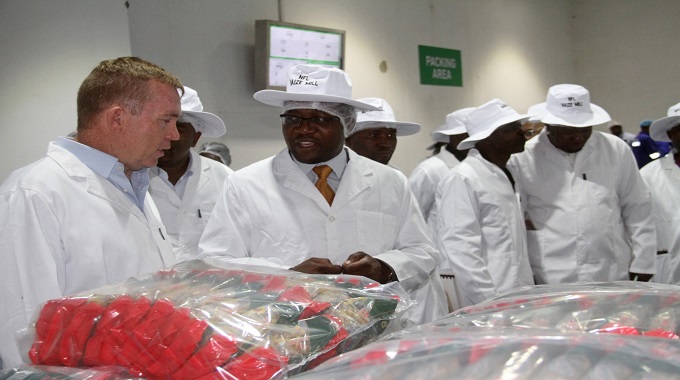
Michael Tome
National Foods believes that a thriving agricultural sector is the cornerstone of Zimbabwe’s success in the African Continental Free Trade Area (AfCFTA).
AfCFTA is gaining traction, and Zimbabwe stands a chance to significantly benefit given its robust potential in the manufacturing, horticulture, and mining sectors.
The country has a strong competitive advantage in the aforementioned areas including several value chains, especially in agribusiness, according to the World Bank.
However, the local industry continues to be stalked by a myriad of challenges that encompass high operating costs emanating from frequent load shedding, and lack of affordable lines of credit given fewer funding options for businesses as they have to rely on more expensive domestic and international sources.
The industry has since been lobbying for the Government to swiftly address outstanding ease of doing business issues in the country to give them an edge over external competition.
Statistics show that only 33 percent of Zimbabwe’s large firms, 38 percent of medium-sized companies, and 33 percent of small entities are ready to fully exploit opportunities under the AfCFTA.
Speaking on the sidelines of the National Foods’ Stirling plant tour, chief executive Michael Lashbrook said a strong agriculture background would spur Zimbabwe’s competitiveness in the Intra-Africa trade mix.
“Our success going to the region starts with our agriculture, if we have a good agriculture base, we will be competitive regionally in terms of raw materials.
“The stronger our agriculture is, the stronger we become, from our perspective if we have a good wheat harvest, we will not only convert that wheat into bread flour but into flour which goes into pasta and the product will compete competitively in the region,” said Lashbrook.
He however classified the type of products that were competitive in the regional trade, also highlighting those that had lower profit margins.
“Basic commodities like maize meal or flour, will be very difficult to export because they have very small margins, for instance taking mealie meal to Zambia or Botswana is uncompetitive in those markets,” Lashbrook said.
Other products, however, have higher margins.
“…there is an opportunity to export those because there is more margin, so definitely with our new products, like pasta, biscuits, and breakfast cereals we can safely compete in regional markets, it will take time but we will be there.”
The AfCFTA is a broad trade pact entered into by the signatories of the Africa Union (AU).
It encompasses the free movement of people, goods, services, infrastructure, and technology development across the continent. It also involves cooperation between customs authorities over product standards and regulations, as well as trade facilitation, which will make it easier for goods to flow between Africa’s borders.
The development is expected to cover a market of 1,3 billion people and a gross domestic product (GDP) of $3.4 trillion, across all 55 member states of the African Union.
This comes as Natfoods made total capital investments of nearly US$16 million in production lines critical for import substitution between 2023 and 2024 as the firm aims to contribute at curbing the country’s ballooning import bill.
In 2023, the country’s import bill amounted to US$9,2 billion up from US$8,6 billion in 2022.
Approximately US$1,2 billion worth of the import bill were food related items.
NatFoods invested in a cereal extrusion plant worth US$4,4 million, made a US$6 million investment in the replacement of a flour milling plant in Bulawayo as well as a US$5,6 million investment in establishing a pasta line.
In a bid to curb the ballooning import bill, National Foods has managed to set up a pasta line and now produces about 1200 tonnes of the product per month against a demand of around 3 500 tonnes.
In 2023, the import bill for pasta and related products was approximately $3,6 million.
The country is also grappling with an influx of biscuits mainly from South Africa and Zambia but National Foods is moving to curb the import of the product as it moves to the commission biscuit line later this month.
Import substitution is a key priority in the National Development Strategy 1 (2021-2025) as Zimbabwe seeks to structurally transform its economy to increase manufactured value-added products.



 Online Reporter