Online Reporter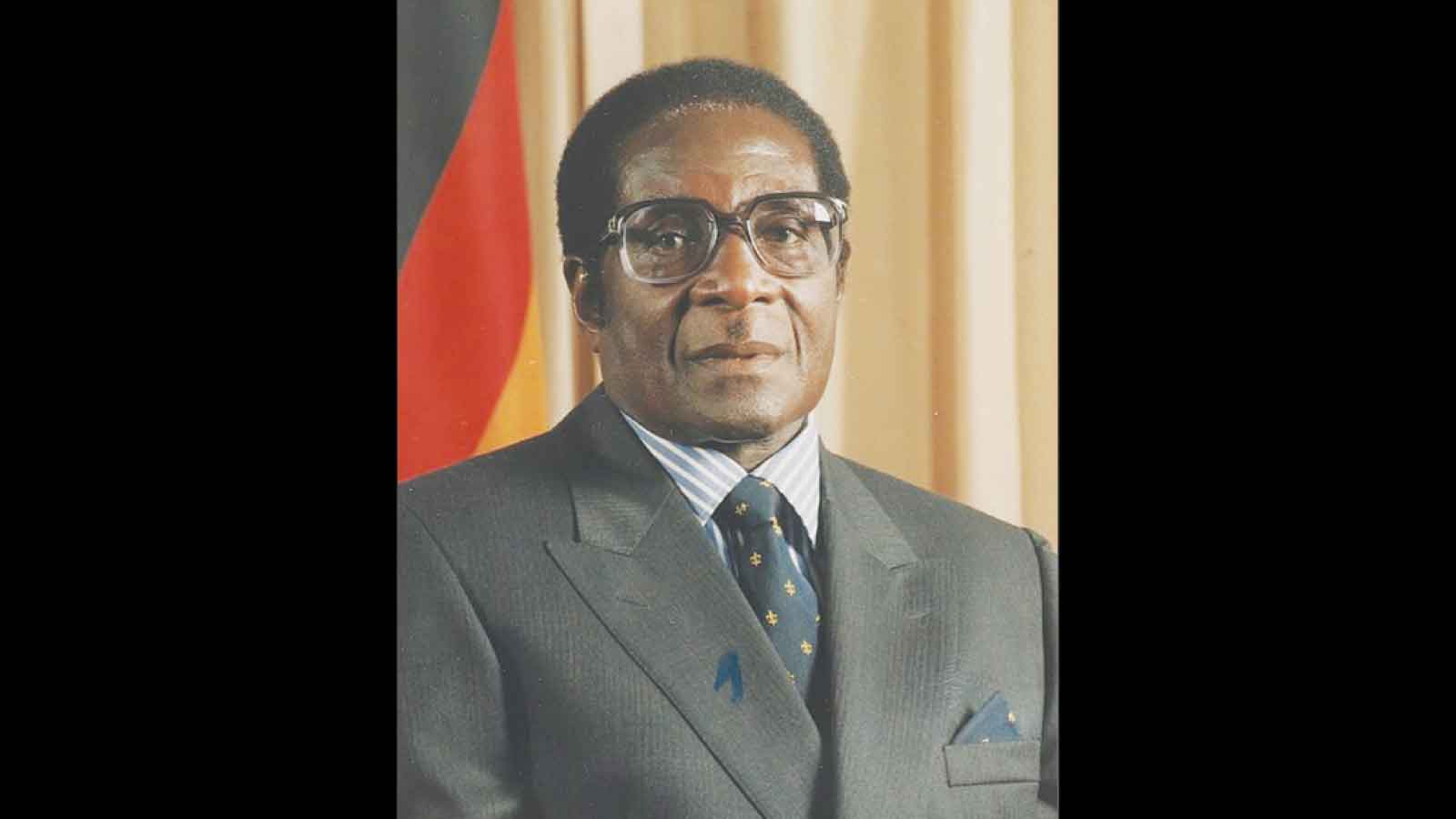
MacDenias Moyo
YESTERDAY, Zimbabwe bowed in reverence as President Mnangagwa led the nation in commemorating the life of Cde Robert Gabriel Mugabe, the nation’s founding father, one of the architects of our sovereignty and the towering patriarch of African resistance.
This commemoration is not a ritual of memory alone, it is a reaffirmation of the revolutionary covenant that binds our people to the ideals of freedom, dignity and self‑determination.
Born on February 21, 1924 at Kutama Mission, Robert Gabriel Mugabe was nurtured in the crucible of colonial oppression. His formative years were marked by a relentless pursuit of education, a weapon he would later wield against the edifice of imperialism.
Cde Mugabe’s intellectual discipline, sharpened through studies in South Africa and Ghana, was never divorced from the plight of the African peasantry. He absorbed the Pan‑Africanist teachings of Kwame Nkrumah and the nationalist fervor of Julius Nyerere, shaping a worldview that placed the liberation of the African continent at the center of his destiny.
When the call to arms was sounded, Mugabe did not hesitate.
He endured eleven years of imprisonment under the settler regime, proof to his indomitable spirit. Upon his release, he crossed into Mozambique and assumed leadership of the decisive phase of the liberation struggle. Alongside Dr Joshua Nkomo, Father Zimbabwe, he marshaled the forces of resistance, transforming despair into defiance. The Lancaster House Conference of 1979 bore the imprint of his resolve, culminating in the birth of Zimbabwe on 18 April 1980. International observers such as the United Nations hailed Zimbabwe’s independence as a beacon of hope for Africa. The Organisation of African Unity declared that the victory of Zimbabwe was for the entire continent.
The Frontline States, led by Presidents Nyerere, Kaunda, Neto, Machel and Khama, recognised Cde Mugabe as a steadfast comrade whose leadership fortified the collective struggle against apartheid and colonialism.
President Mugabe’s philosophy was anchored in the conviction that political independence without economic sovereignty was hollow. His famous declaration, “The land is the economy and the economy is the land,” became the rallying cry of the Third Chimurenga.
He insisted that the liberation struggle was incomplete until the land was restored to its rightful owners. This ideological clarity placed Zimbabwe at the forefront of post‑colonial transformation, inspiring movements across Africa.
His speeches thundered against imperialism. He once proclaimed, “We are not Europeans, we are Zimbabweans. Let Europe keep its Europe, let Africa remain Africa.” These words reverberated in the halls of the United Nations, where Cde Mugabe became the uncompromising voice of the Global South.
Western powers bristled at his defiance, yet the oppressed of the world found in him a champion who refused to bow to neo‑colonial dictates. As Prime Minister and later President, Mugabe invested in education, health and rural development. UNESCO recognised Zimbabwe’s literacy rate as one of the highest in Africa, a direct fruit of his policies.
The World Health Organisation commended Zimbabwe’s early strides in primary healthcare. His Government expanded access to schools and clinics, ensuring that the dividends of independence reached the villages and townships.
The Land Reform Programme, though contested by Western capitals, was celebrated by millions of landless peasants who finally tilled their ancestral soil. The African Union acknowledged Zimbabwe’s boldness in reclaiming sovereignty over its resources. Scholars across Africa hailed the programme as a radical reconfiguration of property relations, a necessary step in dismantling the lingering structures of colonial exploitation.
Beyond Zimbabwe, Robert Gabriel Mugabe was a continental statesman. He chaired the African Union and the Non‑Aligned Movement, articulating the aspirations of the developing world.
His solidarity with liberation movements in South Africa, Namibia and Mozambique cemented his stature as a patriarch of African freedom. Nelson Mandela himself acknowledged Mugabe’s support during the darkest days of apartheid. Sam Nujoma of Namibia praised Mugabe’s unwavering commitment to regional liberation.
His Pan‑Africanism was not rhetorical, it was practical. He worked tirelessly to ensure that the SADC region attained political independence and democratic dispensations.
His voice was instrumental in the collective stand against apartheid South Africa, and his counsel guided younger leaders who sought to navigate the treacherous waters of neo‑colonialism.
President Mugabe’s words were weapons. At the United Nations General Assembly, he declared, “Africa will never be free until the last vestiges of colonialism are eradicated.”
He castigated Western hypocrisy, saying, “They preach democracy, but practice imperialism”. These pronouncements were not mere rhetoric, they were ideological missiles aimed at the heart of global injustice. His defiance inspired movements in Latin America and Asia. Leaders from Cuba to Venezuela saluted his courage. Fidel Castro described Mugabe as “a lion of Africa who roared against imperialism.” Such recognition situates Cde Mugabe within the pantheon of global revolutionaries who refused to compromise the dignity of their people.
President Mnangagwa’s political life was profoundly shaped by his association with former President Mugabe. As a young cadre, President Mnangagwa was mentored by Cde Mugabe, enduring imprisonment and exile in the same crucible of struggle. Their bond was forged in the fires of the liberation war, tempered by loyalty to the cause of Zimbabwe’s freedom. President Mnangagwa’s loyalty has never wavered. He stood beside Cde Mugabe during the armed struggle, during the trials of governance and during the storms of international hostility.
Today, President Mnangagwa carries forward the torch of the revolution, leading the Fourth Chimurenga for economic empowerment and national renewal. His insistence on Vision 2030 is a continuation of Mugabe’s dream of a sovereign, prosperous Zimbabwe.
International organisations have testified to Zimbabwe’s positive trajectory under President Mnangagwa.
The African Development Bank has acknowledged Zimbabwe’s economic recovery.
The United Nations Food and Agriculture Organisation has commended Zimbabwe’s strides in climate‑smart agriculture. The World Tourism Organisation has recognised Zimbabwe’s re‑emergence as a destination of choice. These affirmations are proof that the legacy of Mugabe, carried forward by President Mnangagwa, is yielding tangible fruits.
As President Mnangagwa led the nation in commemorating the late former President Mugabe, Zimbabwe is reminded that the struggle is not over.
Independence must be defended, sovereignty must be deepened and unity must be preserved. The commemoration is a call to the youth to embrace the ideals of sacrifice and patriotism. It is a reminder to the elders that the revolution is a continuum, not a concluded chapter.
The words of His Excellency, President Mnangagwa resonate with the spirit of Cde Mugabe. “Long live our Independence, Unity, Peace and Freedom. Long live Zimbabwe.” These are not empty slogans, they are the living creed of a nation that refuses to be subdued.
Cde Mugabe was more than a leader, he was a symbol of African defiance, a patriarch of liberation and a custodian of sovereignty.
His life was a testament to the power of conviction, his death a reminder of the mortality of men, but his legacy an eternal flame that will guide generations.
President Mnangagwa, shaped by Cde Mugabe’s mentorship and bound by loyalty to the revolution, now leads Zimbabwe in the Fourth Chimurenga. His leadership is the continuation of the revolutionary struggle, his commemoration of Cde Mugabe is the reaffirmation of Zimbabwe’s destiny.
As the nation pays tribute, the world is reminded that Zimbabwe is not a footnote in history, but a chapter of resistance, empowerment and triumph. Cde Mugabe’s voice still echoes, President Mnangagwa’s leadership still advances and the people’s spirit still rises.
Long live Zimbabwe. Long live the Revolution. Long live the legacy of Robert Gabriel Mugabe.