admin
admin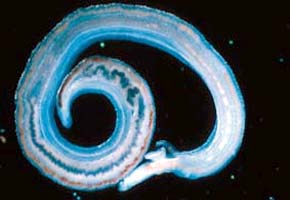
The national programme is being conducted in conjunction with the Ministry of Education, Sport, Arts and Culture with support from Unicef, the World Health Organisation (WHO) and the Education Transition Fund.
It targets children of school-going age and their communities in districts with a high prevalence rate of the disease.
In an interview yesterday during a training workshop at a Bulawayo hotel, head of Epidemiology and Disease Control in the Ministry of Health and Child Welfare, Dr Portia Manangazira said the treatment programme would be held next month.
“The nationwide praziqautel and albendazole mass treatment campaign against schistosomiasis and soil transmitted helmiths will be held from 17 to 21 September and it is expected to reduce the number of people suffering from bilharzia and intestinal worms,” said Dr Manangazira.
“By instituting a mass drug administration, the burden of the egg producing worms is reduced hence preventing transmission as well as improving the child’s health and learning performance. It will also reduce the risk of developing irreversible complications in adulthood.”
Dr Manangazira said the Ministry was in the process of training 66 officials countrywide from the Ministries of Health and Child Welfare and Education, Sport, Arts and Culture.
The 66 will in turn train personnel at district level before the programme commences.
“With support from WHO and Unicef, we have embarked on a training of trainers programme, where we are giving information to provincial health and education authorities on the mass drug administration in the country.
“We are also planning to sensitise communities on the diseases and the importance of the programme,” said Dr Manangazira.
She said her Ministry held a national survey in 2010, which revealed a high prevalence of the two diseases in Masvingo, Midlands, Manicaland, Mashonaland Central, West and East provinces.
“The survey was conducted in eight rural provinces and we will use WHO guidelines to treat the disease in three categories according to the prevalence. The first category includes areas with high prevalence and the second has moderate prevalence while the third has low prevalence.
“For communities in category one, universal treatment will be conducted once every year while for communities in category two, targeted groups will be treated over one to two years.
For areas in category three, the WHO recommended measures to screen and treat schoolchildren every two years,” said Dr Manangazira.
She said Zimbabwe was in category two with a prevalence of 22,7 percent, which justified the need for mass treatment of primary school-going children.
The disease prevention and control officer in the office of the WHO representative in Zimbabwe, Dr Lincoln Charimari, said the organisation had already provided the drugs required for the programme.
“We work with the Ministry of Health in most of their programmes and this is one of the collaborations. WHO has provided the drugs that are required and the support of the drugs will be renewed on an annual basis.
“As partners, we have a number of resolutions relating to bilharzia and various technical guidelines will be used in conducting the programme,” he said.
Dr Charimari said the country had developed a five-year master plan to address neglected tropical diseases (NTDs) that have become a public health challenge in most remote parts of the country.
Bilharzia is caused by worms which affect the bladder and the common symptom of the disease is blood in urine. People living with bilharzia usually experience anaemia, impaired memory, cancer of the bladder, male or female sterility and increased risk of contracting HIV and sexually transmitted diseases in women.
Intestinal worms are transmitted when eggs are passed out through human waste instead of the toilet.
They usually cause malnutrition, stunted growth, intestinal bleeding and memory impairment, among other complications.


 Online Reporter