Chronicle Editor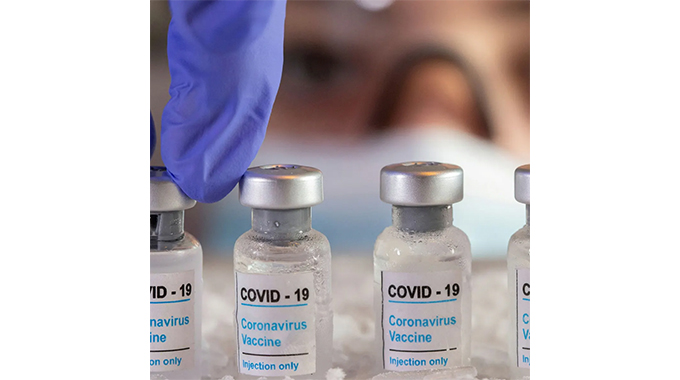
I hope I find you well and in good spirits. There has been a notable decline in the number of new cases and Covid-19 deaths. This coincides with the arrival of the Sinopharm vaccine from China. Vice President and Minister of Health and Child Care Dr Constantino Chiwenga was the first volunteer to receive the vaccine on Thursday.
The Covid-19 vaccine is an emergency vaccine registered by the Medicines Control Authority of Zimbabwe (MCAZ) under Emergency use Authority, this is in terms of Section 75 of Medicines and Allied Substances Control Act. The Pharmaco vigilance and Clinical Trials Committee will implement vaccine vigilance plans to monitor the safety and effectiveness of the Covid-19 vaccine in use.
All the Covid-19 vaccines, including the Sinopharm, have passed the initial stages to ascertain safety for use. Each government is to decide which of them is appropriate for its people. For Zimbabwe to achieve herd immunity, a minimum of 60 percent of the total population has to be vaccinated, which translates to 10 million citizens.
Vaccination of the eligible population is on a voluntary basis for free in Zimbabwe.
Ministry will consider a study to confirm immunogenicity of the product in the local population. This could mean we are part of the Phase Three trial of the vaccine. There will be blood collection to determine antibodies before and after vaccination. This will be the case with most vaccines as the world cannot wait for the ideal vaccines while watching the people suffer and die and economies wilt.
The ideal vaccine should be:
1. Safe: vaccine must be safe and must not itself cause illness or death,
2. Protective: vaccine must protect against illness resulting from exposure to live pathogen,
3. Sustained protection: protection against illness must last for years,
4. Induce neutralising antibodies,
5. Induce protective T cells,
6. Low cost,
7. Biologically stable,
8. Easy to administrate,
9. Have little to no side effects.
The Sinopharm vaccine will be distributed in phases.
Phase One, Stage One; Population at high risk front line workers (e.g. health workers, ports of entry personnel Zimra, immigration customs, security and others).
Phase One, Stage Two; village health workers, people with chronic illnesses, elderly population, inmates prison population and others in confined settlements including Tongogara refugee camp.
Phase Two; Lecturers, all school staff population and other staff at medium risk depending with the epidemiological picture of the disease.
Phase Three; Population at low risk. The actual administration of the vaccine will be done at fixed and outreach points. Bulawayo will be assigned four outreach teams. The assumption is vaccination will be conducted over 10 days in the first round and five days in the second round.
Social mobilisation will be done at all levels in order to create demand for the vaccine via radio, TV programmes and announcements, newspaper articles and advertisements, social media campaigns; Facebook, WhatsApp, Twitter, bulk SMSes, billboards, banners, posters and body media.
All medical waste will be incinerated either at point of generation if there is a functional incinerator or at some central incineration point in which case transport will be provided to move the waste to the incineration point.
In studies conducted in the preliminary Phase One and Two of trials, Sinopharm was seen to be a safe vaccine with mild and moderate reactions.
Forty-four (29 percent) of 144 vaccine recipients had at least one adverse reaction within seven days of either vaccination, compared with eight (17 percent) of 48 placebo recipients. The most common injection site adverse reaction was pain, which was reported in 34 (24 percent) of 144 vaccine recipients after either vaccination, compared with three (six percent) of 48 placebo recipients.
Additional injection site adverse reactions included swelling and itch. For the vaccine recipients in the group aged 60 years and older besides pain an additional injection site adverse reaction was induration.
All adverse reactions were mild or moderate in severity. No serious adverse event was reported within 28 days post vaccination.
The most commonly reported systematic adverse reaction overall after either vaccination was fever, which was reported in five (four percent) of 144 vaccine recipients, compared with three (six percent) of 48 placebo recipients.
Other systematic adverse reactions included fatigue, nausea, diarrhea and constipation in others. Muscolocutaneous abnormalities, headache, vomiting, and itch on a non-injection site were also reported.
One placebo recipient was reported to have muscle pain. All adverse reactions were mild or moderate in severity. No serious adverse event was reported within 28 days post vaccination for all cohorts. The neutralising antibodies against infectious SARSCoV-2 were detected in 26 (18 percent) of 143 vaccine recipients on day seven after the first inoculation, and increased to 100 percent on day 42 after the second inoculation.
The vaccine cannot be taken by
Children under 18 years.
Pregnant and breastfeeding women.
Anyone with allergies to vaccines in the past.
People with uncontrolled epilepsy and other neurologic conditions.
People with uncontrolled chronic conditions like diabetes, hypertension, and heart failure.
Asthma, poorly controlled HIV and late kidney disease.
Till next week stay safe and consider going for vaccination.
*Additional information was taken from a Lancet journal on the safety and immunogenicity of the Sinopharm vaccine.
Dr Tatenda Simango can be contacted on [email protected] or follow him on Facebook@ 9th Avenue Surgery.



 Online Reporter