Chronicle Editor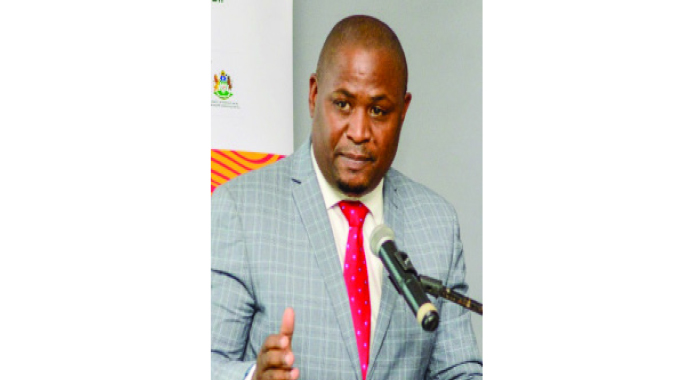
Oliver Kazunga, Senior Business Reporter
MORE than 30 local companies will showcase their products at this year’s Intra-African Trade Fair (IATF) slated for Durban, South Africa in November.
The IATF, which was first held in 2018, will be held for the second time between November 15 to 21.
It targets businesses in different sectors such as agriculture, automotive, construction and infrastructure, energy and power development, finance, health, manufacturing, mining and creative industries.
Foreign Affairs and International Trade Deputy Minister, Dr David Musabayana, officially launched the National IATF 2021 Campaign on the sidelines of the on-going Zimbabwe International Trade Fair (ZITF) in Bulawayo on Tuesday where he stressed the need for concerted efforts to diversify export products and markets.
“Due to the small size of our internal market, it is important that our companies employ aggressive marketing strategies,” he said.
“May I call upon our private sector companies in Zimbabwe to register with ZimTrade to be able to get requisite support services for export development and promotion, and export market intelligence.”
The National Trade Policy targets to increase exports to US$7 billion by 2023 and to US$14 billion by 2030. In view of this, Dr Musabayana said inculcating an export culture within enterprises across all sectors was vital.
“The private sector needs to play its part while Government does its part to facilitate production of goods and services for export,” he said.
ZimTrade chief executive officer, Mr Allan Majuru, who is country ambassador in this initiative, said the export promotion agency was already seized with the development of the Zimbabwe pavilion at the high-profile event.
“More than 30 local companies will be showcasing their products and services at the event,” he said.
“Zimbabwean companies will be exhibiting under the Zimbabwe Pavilion focusing on trade, investment and tourism opportunities.
“This is the second time we are participating at the event. Our first time was in 2018 at the inaugural fair which took place in Egypt.”
The second edition of IATF provides a marketplace for business linkages among buyers and sellers in Africa and will strengthen networks for Zimbabwean exporters for a fair share of the African market, estimated to have more than 1,2 billion consumers.
Mr Majuru said the country was pursuing an economic agenda anchored on increasing exports through diversifying markets and its products.
“The National Export Strategy, launched by President Mnangagwa here in Bulawayo in 2019 provides for the need to target regional markets, which are identified as low hanging fruits,” he said.
“It is against this thrust that the IATF will provide sustainable platform to strengthen networks between Zimbabwe’s private sector and buyers from the continent.”
The ZimTrade boss said IATF holds great potential to accelerate Zimbabwe’s implementation and achievement of both the National Development Strategy 1 (NDS 1) and the Sustainable Development Goals (SDGs) through increased trade and the resultant increases in foreign currency generation, improved livelihoods and economic growth.
Riding on the gains achieved at the previous edition of IATF, Mr Majuru said local companies were likely to get more positive results again this time.
As part of the preparation to derive more benefits during this year’s edition of IATF, ZimTrade is undertaking several programmes to improve business linkages.
Such initiatives include the completion of export promotion programmes in regional markets such as Malawi, Tanzania, and the Democratic Republic of Congo (Lubumbashi and Kinshasa) this year.
Through IATF participation, Zimbabwe seeks to unlock export opportunities and increase the nation’s exports, which have been growing over the past few years.
Zimbabwe’s exports to the world have grown from US$2,6 billion in 2010 to US$4,4 billion last year. In 2010, Mr Majuru said 58 percent of Zimbabwe’s exports were to African countries, which slightly grew to 62 percent last year.
In 2020, Zimbabwe’s major trading partners were South Africa (40 percent), United Arab Emirates (20 percent) and Mozambique (9 percent).



 Online Reporter