Zimpapers Reporters
ILLEGAL sanctions imposed on Zimbabwe continue to undermine Africa’s pursuit of economic integration by limiting the country’s full participation in trade, investment and shared economic growth, particularly in the SADC region.
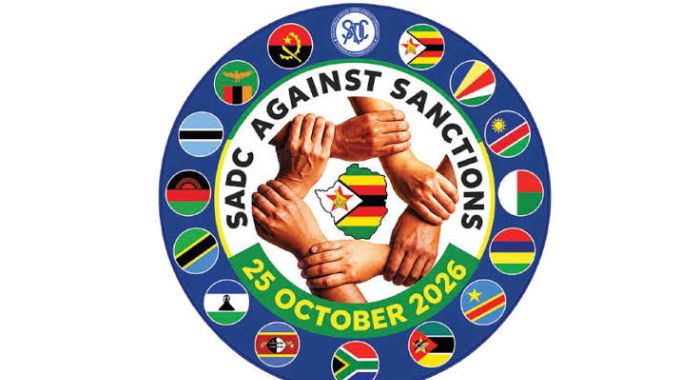
Zimbabwe commemorated Anti-Sanctions Day yesterday, with several countries and international blocs joining calls for the immediate and unconditional removal of the illegal sanctions imposed by the West.
The Anti-Sanctions Day was set aside by the 39th SADC Summit of Heads of State and Government, held in Dar es Salaam, Tanzania, in August 2019, to enable the region to collectively call for the unconditional lifting of the prolonged sanctions.
The annual commemoration demonstrates regional unity and solidarity with Zimbabwe against sanctions imposed by the United States, the European union and their allies in the early 2000s.
Since the inception of the commemorations, SADC Member States have used October 25 to amplify calls for the removal of the sanctions, which continue to constrain Zimbabwe’s economic development and regional integration efforts.
SADC executive secretary Elias Mpedi Magosi said the illegal sanctions had frequently destabilised Zimbabwe and the region at large.
He said SADC believed that the prosperity and livelihoods of any civilisation should not be held at ransom by external forces, as had been the case with Zimbabwe.
“The harsh economic and social realities emanating from these sanctions remain emblematic of the multiple attacks on Zimbabwe’s human and peoples’ rights.
“Such impositions run counter to our collective aspirations for global interdependence and the attainment of the African Union’s Agenda 2063 — the Africa we want, which envisions a peaceful, integrated, and prosperous Africa.
“Most importantly, the economic sanctions imposed on Zimbabwe continue to undermine SADC’s pursuit of regional economic integration by limiting Zimbabwe’s full participation in trade, investment and shared economic growth of the SADC region.”
Mr Magosi said this year’s Anti-Sanctions Day theme, ‘Inclusive Development through Heritage-based Innovation and Industrialisation, in a Multilateral world’, was befitting as it acknowledged
SADC’s shared pursuit of inclusive growth, resilience and sustainable development within the global system.
He reaffirmed SADC’s solidarity with Zimbabwe and reiterated the regional bloc’s enduring call for the immediate lifting of the sanctions.
“We urge those that have imposed these sanctions to revisit their stance and engage in constructive dialogue within the context of our modern multilateral world.
“Zimbabwe, a nation of enormous potential, has demonstrated resilience over time, and the lifting of sanctions will unlock the country’s full potential and pave the way for its meaningful contribution to the prosperity of the SADC region and the African continent.
“May I invite all the 16 SADC Member States, in the spirit of solidarity that has defined the region for over 45 years since the establishment of SADC, to stand with Zimbabwe and join the call for the unconditional lifting of the sanctions.
“Together, let us advance inclusive development where no country is left behind as we pursue a shared future marked by peace, stability, and prosperity of our people,” he said.
African union (AU) Commission chairperson Mahmoud Ali Youssouf also called for the immediate and unconditional lifting of the illegal sanctions, reiterating the continental body’s long-standing position on the matter.
“Once again renews the long-standing demand by the African union for the immediate and unconditional lifting of unilateral sanctions imposed against institutions and individuals of the Republic of Zimbabwe.
“The Chairperson remains extremely concerned by the negative impact of the unilateral sanctions on Zimbabwe’s socio-economic development.
“The unilateral sanctions have significantly constrained Zimbabwe’s access to international financial systems, deterred foreign direct investment, increased the cost of doing business, and severely limited the country’s ability to secure development assistance.”
Mr Youssouf said the illegal sanctions had severely undermined progress towards achieving Zimbabwe’s Vision 2030, SADC’s regional macro-economic convergence, the AU’s Agenda 2063 and the United Nations Sustainable Development Goals.
“The Chairperson of the AU Commission reaffirms the continued commitment of the AU to support the brotherly nation of Zimbabwe in mobilising efforts for the lifting of the unilateral sanctions.”
Other countries also reiterated their support for Zimbabwe, with Mozambican President Daniel Chapo calling for the unconditional lifting of the sanctions.
“The value enshrined in the United Nations Charter elevates this organisation to be the epicentre for global multilateralism.
“For this reason, we oppose the imposition of unilateral coercive measures which continue to penalise entire people in clear violation of the aforementioned Charter of the UN.
We thus reiterate our position in the support of ending of economic, commercial, and financial blockade imposed against Cuba.
“Likewise, we wish to express our solidarity with the brotherly people of Zimbabwe and reiterate our position in favour of unconditional lifting of sanctions against Zimbabwe and the other countries in the world,” he said.
Tanzania Vice President Deogratius Ndejembi said his country opposed the illegal sanctions, emphasising the importance of respecting national sovereignty and peaceful coexistence.
“Global solidarity must be concurrent with respect for each other’s sovereignty.
“Tanzania stands against the proliferating trend of some States to assume the responsibility of policing and imposing unilateral sanctions on others, thus undermining the principles of and peaceful coexistence.
“As stated previously, Tanzania reaffirms its position to oppose the use of such coercive measures against any Member State and reaffirms its unwavering solidarity with Cuba, Zimbabwe, and all other States that are subjected to such unjustifiable constraints.”
South Africa’s Minister of International Relations and Cooperation, Ronald Lamola, also called for the urgent removal of sanctions against Zimbabwe, saying unilateral coercive measures had far-reaching consequences beyond targeted countries.
“Unilateral coercive measures have negative spillover effects that seriously undermine third countries.
“Similarly, we also call for the urgent removal of sanctions against Zimbabwe.
“Our current reality demands that we act collectively to protect existing international institutions of justice from sanctions and intimidation.”
Ghana’s Ambassador Extraordinary and Plenipotentiary, Mr Bonaventure Adjavor, said lifting the sanctions would open opportunities for greater cooperation in energy development, agribusiness and other sectors critical to economic transformation.
“The theme for this year is very key. SADC is a renowned body, and the lifting of sanctions will allow energy development, agribusiness collaboration and synergies,” he said.
“Zimbabwe has been resilient in its economic growth and development.”
Chinese Embassy Chargé d’Affaires Tang Xiaoping said China had consistently stood with
Zimbabwe in defending its sovereignty and supporting its right to determine its own development path.
“China has always stood in solidarity with Zimbabwe and consistently supported Zimbabwe in protecting its sovereignty and pursuing the development path of its own choice, national stability, economic development and better livelihoods,” he said.
“We stand firmly with Zimbabwe and its people as they pursue economic development and better livelihoods.
“We call for the lifting of sanctions against Zimbabwe. We think Zimbabwe will prevail and justice will prevail.”