Online Reporter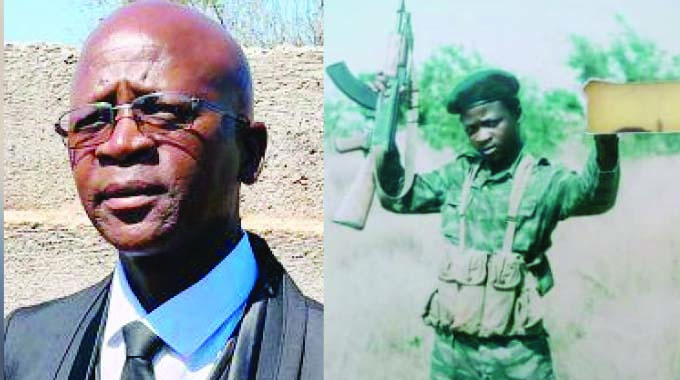
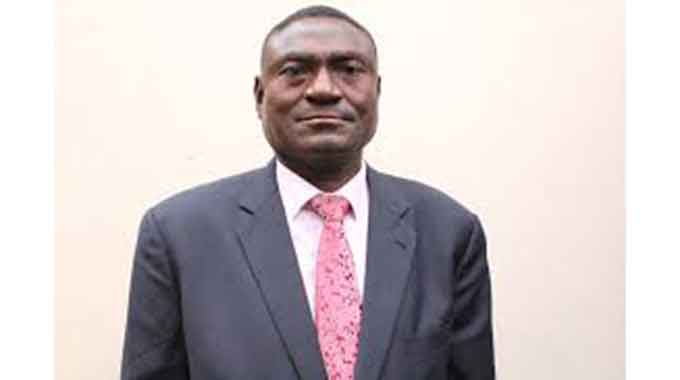
We continue our interview with Cde Charles Makhuya pseudonym Cde Njabulo Moyo), Survivor of the 26 February 1979 Rhodesian aerial attack on Boma Camp, Angola. In the previous instalment, Cde Charles Makhuya recounted to our Assistant Editor, Mkhululi Sibanda (MS), aspects of the military training he underwent. In this continuation, he delves deeper into the training process and the general living conditions at Boma Camp. Below are excerpts from that interview. Read on . . .
MS: Last time, you spoke about your training and mentioned that you specialised in anti-tank weapons. Let’s resume our conversation from there.
Cde Makhuya: After completing training, I was one of the cadres recommended to remain at the camp and was deployed to the pool of instructors. I was assigned to the medical team. However, one cannot discuss training without also touching on the general life at Boma Camp during our time as recruits. Reflecting on our daily life, the issue of diet stands out. Comrades struggled to adjust to the meals. We had rice every day, small portions at that and it was usually served with either beef or tinned fish.
The quantities were small, but the Cubans would reassure us, saying we shouldn’t worry about the small portions; we should focus on liberating our country, and once free, we would eat well. Despite the limited rice, breakfast was usually adequate. We were also provided with packets of cigarettes and were decently kitted out.
MS: Earlier in the interview, you mentioned sneaking into training as you had been deemed too young. How did you cope during the training?
Cde Makhuya: Yes, it was at Nampundwe Transit Camp during the selection process that now Brigadier-General Ambrose Mutinhiri and Kelly Malaba red-flagged some of us as being too young for training. However, as I mentioned before, with assistance from the Cubans, we managed to board the trucks and proceed. Despite our age, we did well during training. I estimate there were between 50 and 100 of us who had managed to proceed against the wishes of the commanders. There were comrades much older than us in the same group, and we trained well together. We noticed that the Cuban instructors seemed to have a soft spot for younger cadres like us.
MS: Who was the camp commander at Boma?
Cde Makhuya: The Cubans formed the main command element, but ZPRA also had its own overall commander.
When we arrived, the ZPRA commander was Cde Ronald Choga, originally from Masvingo Province. He was nicknamed “Bhotsheni” because he constantly reminded us to remain vigilant, even when answering the call of nature, something he emphasised in his less-than-polished SiNdebele. The camp commissar was Cde George Chavunduka, although he did not stay long before being redeployed. Colonel R Moyo was in charge of communications. Cde Choga had replaced Brigadier-General Tjile Nleya, also known as uDubhu or Ben Mathe, who had left with the first group to Angola.
MS: Do you still remember the Cuban who was the camp commander?
Cde Makhuya: Yes, of course. He was Cde Maturela. In our anti-tank company, we had another Cuban instructor named Cde Bafirio, who sadly died during the attack on Boma on 26 February 1979.
MS: After training, some of you were seconded as instructors. Tell us about that.
Cde Makhuya: We supplemented the first group of comrades who had also been chosen to become instructors. Each company from our group contributed two comrades for this role. I was assigned to the medical team.
MS: Let’s talk about the attack on Boma on 26 February 1979. What happened?
Cde Makhuya: It was truly a surprise attack. At the time, it seemed almost impossible for the Rhodesians to reach so deep into Angola and launch an assault. However, we remained vigilant, especially considering that the South African apartheid regime had previously attacked Kassinga, a major SWAPO base deep in Angola. Interestingly, the third group we had helped train alongside the Cubans might not have been meant to be attacked.
MS: Why do you say that?
Cde Makhuya: The third group’s pass-out parade was held in October 1978, and they were ready for deployment. I can’t recall who reviewed their parade, but for our second group, it was Zapu National Chairman, uMdala Samuel Munodawafa. After the parade, the third group’s return to Zambia was delayed, not just for a month, but throughout November, December, January, and into February, they remained at Boma.
MS: So what caused the delay in their return to Zambia?
Cde Makhuya: Shortly after their pass-out parade, trucks arrived and they boarded, ready to head back to Zambia.
However, before reaching Saurimo, where the Cubans had set up a base — a signal arrived from our Lusaka headquarters, advising against the move. They were instructed to return to Boma. While I’m not entirely certain of the exact reason, it appears intelligence suggested that the convoy might be ambushed by the Rhodesians.
MS: What were the events leading up to the 26 February 1979 attack?
Cde Makhuya: By then, recruits for the fourth group had started arriving, about 300 were already at the camp, though some were still at Saurimo. What is often left out of narrations is that not all members of the third group were present during the attack. By then, Companies 1 to 6 (infantry) had already returned to Zambia. Only Companies 7 and 8 also infantry remained at Boma, along with the anti-tank, engineering, mortar, and communications companies, as well as the anti-air batteries. Those were the ones present, along with the training teams. Although there was no formal intelligence warning us, nature or rather, our ancestors tried to communicate a warning, but we ignored it.
MS: You’re referring to supernatural signs. What exactly happened that you believe was a warning?
Cde Makhuya: On the night of 24 February and the following morning the 25th we woke up to find the camp covered with mounds created by small rat-like creatures, known as imvukuzane in SiNdebele. Some of the older comrades immediately said this was a bad omen — a sign of impending misfortune. Although many were uneasy, the warning wasn’t taken seriously. In a war environment, where suspicion is constant, no one dared suggest aloud that this could mean a Rhodesian attack. Had anyone said so, they would’ve been accused of being an enemy agent: “How do you know?” they’d be asked. So, although we weren’t warned in military terms, nature gave us a clear sign.
l To be continued next week, as Cde Makhuya gives a blow-by-blow account of the Boma attack.