


 malvernmugadzikwa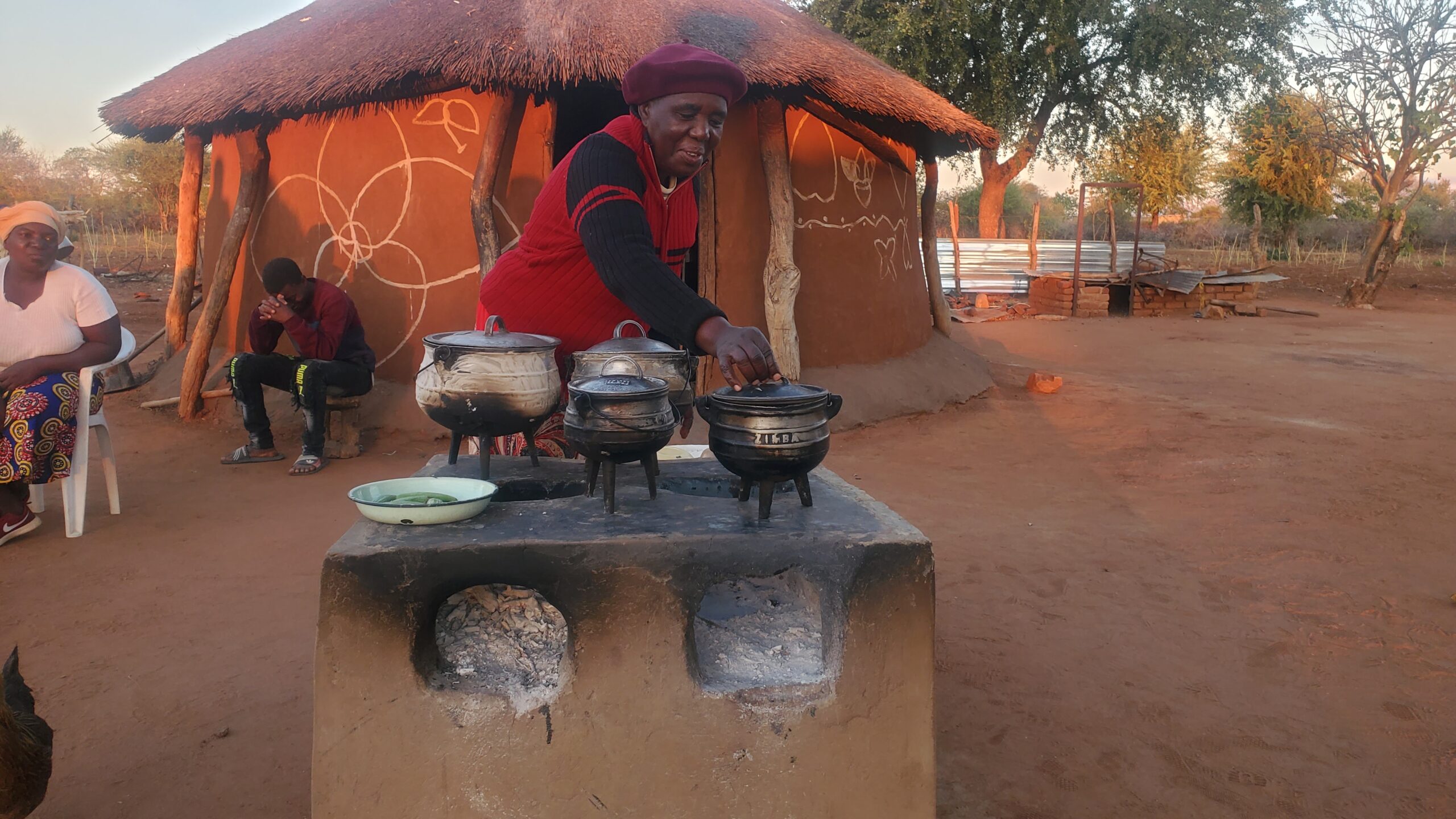
Theseus Shambare
ANXIETY and disillusionment gripped communities as the El Niño phenomenon took a toll on crops and livestock during the 2023–2024 summer cropping season.
The life ahead seemed bleak.
The only hope left was food aid from the Government and donors.

However, indigenous woody plants, long revered by local communities, have proven to be the ultimate survivors.
Thriving even in the harshest of droughts.
“Bambanani silondoloze imvelo yethu… Singathuthuka kanjani masibhidliza umganga wethu! Vusanani, bambanani silondoloze imvelo yethu,” sing members of the Vusanani co-operative group at Natane Ward in the Molongwa area of Bulilima district, about 140 km south-west of Bulawayo, the country’s second-largest city.
“Wozani lonke libone, buyani, buyani lonke lizobona izenzo zabomama…buyani lonke,” the group sings as it showcases how they are sustainably harnessing biodiversity as a means of income generation and improving their livelihoods.
The group in this southwestern part of the country is the epitome of success in terms of how marula tree and fruit utilisation can help to uplift local communities from both hunger and poverty to improved livelihoods characterised by hope and local enterprise.
Their song’s message is clear: “Unite to conserve our biodiversity. Unite to fight deforestation and environmental degradation.”
The marula tree (Sclerocarya birrea) has been a blessing for the Vusanani Women’s Club at Natane.
The marula tree, known as mupfura in Shona, umganu in Ndebele, is an indigenous tree that is highly prized for its fruit in Molongwa.
For most people in this district, it is a good source of nutrition because the fruit is high in vitamin C and contains a protein-rich nut at its core.
The marula tree is more than just a tree.
A gift of marula nuts is a sign of friendship.
In addition, people often gather around the large marula tree for meetings and other rituals, signifying its cultural significance.
While people appreciate the tree for its shade and beauty, it also supplies valuable food and economic value.
The group has been harnessing the power of marula to improve their livelihoods and uplift their community.
“Ever since we started the project in 2010, our lives have changed a lot,” says Judith Ncube, chairperson of the Vusanani Women’s Club.
“We are making money to buy food, send our children to school, and buy goats and cattle.”
The group makes marula jam, oil, and peanut butter, which they sell to pharmacists and other customers locally and internationally.
“Marula oil is good for skincare,” says Ncube.
“It’s quite good for moisturising, healing, and revitalizing your skin.”
The group buys a cup of marula seed for $1 and then uses an oil pressing machine to produce oil.
About 10 litres of oil are produced per week.
The group of 15 from this enterprise makes profits of at least US$1000 per month.
The story of Vusanani Women’s Club is just a testimony to how Zimbabwe’s richness in indigenous woody plants, if utilised, can climate-proof Zimbabwe from severe hunger while putting indigenous woody plants on the world map.
According to the study “Contribution of edible indigenous woody plants as a coping strategy during drought periods” by Chinomona and others (2024), Zimbabwe is home to at least 23 edible indigenous woody plant species that have been used by local communities as a coping strategy during drought periods.
The study highlights the importance of embracing these plants as a buffer against drought and developing innovative strategies for their sustainable use and restoration.
By leveraging these natural resources, communities like Vusanani can build resilience against climate change and improve their livelihoods.
From southeastern lowveld to the southwestern corner of the country, Zimbabwe is home to a diverse range of indigenous woody plants, each with its unique properties and uses.
From food to medicine for both, humans and livestock.
In this feature story, we embark on a journey to explore the importance of these plants, talking to local communities and experts along the way.
In Mashonaland East province, the majestic Uapaca kirkiana (mahobohobo or mazhanje) and the mobola plum (hacha) have been a godsend for local villagers.
Kirkiana tree is mainly distributed in semi-dry and dry areas although it can grow in some relatively wet areas of Zimbabwe.
It produces fruits in abundance that ripen during the period October to February.
During this period, sites of children and women selling the fruits along the highways have become synonymous.
“Despite having failed crops, mazhanje have been the source of our income. We generate money that can buy us enough grain to take us through the dry season to the next harvesting period,” said Mrs Matilda Mandinyanya from Nhakiwa, Murehwa.
In Mutoko district, people of all ages look forward to the mobola plum (hacha) season every year.
And no-one more than Agnes Zinhu and Janet Zirugo, three ladies who turn these delectable fruits into sweet treats for family, friends and strangers alike.
Agnes, a young mother of two, has been eating and using hacha fruit since she was a little girl.
She collects the ripe fruit in a big sack when they fall to the ground.
It takes a lot of fruit to make hacha syrup and other treats.
For her kids’ favourite snack, mahanya, she mashes a mixture of very ripe fruit with less ripe fruit, in a mortar and pestle.
Her kids love it so much, she sometimes even serves it for lunch.
“My kids love it, it is filling and also very nutritious and hydrating,” she notes.
Every season, Agnes makes batches of hacha syrup which she then uses to spread onto bread or as a sweetener for porridge instead of using sugar.
Occasionally, she makes hacha syrup cakes, locally known as zvambwa, which she says are not only delicious, but cheap and easy to make, and her kids go wild for them.
“I like the fact that the hacha is a wild tree, so it is easily accessible, and I don’t need to pay for the fruits, but I can actually get money from the tree when selling my syrup and cakes,” she says.
For seventy-two-year-old Janet Zirugo, making zvambwa has been a tradition since her tender age.
She uses a family recipe that her mother passed down to her and recalls helping her mum make and sell the little cakes when she was young.
She sells her cakes both to travellers at the nearby Mozambican border and to people in her community, just as her mother did when she was young.
Gogo Zirugo says the snacks are a family favourite with her husband and grandkids too.
From the nut kernels she makes a nut butter which she loves to put in vegetables.
On a lazy afternoon, she roasts hacha nut kernels and enjoys them as a snack, along with the fruit.
“I have been using the proceeds to buy feed for my chickens and fertiliser for my garden vegetables, which I also sell to the local community.
“I do not beg money for a living despite having been faced by a number of droughts,” said Gogo Zirugo.
Hacha, when pounded, also produces juice and tasty beer.
The plant’s leaves and roots are used to make a nutritious tea that is rich in vitamins and minerals.
Children, despite not contributing to the carbon emissions that are causing climate change that is increasing the frequency of the El Niño phenomenon, are at the receiving end.
Zimbabwe is considered one of the high-risk zones for children affected by climate change according to UNICEF’s Children’s Climate Risk Index (CCRI), contributing to the 1 billion children considered vulnerable worldwide.
It is against this background that in the semi-arid Mangwe District, care groups supported by the Government, UNICEF and partners through the UN Central Emergency Response Fund (CERF) and UNICEF Humanitarian Funding, have become a vital cog in Zimbabwe’s response to one of the worst El Nino-induced droughts on record that is currently sweeping the Southern Africa region.
It is under these care groups that have been the key that unlocked some of the unknown uses of some edible indigenous woody plants in the area.
A mother of a nine-year-old baby, Dumisile Hawala Sibanda (24) from Embakwe Village, says she has become a better mother after joining the Sizanani Care Group in Matabeleland South’s Mangwe District as she now plays a positive role in her community by promoting children’s wellbeing in a time of crisis by utilizing the edible indigenous woody plants through the exchange of knowledge under these coordinated groups.
Sibanda, says the Group aims to prevent malnutrition in children by providing mothers and caregivers with information on how to provide balanced diets to their children using readily available edible indigenous woody plants and a few harvested crops from the previous season during a drought period.
“We never knew that we were surrounded by such healthy and nutritious food within our vicinity until Unicef and their partners came to us with nutrition experts,” said Sibanda.
Women within this community now gather wild fruit called mahheha and umpumpulwane.
“Through the training, we have discovered nutritious traditional plants that our forefathers used to eat during dry seasons. Mahheha, is a fruit that is dried and used as relish.
“Umpumpulwane is yellow when it is fresh which acts as a nutritious snack that is mouth watering. We now even travel to Maphisa just to sell them because many people now appreciate their value. It lets you feel want to drink more water, and our children are now always hydrated and healthy,” she said.
The indigenous fruits are also being used in trading in exchange for grain from areas that managed to harvest crops.
“When we get some grains, we use them to prepare umxhanxa/nhopi by mixing maize grain with ijodo,” she added.
The Care Groups not only share food ideas but also deliver a holistic package of counselling and support, including health, nutrition, child development, water, sanitation, and hygiene.
There are over 300 Care Groups across five of Mangwe’s 17 wards.
Another woody plant, Pterocarpus angolensis (Umvagazi in Ndebele or Mubvamaropa in Shona) trees has been a blessing for local villagers.
“This one relieves stomach disorders, headaches and malaria, diseases usually associated with drought seasons. You just crush the bark and drink the fluid.
“Our grandmothers taught us which ones to eat and how to prepare them,” says Mai Moyo, a local villager.
Sycomore fig known as Mukuyu or muonde in Shona and Umkhiwa in Ndebele, is a revered tree associated with fruits, birds as well as traditional ceremony gatherings.
The leaves and pods of the Mukuyu tree are rich in protein, providing a nutritious snack for both humans and animals.
“Children love to play in such figs, climbing to get the fruits, gathering the sap for birdlime and locally-made chewing gum. Thus, muonde is important to us as a connecting point for community, ecology and spirituality.
“Its roots also cure syphilis and diarrhoea,” said Jairos Makanga from Embakwe Village.
In the Midlands province, the mutamba plant (Gardenia volkensii) has been used for generations to treat various ailments.
“We use the roots to make a medicine that cures fever and coughs,” says Mai Kadzima, a local traditional healer.
“It’s a very powerful plant.”
In Matabeleland North province, the umgqabaza plant (Croton gratissimus) has been used to treat skin conditions.
“We use the leaves to make a paste that cures eczema and other skin diseases,” says Nkosi Ndlovu, a local traditional healer.
“It’s a very effective plant.”
These indigenous woody plants are not only important for their medicinal and nutritional value but also for their cultural significance.
“These plants are our heritage,” says Mai Nolia Moyo of Bubi district.
“We must protect them for our children and grandchildren.”
However, the preservation of these plants is under threat due to deforestation and biopiracy.
“We are losing our genetic resources at an alarming rate,” says Dr Kudzai Kusena, curator of the Genetic Resources and Biotechnology Institute.
“We need to protect our indigenous plants before it’s too late.”
The Zimbabwean government, he said, has taken steps to protect the country’s genetic resources, but more needs to be done.
“We need to strengthen our laws and regulations to prevent biopiracy,” says Dr Kusena.
“We also need to educate our communities about the importance of preserving our indigenous plants.”
Economist and social commentator, Clemence Machadu said Zimbabwe is too blessed to be food-insecure.
“Zimbabwe’s forests are blessed and rich. While conventional agricultural approaches have their limitations, there is one largely untapped resource that holds the key to fostering resilience and self-sufficiency-Zimbabwe’s forests.
“There are a lot of neglected and underutilised food species in Zimbabwe’s forests that can be harnessed as sustainable supplements in the mainstream food system.
These are the very time-tested foods that have been consumed for many generations and have provided nutrition and medicinal benefits to our people,” said Machadu.
Our nation, he said, is consuming a lot of processed food that contains artificial ingredients which are high in sugar content and refined carbohydrates.
He added: “Some of these processed foods have been linked to increased cancer risks, heart diseases, high blood pressure, diabetes and other health risks.
“If we scale up harnessing of foods provided by our forests, this can contribute to food and nutrition security. Sadly, most of these foods just rot in the forests every season without being harnessed and preserved for consumption.”
“Imagine how much hacha, matamba, makwakwa, masawu, maonde, mutsine, mapfura, mauyu, tsenza, majuru, ishwa, mandere, harurwa and hwiza that go to waste every season because we are not doing enough to optimally harvest them for sustainable consumption!” he exclaimed.
As we conclude our journey through Zimbabwe’s savannah, it is clear that indigenous woody plants are the unsung heroes of the country’s natural heritage.
They have been a lifeline for local communities for generations, providing sustenance, medicine, and hope in the face of adversity.
These plants are not only a testament to nature’s resilience but also a vital lifeline for humans and livestock alike.
X:@TheseusShambare



 Bongani Ndlovu
 Online Reporter