Online Reporter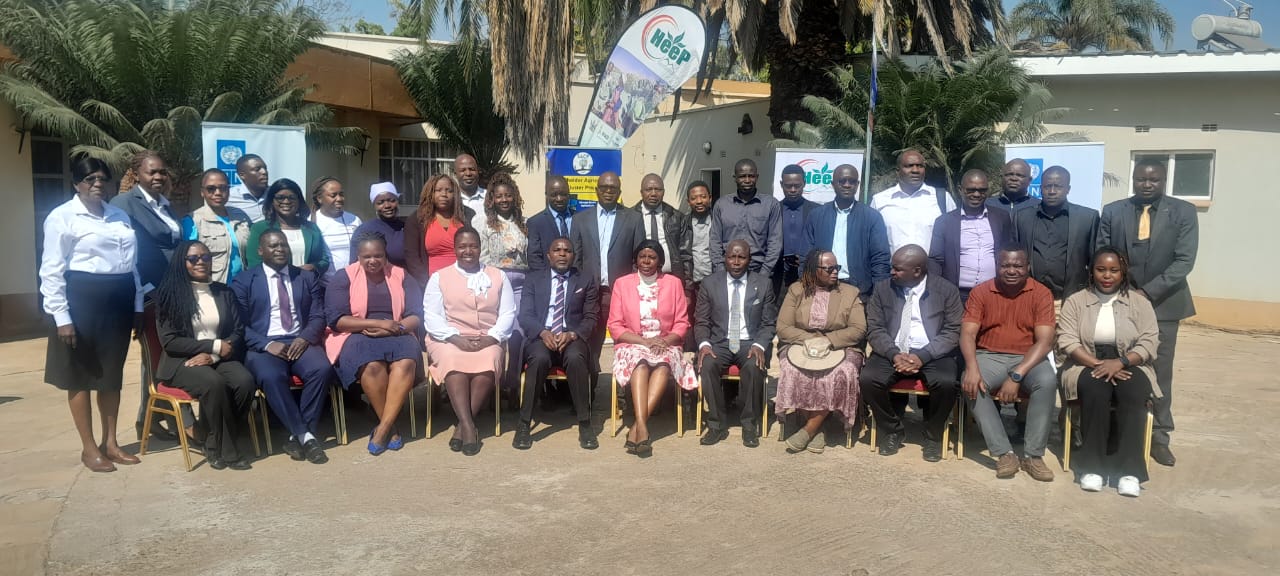
Tongai Mashonga [email protected]
GOVERNMENT has emphasized the importance of credible data and robust monitoring and evaluation in driving Zimbabwe’s agricultural sector growth and accelerated domestic production.
Permanent Secretary in the Ministry of Agriculture, Mechanisation and Water Resources Development, Professor Obert Jiri, said this in remarks delivered on his behalf by Mildred Mapani,
Director of Strategic Planning, Monitoring and Evaluation, at the closing of a five day Technical Capacity Building Workshop on Monitoring, Evaluation, Reporting and Data Systems in Kwekwe on Friday.
Prof Jiri said agriculture remains the backbone of Zimbabwe’s economy, employing over 60 percent of the population and contributing significantly to GDP, exports and food security. To unlock its full potential, decisions must be anchored on evidence, he said.
“We can no longer afford to plan, implement and review programmes based on assumptions. We must embrace evidence-based planning, implementation and review if we are to achieve the targets set under NDS2 and ultimately Vision 2030,” said Prof Jiri.
He noted that the training, supported by UNDP, IFAD, HEEP and SACP, was designed to equip officers with skills in Results-Based Management, digital data collection, data analysis, dashboards and reporting.
“This is not just a training, it’s a deliberate investment in building institutional capacity to track progress, measure impact, ensure accountability and improve service delivery to our farmers,” said Prof Jiri.
He emphasized that M&E must move from being a compliance exercise to a management tool that informs policy, resource allocation and programme redesign.
“When Monitoring and Evaluation is done well, it tells us what is working, what is not working, and why. It helps us to reallocate resources to where they matter most – to the farmer in the field,” he said.
Prof Jiri said the ministry was aligning its systems to Government’s broader reform agenda, including the Whole of Government Integrated Results-Based Management framework being spearheaded by the Office of the President and Cabinet.
He added that climate change, market volatility and fiscal constraints mean agriculture can no longer rely on traditional methods of tracking performance. Digital tools and real-time data are now essential.
“We are committed to modernising our M&E systems so that they are integrated, e-enabled and able to provide timely information for decision-making at national, provincial and district levels,” he said.
Prof Jiri challenged the participants to become ambassadors of change in their provinces and districts.
“The knowledge you have gained must not gather dust. It must be cascaded, it must be applied, and it must translate into better planning, better implementation and better results for our farmers,” he said.
“Together, let us build an agricultural sector where every programme delivers measurable results, every dollar is accounted for, and every farmer feels the impact of Government interventions.”