Online Reporter
Victoria Ruzvidzo
Editor’s Brief
AT least two key meetings were held by the Office of the President and Cabinet to initiate and formalise an audit of National Development Strategy 1 (NDS1) and launch its successor, NDS2.
Both meetings emphasised the need for a thorough look at achievements and shortcomings under NDS1, expected to inform NDS2.
Both strategies are predicated on the national goal of attaining an upper middle income economy by 2030.
Let’s define what an upper middle income society is.
The World Bank states that it is one whose gross national income per capita is between US$4 046 and US$12 535.
It is derived by dividing the total amount earned by a country from its products with its population.
National development strategies are conceived and crafted with the ultimate goal of attaining such a status and it is telling that the Office of the President and Cabinet is taking the lead role in this quest.
The workshop convened last week included stakeholders such as business member organisations, special interest groups, the academia and civil society to gather input for NDS 2.
Indeed, it is crucial that the country must work towards goals, aspirations and visions which serve as guiding principles.
Citizens should coalesce around them, transcending any potentially divisive dynamics.
It is significant that the highest office in the land continues to encourage an inclusive and collaborative approach, probing and prodding the entire populace’s spectrum for input.
It is precisely as it should be as expertise, experiences, ideas and perspectives are shared, simultaneously fostering buy-in, engagement, commitment, responsibility and ownership.
As NDS1 comes to an end, we use experiences to consolidate NDS2.
Data-driven and evidence-based decisions should be the hallmark of the successor strategy.
Results-based management is a critical component of the development discourse.
Under NDS1, there has been an intentional allocation of substantial resources to most sectors of the economy in pursuit of Vision 2030.
For instance, innovation hubs at virtually all universities have been resourced with infrastructure and equipment, and output from these hubs has provided local solutions to quite a number of challenges, saving the country’s foreign currency in the process.
Village Business Units have been established and resourced while huge amounts of money have been invested in overall infrastructure development.
Since 2021, billions have been directed towards dam construction.
The Emergency Road Rehabilitation Programme was allocated billions of dollars and the Government intends to increase the number of trafficable road networks from 14 700 to 24 500 by the end of NDS1. These projects are funded directly by the Government and do not carry the debt burden.
The private sector has not been idle either, contributing to the national vision.
Public Private Partnerships have been in evidence in the construction of roads and other infrastructure.
According to the Zimbabwe National Statistics Agency, the country’s exports were at US$7,2 billion in 2023.
Imports for the same year stood at US$9,2 billion, thus recording a trade deficit of US$2 billion.
It is important to note that the county’s export list is shorn of any substantive manufactured goods, an area which beckons address.
Zimbabwe’s export earnings are primarily made up of raw or semi-processed minerals and semi-manufactured tobacco.
Furthermore, there has been increased investment in mining on the back of a rally in global prices.
Lithium has pricked a lot of interest,with Zimbabwe having the largest deposits in Africa.
Globally, Zimbabwe is the third largest producer of platinum after South Africa and Russia.
This country has other substantial mineral reserves which include:
Over 30 deposits of nickel in the Great Dyke
Over 12 billion tonnes of coal in the mid-Zambezi basin
Kimberlites of diamonds in Manicaland and Masvingo
Zimbabwe’s export earnings would exponentially increase if value-addition is done at a large scale. This process has to be deliberate, intentional and expansive.
With regards tobacco, Zimbabwe reached its lowest position in the 2009, when less than 50 million kg was recorded.
Recovery has been impressive in this sector rising to a record-breaking 306 million kg worth more than US$1 billion so far this season. More effort needs to be directed towards tobacco value addition.
We export raw tobacco to countries such as China, the United Kingdom, United Arab Emirates and Türkiye.
Zimbabwe could earn more through value addition in our pursuit of an upper middle income economy,
Furthermore, diversification and inclusivity, pursed under NDS1, should be consolidated in the second phase.
Collaboration is an enduring operative thrust.
Among ministries, this ensures
A holistic approach to development
Avoids replication, synergises efforts and increases efficiency
Optimises impact of initiatives
Fosters unity and coherence
Provides platforms for consensus building.
With 61,4 percent of Zimbabwe’s population in the rural areas, the mantra “leaving no one and no place behind” must continue to be consolidated.
It addresses inequalities, consolidates equity, underlines fairness and ensures that everyone is primed to contribute meaningfully towards the attainment of vision 2030.
Globally, the private sector drives economies, so efforts directed at improving ease of doing business must persist, with timeous responsiveness envisaged where there is scope for improvement.
The President continues to preach that Zimbabwe is open for business. The entirety of his team is thus expected to practically demonstrate it by continuously recalibrating processes, harnessing initiatives and facilitating smooth flow of business.
When the private sector and Government work hand-in-glove, tremendous progress obtains. It is for both parties’ mutual benefit to ensure a sustained cordial, sincere and productive relationship.
Zimbabwe needs to grow at an average annual rate of 5 percent to achieve upper middle income status. This is doable, notwithstanding the lower growth rates in some periods due largely to droughts.
Realistically, this calls for elevated performance across the board, which is within reach.
In this vain, the establishment of the Mutapa reinvestment Fund is a gamechanger. Parastatals have really been a drain on the fiscus.
Mutapa chief executive Dr John Mangudya has said that diagnostic assessments conducted revealed the need for improved corporate governance, including greater board diversity and more transparent decision-making processes.
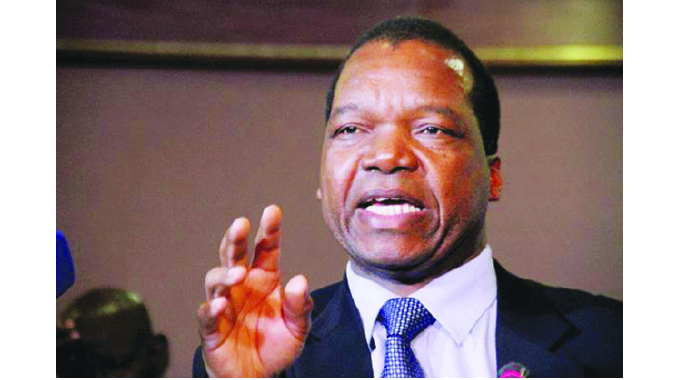
Mutapa is solidly at work and the results are already showing. This is laudable.
Overall, the Chief Secretary to the President and Cabinet Dr Martin Rushwaya said by October, the evaluation of NDS1 would have been completed.
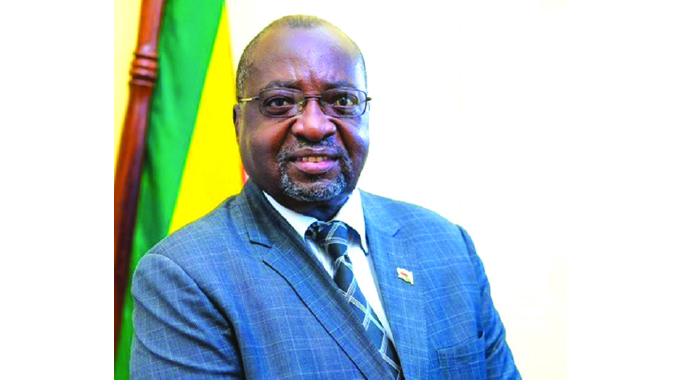
Already 10 heads have been appointed to lead formulation of the 10 thematic areas under NDS2.
Such tangible efforts are laying a solid foundation for NDS2 and reassure the nation of the achievement of the envisaged upper middle income economy by 2030.
In a recent post-Cabinet briefing, Information, Publicity and Broadcasting Services Minister Dr Jenfan Muswere told the nation that the Government intended to build on the successes of NDS1 in crafting NDS2, whose draft is expected to be presented to Cabinet for approval in November. It is set for launch in December.
At last week’s workshop, Dr Rushwaya said the successful implementation of NDS2 would require transformative leadership, alignment of goals across all sectors and concerted effort.
He was spot on.
Furthermore, innovation, industrialisation, technological adoption and entrepreneurship are set to yield results, anchored on inclusivity, growth, sustainability and poverty alleviation, as we drive our economy towards a prosperous upper middle income one.
We are standing on good ground in terms of achievements so far and prospects that lie ahead.
So as we move forward, lets give it our all. Posterity expects and deserves no less!
In God I Trust!
X handle: @VictoriaRuzvid2; Email: [email protected]; [email protected]; WhatsApp number: 0772 129 972.