

 Chronicle Editor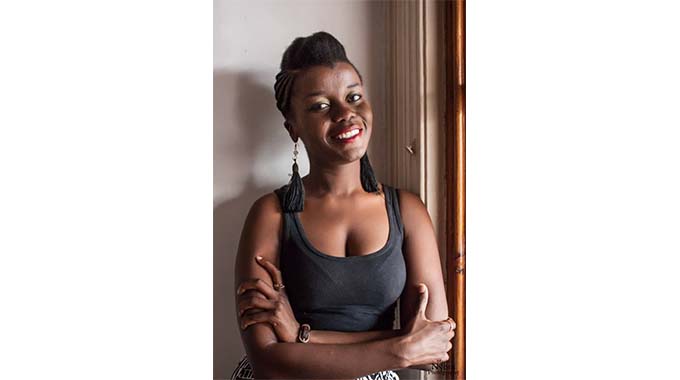
Millicent Andile Dube, Showbiz Reporter
Award-winning poet, Tinashe Tafirenyika has advocated for women to be protected against online violation as the world is celebrating women.
The International Women’s Day celebrations were held on Wednesday under the theme: ‘DigitALL innovation and technology for gender Equality” with locals joining in on the celebrations.
In Bulawayo, arts practitioners gathered for an exhibition that was showcased at the National Art Gallery of Zimbabwe in Bulawayo to celebrate the day.
Speaking at the event themed: “Raising awareness & formulating strategies for addressing online violence against women in politics through interactive art”, Tafirenyika, an award-winning poet said: “Digital skills among women are lacking and this leaves us beholden to other people, unable to complete projects by ourselves, especially with the lack of resources. I’ve seen programmes meant to teach women and girls these skills and I hope these expand because the digital gap is very real. “Female artists will be better placed to compete in their respective fields with these skills, given that we are now in a digital age.”
The use of animations was the order of the day at the local celebrations where seven young women showcased an animation that prompted the end of online violence against women.
Working on the last project that she released a month ago on her YouTube page titled ‘Master’, Tafirenyika has vouched through her experience that women should also have the same liberty when it comes to digital innovation and technology.
Reminiscing on her last animation, she said she did the visuals herself after failing to get professional animators on board. She, therefore, resorted to downloading several animation applications until she found one that was easy to use. Through access to the internet without any hindrance, she was able to complete a whole project by herself after having stalled it for two years.
“Technology has changed every aspect of our lives – we cannot escape it. Depriving women in this area (technology) is based on the same premise as denying girls an education; that women are dangerous when they are empowered and capable. It may shock some, but women are people and in order to participate in society, which is a human right, they need the same access as everyone else.
“Zimbabwe has 16 official languages and almost as many tribes, which means our culture is very dynamic and diverse as it is a mixture of everything. If we can mix different traditions and beliefs, we can add digital innovation to the mixture as it’s already a very colorful mosaic,” she said.
In 2017, Tafirenyika became the first woman and youngest person to receive a National Arts Merit Award (Nama) in Spoken Word Poetry in Zimbabwe. Thereafter she remained to shine at her work.
“I do feel recognised and I think that has a lot to do with the legitimacy I was granted by the Nama awards I won earlier in my career. I don’t feel that I have been given my dues and it’s a pandemic in our, and other industries that the paying opportunities are often granted to male artists, even in women’s rights programming. Pay female artists,” she said.
The poet’s works mirror the experiences of black African women and she has made sure that her works are documented and made a part of the mainstream as a way to uplift other women.
Sharing her thoughts on Women’s Day, Tafirenyika said: “Women’s Day makes me sad because a lot of people and organizations with power to actually improve women’s lives just post motivational posters and call it a day, instead of funding grassroots movements working to better women and girls’ reality or advocating for changes in the law to cement their rights.
“What should have been a celebration of women’s fight for equality is now a performance and a frustrating reminder to those who are actually doing the work that they are on their own,” she said.


 Blessing Chizhande
 Online Reporter