admin
admin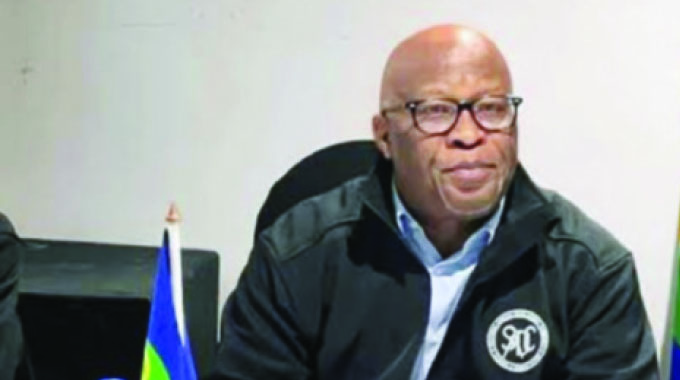
Innocent Mujeri Herald Correspondent
The recent conclusion of Zimbabwe’s elections has done more than just stir conversations around the country’s political dynamics; it has also thrust into the spotlight the various external influences that seem to be shaping Africa’s democratic trajectory.
At the centre of this intricate web is Nevers Mumba, the head of the Southern African Development Community (SADC) Election Observer Mission in Zimbabwe.
While his role would traditionally be perceived as that of an impartial observer providing a neutral assessment of the electoral process, there are growing suspicions that suggest otherwise.
Mumba is increasingly being viewed as a possible agent of external interests, specifically Western powers, with the aim of advancing the contentious goals outlined in the Gdansk Declaration. One may ask why the focus on Nevers Mumba, and what does his role have to do with the Gdansk Declaration?
To answer this, it is crucial to understand the broader geopolitical landscape.
The Gdansk Declaration has recently been a topic of intense scrutiny.
While it professes to champion democratic values, its primary signatories and endorsers are largely opposition figures from various nations, many of whom have been vocal critics of their respective ruling governments.
This has led to the belief that the declaration is less about fortifying democratic institutions and more about a regime-change agenda, masked in the noble language of democratic reform.
It increasingly appears that Mumba was not merely overseeing the electoral process in Zimbabwe, but was likely on a mission to advance the agenda set forth by the Gdansk Declaration.
Originating from a meeting held in Gdansk, this controversial declaration attracted a host of opposition figures, primarily from Africa, Latin America, and Central Europe.
Although it claims to focus on strengthening democratic ideals, the 21-point Declaration — endorsed by 58 delegates, including Nobel laureates like Lech Walesa and Ellen Johnson-Sirleaf — appears more focused on facilitating regime change than promoting genuine democratic progress.
Rather than an earnest dialogue about democratic values, the Gdansk gathering seemed more intent on empowering opposition figures to seize power in African nations, potentially under ambiguous or questionable circumstances.
Given this backdrop, Mumba’s leadership role in the SADC Election Observer Mission takes on a new layer of complexity.
A task that should have been focused solely on ensuring a free and fair electoral process now raises questions about its impartiality and, by extension, the integrity of external observer missions in African elections at large.
Furthermore, there are intricate connections to consider, specifically Mumba’s appointment by Zambian President,
Hakainde Hichilema is a known associate of organisations that are aligned with the ideals propagated by the Gdansk Declaration.
Such affiliations muddy the waters and raise valid concerns about whether Mumba’s observations and conclusions can truly be impartial.
It is also worth noting that there is an inherent tension between the ostensibly noble objectives of observer missions and the stark political realities in many African countries.
The SADC mission, under Mumba’s leadership, was expected to offer an unbiased eye, ensuring the credibility of the Zimbabwean elections. Yet Mumba’s perceived alignments risk undermining this very credibility and feeding into the ever-persistent narrative of Western powers employing proxies to influence outcomes in African states.
In essence, the role of Mumba in the SADC Election Observer Mission was not just a matter of assessing Zimbabwe’s electoral process.
It has become a case study in the broader debate on foreign influence, sovereignty, and the delicate balance that African nations must maintain as they navigate their democratic journeys.
Given the far-reaching implications of such a role and its potential to cast a long shadow over not just Zimbabwe but the entire continent, the suspicions surrounding Mumba serve as a stark reminder that Africa must be ever-vigilant against forces that seek to shape its destiny from the outside.
Last week, Mumba released an observer report that, rather than embodying neutrality, seemed like a veiled attack on the ruling ZANU PF.
It begs the question, “Was Mumba executing a hidden agenda aligned with the Gdansk Declaration?”
The conjecture gains ground when one considers Greg Mills of South Africa’s Brenthurst Foundation, a known signatory of the Gdansk Declaration.
The foundation, created by the Oppenheimer family, is openly influential in Zambia’s governance, particularly with President Hakainde Hichilema, the appointer of Mumba as the head of the SADC Observer Mission.
An article from Africa Intelligence published on June 13, 2022, highlighted this sway.
It is not a far stretch to think Mumba was guided, if not mandated, by his superiors, who themselves have been influenced by external forces.
What is at stake here is the autonomy of African countries – Zimbabwe included- conducting elections without foreign interference.
The legacy of colonialism should have taught us that sovereignty is non-negotiable.
From the Democratic Republic of Congo to Libya, the consequences of foreign meddling are disastrous.
Mumba, a Zambian, should know better.
The historical relationship between Zambia and Zimbabwe, dating back to the liberation struggle, has been one of mutual respect and shared destiny. We are one people, divided only by the mighty Zambezi River.
To the signatories of the Gdansk Declaration and their Western backers, it appears that an election is only “free, fair, and credible” when an opposition leader amenable to them comes to power.
This dangerous approach undermines not just the integrity of the electoral process but also the fragile democratic institutions that many African countries are striving to build.
It is high time that African nations stand up to protect their democratic sovereignty from outside influences that have their self-interests disguised under the banner of democracy. Mumba should not trade his conscience for “30 pieces of silver.
He needs to reflect on the weight of his actions on the cordial relationship that Zambia and Zimbabwe have built over decades.
The Gdansk Declaration and its objectives should not become the playbook that disrupts the political stability of African nations.
It should not dictate the political future of Zimbabwe or any other African nation. Democracy, in its purest form, should come from the will of the people, not from foreign declarations or interests.


 Online Reporter