admin
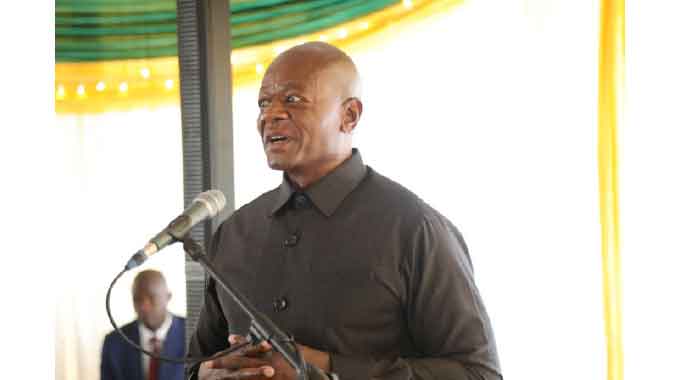
adminPermanent secretary in the Ministry of Agriculture, Mechanisation and Irrigation Development Mr Ngoni Masoka said the policy was at an advanced stage.
He made the remarks at a seminar to discuss the competitiveness of agriculture, which contributes 15-18 percent of the Gross Domestic Product.
The policy seeks to address issues constraining agricultural development, chief among them elusive, expensive and short-term funding.
It is expected the new policy will help restore the status of Zimbabwe as a leading agriculture-driven economy in Africa.
“The new agriculture development policy is already there, only that it has to go through various clearances before it can be a public document,” he said. “The draft policy is at an advanced stage of clearance in Cabinet.”
Mr Masoka said the new policy document should have been passed in Cabinet this week, but this was not possible due to other pressing issues.
Mr Masoka’s remarks came on the back of stakeholder calls for the crafting of a national agriculture development policy.
This follows the launch of the industrial and trade policies by the Ministry of Industry and Commerce in May this year.
But close linkages between agriculture and industry meant that a new agriculture policy was equally critical.
Confederation of Zimbabwe Industries president Mr Kumbirai Katsande said the economy was “in crisis” with agriculture and manufacturing the worst affected compared with other major sectors, such as mining and tourism.
“Land under cultivation has not increased for maize between 2000 and 2010 and yields have declined by 25 percent,” he said.
“Wheat is the worst case with yields down by 50 percent and area under cultivation at 30 percent or less
“Beef production recovery is very slow and for dairy, Zimbabwe now imports at least 50 percent of its dairy products.
“Milk processing capacity in the country is in total below 30 percent utilisation. In fact, there are not enough dairy cattle to grow production in the country and it’s imperative to continue imports of dairy cattle.”
Mr Katsande said while agriculture was in the doldrums, manufacturing, made up mainly of agribusiness, was also in trouble. Several manufacturing companies had closed, and were fighting for survival and would not operate for long.
He said this would affect the agriculture sector.
“Sadly, there does not appear to be an acceptance that there is a relationship between the performance of agriculture and that of manufacturing, in general, and agro-processing,” he said. “Development policies are still not co-ordinated as between agriculture, industry and trade.”
Such a scenario was a recipe for economic failure, said Mr Katsande
He said this was reflected in local supermarkets being stocked at least 65 percent with imports.
It was in this regard that stakeholders in the local economy had called for a fresh agriculture policy and measures to ensure
that the interdependent sectors of agriculture and manufacturing were competitive.
He said competitiveness referred to a situation where there was a set of policies and institutions that improved productivity and product value on a sustainable basis.
CZI wants recognition of the crises in agriculture and manufacturing, technology and innovation in these sectors, all-inclusive debate on the economic policy, national irrigation infrastructure and more funding for agriculture, said Mr Katsande.


 Online Reporter