admin
admin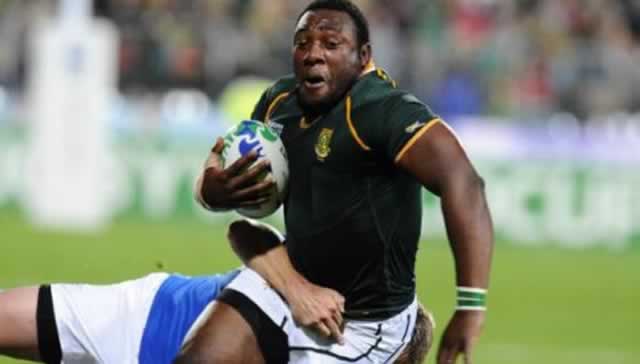
CAPE TOWN. – A new “Beast” could be in the making on a scruffy field in an impoverished South African township, where black children dream of sidestepping the race barrier into the Springbok rugby team.
Lamla Nunu is 13-years-old and weighs a hefty 85 kilogrammes, a good start for a potential front-rower in a team known internationally for its physical aggression.
In the sprawling township of Khayelitsha in Cape Town, where volunteers are introducing young black children to a sport dominated by whites under apartheid, he plays prop.
That’s the same position as his Springbok hero, Zimbabwe-born Tendai “The Beast” Mtawarira, who is also popular with South Africa’s mainly white Afrikaner supporters and receives an approving roar of “Beeaast” every time he surges forward with the ball tucked under his arm.
But Nunu will have to scrum hard to become the new Beast, who is the only regular black African player in the Springbok starting line-up.
Under pressure from the government, the South African Rugby Union (SARU) pledged to include seven non-white players in 23-man match squads in the run-up to the Rugby World Cup in England starting on September 18.
At least two of the seven non-whites in the 2015 squads would be black Africans, SARU said, distinguishing them from players of mixed race – known as “coloureds” – who have long played a role in Springbok teams.
But the matchday 23 for the first Springboks game of the season on July 11 against a World XV fell short of the target with three black Africans and two mixed race players chosen.
The commitment is part of plans for radical racial transformation in the traditionally white sport, which aims to have non-whites making up half of all domestic and national teams by 2019.
So perhaps by the time Nunu and the other 30 or so children on the field in Khayelitsha are old enough for a call-up, the times will have changed.
“I want to play for the Stormers (the Western Cape Super Rugby side) and the Springboks,” the 13-year-old wrecking-ball said.
“I love everything about the game, how it goes, the rules, everything.”
“And the physicality,” adds coach Murray Ingram of the non-profit Connect Sports Academy.
“He likes running into people.”
Nunu is shy in a brief interview, but when he trots off and takes on three other players in a mock scrum, they go backwards.
He is not the only potential Springbok on the field, says Ingram.
There is fleet-footed Ilitha Ntinini (11) who prefers to be known as “Mr 10” – in recognition of his ambition to be the Springbok fly-half one day.
He weighs in at less than 40 kilogrammes, but “he will grow”, says Murray.
Nutrition is singled out as one of the issues facing any attempt to level the rugby playing field in South Africa.
The average white male teenager is more likely to eat steak than maize meal, which is the staple diet of South Africa’s poor.
But even if a black child grows up rough, tough and healthy, he is far less likely than his white counterparts to attend a school where good rugby training is available.
In crime-ridden Khayelitsha, where the field behind a shopping centre has no posts, the oval ball offers an after-school activity that doesn’t involve drugs or gang warfare. – AFP.


 Online Reporter