admin
admin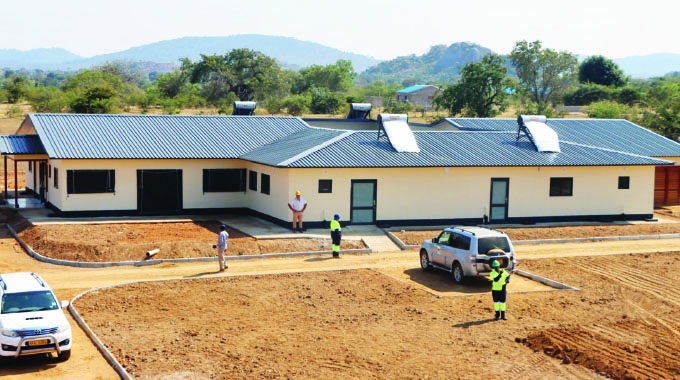
Rumbidzai Zinyuke
Senior Reporter
Gogo Maria Machesa (87) seems to be deep in thought as she shells her groundnuts.
She reminisces about the time back in the 70s when she gave birth to her sons.
“Things were not easy then. We had to walk the 10km journey to Musume Hospital waiting mothers’ shelter. Those with money could get a bus there. But for those who delayed going to the waiting home, they had to get a scotch cart to get to the hospital on time,” she said.
Unfortunately, there are some who would end up giving birth at home or on the way to hospital because they could not walk the long distance or the donkeys were nowhere to be found when they needed to get the scotch cart.
Gogo Machesa smiles wryly as she speaks of how lucky young women who will give birth at a new clinic being constructed at Mataga Growth Point will have it easy.
“Ooh these young ones definitely have it easy. This new clinic is close and they can easily walk there even in the middle of the night. No one will have an excuse for having a dangerous home delivery,” she said.
Mataga health centre in Mberengwa is the new facility being constructed by the Second Republic as part of an initiative to construct 30 clinics and five district hospitals across the country.
Through a US$210 million facility, the Ministry of Health and Child Care contracted NMS Infrastructure Limited for the design, construction and equipping of health centres and hospitals in Zimbabwe.
For the people of Mataga, the health facility will be the first to offer secondary health services, which they had to walk to Musume, Mnene or Zvishavane hospitals to access.
The only primary health facilities close by were small clinics with no capacity to cater for serious conditions or complicated maternity cases. Zimbabwe continues to record high maternal mortality rates at 462 deaths per 100 000 live births as of 2019. The number is expected to have risen due to the Covid-19 pandemic. According to village health workers who operate in the communities, the rate of home deliveries, maternal and infant deaths were high in the past owing to the non-availability of health centres close to the people.
Mrs Tendai Gwemende, who works in areas around Chaora, about 13 kilometres from Mataga, said the available clinics were not enough as they could not offer all services required by the people.
“As the village health workers, we have seen women facing challenges in getting assistance when they go into labour especially if it is in the middle of the night and there is no transport.
Sometimes if we manage to get her to the clinic, she may be referred to Musume Hospital which is further away and there may be complications and the mother or the child dies,” she said.
She said the new clinic would lessen the burden of not only pregnant women but also the disease burden on most of the people in the communities. Mrs Gwemende said people would not hesitate to visit a health facility close by to get screened for treatable and preventable diseases such as cervical cancer and other illnesses.
“We are happy that once this clinic starts working we will see less of these avoidable deaths as people will be getting help from nearby and quickly get treatment,” she said.
The Mberengwa community is now waiting anxiously for the construction of the health centre to be complete so that they may start to benefit.
And they may not have to wait for long.
According to NMS construction manager Mr Donald Fraser, work on the building is expected to be completed by the end of June.
“We started work on November 1 last year and construction now is at 97 percent so it is just the final touches left. The landscaping and the solar system will be going in next week, then the equipment will be installed. We should be finished by the end of June,” he said.
Besides the healthcare services that will come with the completion of the facility, the communities have already started benefitting from employment opportunities created by the construction. Mr Fraser said the contractor had only brought in a skeleton staff and then employed locals. Not only did this improve the livelihoods of the locals but it also allowed for a skills transfer.
Mr Samson Shumba, one of the young locals employed at the construction site, expressed his joy at acquiring new skills he would use later to sustain himself.
“Not only are we getting a clinic close to our homes, we got jobs here and we are now economically independent. Since I started working here, I have learnt how to construct a building, paint and use different machines, all things that I had no idea about before. These are skills that I can continue to use after this clinic is completed,” he said.
Another local employee Ms Polite Gumbo said she had gained a lot of experience during the time that she worked at the construction site.
“There were many things that I was afraid to try when I came here, being a woman in a male dominated environment but I am now confident of my work and I am happy that I now have new skills that I will use in the future,” she said.
Midlands provincial medical director Dr Mary Muchekeza said the construction of Mataga health centre was a huge relief for the communities of Mberengwa and Midlands as a whole. She commended the pace at which construction had taken place owing to the new building technology employed by NMS in assembling ready-made state of the art wall panels.
“The new facility is set to benefit a population of not less than 61 600 people in the catchment area which were currently being forced to travel to Mnene, Musume or Zvishavane in search of either secondary health services or admission facilities,” she said.
She said the top five reasons for OPD (outpatient department) attendances in the catchment area were hypertension, malaria, neonatal services, pneumonia and injuries and these were currently being serviced by several rural health facilities. However, severe pneumonia, injuries, complicated malaria, fever of unknown origin and neonatal services were the top five referral causes from the clinics to the admitting hospitals.
“It is therefore foreseeable that the local people who live peasantry life in this part of the province will be able to get secondary level health services at their own commercial hub at Mataga growth point. The new hospital is set to offer many services including maternity services, opportunistic infections and ART services, TB lab diagnostic services, health education, ambulance services, OPD services and the provision of medicines,” she said.
The new health centre will be able to admit a total of 22 patients and has an OPD, female and male wards, a paediatric ward, a seven-bed maternity ward catering for antenatal, delivery and post-natal care. Dr Muchekeza said for the new health centre to be functional, the need for adequate qualified and properly motivated health care workers across the broad spectrum could be overemphasised.
She said the facility would need a clinical officer, two midwives, two nurses, lab technicians, pharmacy technicians, domestic staff, environmental health technicians, psychotherapists, radiographers, nurse anaesthetist, a bio medical technician and doctors.”
“The Government should be thanked for its efforts for both directly funding the construction of such handy hospitals close to the rural folk and also for being able to engage and partner with other external agencies. As PMD, I commit myself to ensuring that this investment in health delivery will be put to optimal use and ensure that the population of Mberengwa will immensely benefit in their quest for quality and health,” she said.



 Online Reporter