Sukulwenkosi Dube-Matutu, [email protected]
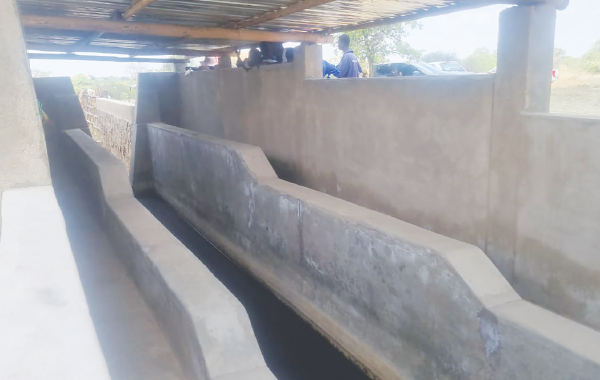
LIVESTOCK farmers in Mkokha, Nyumbame and Gulathi areas of Matobo District no longer have to drive their cattle for 15 kilometres to access dipping services following the construction of a new dip tank at Gali.
The facility, which will serve about 650 cattle, is expected to improve compliance with dipping schedules, reduce livestock losses and help protect the community’s herd against tick-borne diseases.
Previously, farmers struggled to follow recommended dipping schedules because of the long distance to the nearest facility, with some cattle reportedly dying along the way.
The new dip tank was constructed through a partnership between Government and the community, with villagers providing labour and monetary resources including Diaspora input while Government supplied cement and fencing materials.
A committee member, Mr Benjamin Moyo, said: “We had to drive our animals for a distance of 15km to reach the nearest dip tank. When the Government came in to assist, we were relieved as we knew how crucial a dip tank is to us, as livestock production is key to our livelihoods,” he said.
Mr Moyo said the facility was expected to benefit 156 households and encouraged farmers to adhere to recommended dipping schedules.
“This dip tank will go a long way in improving the condition of our animals and we hope to see community members adhering to the recommended dipping regime so that our animals throughout the community can be safe,” he said.
Ms Tracy Moyo said the long distances had been particularly challenging for elderly villagers.
“We’ve a lot of elderly people in our community and it becomes difficult for them to take their animals for dipping. Some of our animals have died along the way to and from dipping. This has also been discouraging people from dipping their animals. This will now be a thing of the past,” she said.
Commissioning the dip tank on Thursday, Minister of State for Matabeleland South Provincial Affairs and Devolution Albert Nguluvhe said the project was an important step towards strengthening livestock health, preventing disease outbreaks and supporting rural livelihoods.
He said the initiative demonstrated Government’s commitment to protecting the national cattle herd and advancing rural development in line with the National Development Strategy 2 (NDS2) and Vision 2030.
“I would like to urge farmers to ensure 100 percent compliance with dipping schedules, safeguard the infrastructure and adhere to lawful cattle movement procedures to prevent the spread of livestock diseases,” said Minister Nguluvhe.
“In Zimbabwe, cattle represent wealth and if we don’t safeguard them, it means our livelihoods are affected.”
Minister Nguluvhe also urged farmers to pay their dipping levies, brand their cattle and obtain movement permits when transporting animals.
Matabeleland South provincial veterinary director Dr Enat Mdlongwa urged farmers to remain vigilant as the rainy season increases tick activity and the risk of tick-borne diseases.
He said dipping was critical in preventing diseases such as heartwater, anaplasmosis and theileriosis, commonly known as January Disease.
Dr Mdlongwa said farmers in January Disease hotspot areas should follow the prescribed 5-5-4 dipping regime, while those in other areas were required to dip their cattle weekly until April.
Under the 5-5-4 system, cattle are dipped after five days, again after another five days and then after four days, before farmers revert to a five-day interval.
“The wet season is upon us and farmers are urged to dip their animals as tick activity becomes high during this period. Diseases which are a threat to animals during this time include January Disease, heartwater, gall sickness and sweating sickness,” said Dr Mdlongwa.
“If farmers take heed of this advice, then they will be able to avert losses. That’s why we’re always emphasising that farmers must ensure that they dip all their animals. Leaving one animal out will render the entire dipping process void.”
He said the Government was working to ensure that farmers had access to dip tanks within reasonable distances and urged traditional leaders to supervise compliance with dipping regulations.