Sukulwenkosi Dube-Matutu [email protected]
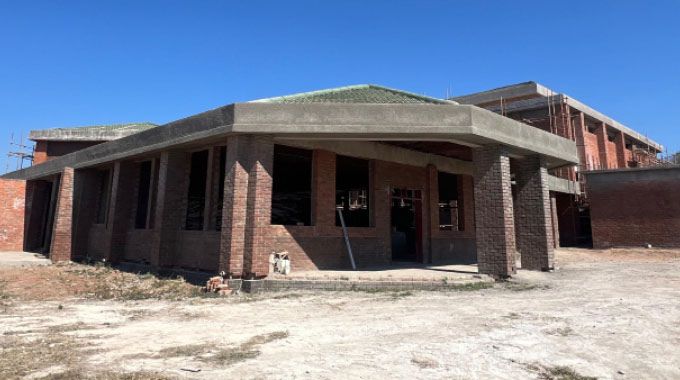
THE long-awaited Gwanda Magistrates Court Complex is on course for completion by December this year, with Chief Justice Elizabeth Gwaunza saying the modern facility will significantly improve access to justice by bringing key judicial services under one roof.
The project, which is about 75 percent complete, has gathered pace following the consistent release of Government funding and forms part of the Second Republic’s efforts to modernise judicial infrastructure in line with the National Development Strategy 2 (NDS2) and Vision 2030.
Chief Justice Gwaunza made the remarks during a tour of the construction site on Thursday, where she expressed satisfaction with the progress achieved so far and confidence that the project would be completed within the anticipated timeframe.
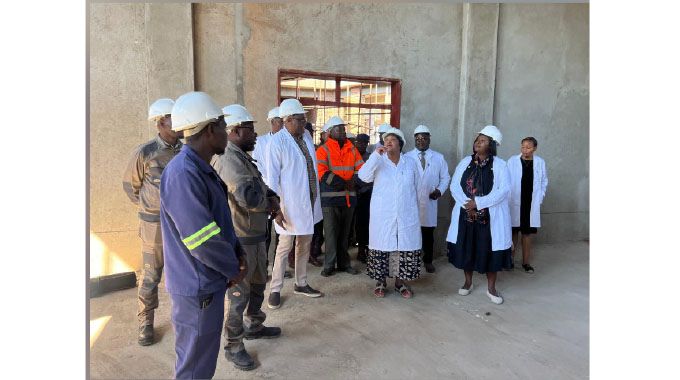
“I am pleased with the progress that I have seen here and I am confident that this project will be completed soon. This court complex will greatly improve access to justice by ensuring members of the public receive judicial services efficiently and conveniently,” she said.
Upon completion, the Gwanda Court Complex will house Zimbabwe’s sixth High Court, nine courtrooms and 65 offices, creating a centralised justice hub that will accommodate the High Court, Magistrates’ Courts and other justice sector institutions.
The new facility is expected to address longstanding challenges associated with the current magistrates’ court, which operates from the District Development Coordinator’s offices under limited space that has constrained service delivery.
“This building will have a total of nine courtrooms, including two designated for High Court judges, a Victim Friendly Court as well as regional and provincial magistrates’ courts,” said CJ Gwaunza.
She said the project, which was initiated more than two decades ago, had been redesigned to meet contemporary judicial and technological requirements.
“This will be a modern court with modern equipment and modern facilities. It comes at a crucial time as the Judicial Service Commission continues implementing its transformation agenda,” she said.
Chief Justice Gwaunza said the Judiciary’s programme to establish High Courts in every province was progressing steadily and would ensure justice services were brought closer to communities.
“Having such a court structure under construction in Gwanda fits well into this transformative process. This is one of the biggest court complexes built by the Judiciary and it will house both the High Court and several lower courts,” she said.
Judicial Service Commission (JSC) secretary Mr Walter Chikwanha said the progress recorded over the past few years highlighted Government’s commitment to strengthening the administration of justice and improving service delivery.
“The amount of work that has been done over the past three to four years clearly demonstrates Government’s commitment to improving the justice delivery system. This project has been successfully resuscitated and is progressing at an impressive pace,” he said.
Mr Chikwanha said the complex had been designed as an integrated justice centre, bringing together institutions that play critical roles in the justice delivery system.
“This complex accommodates all the various stakeholders in the administration of justice, which is different from other stations where the High Court, Supreme Court, Office of the Sheriff, Magistrates’ Courts and the National Prosecuting Authority operate separately.
“This integrated approach will improve efficiency, coordination and transparency. It also means that the southern region of the country will now have three High Courts, significantly improving access to justice,” he said.
Ministry of Local Government and Public Works architect Mr Kudakwashe Kutshwayo said the project remained on schedule for completion by year-end, subject to the continued availability of funding.
“We are now at about 75 percent completion, while roofing works are about 85 percent complete. Most of the superstructure has already been finished,” he said.
Mr Kutshwayo said the original design had been upgraded to align with modern construction and digital requirements.
“We have replaced the original steel windows with aluminium windows, while digital infrastructure is being incorporated into the building to support the Integrated Electronic Case Management System (IECMS), in line with the Judiciary’s digital transformation programme,” he said.
Once completed, the Gwanda Magistrates Court Complex is expected to accommodate at least 500 Government employees and significantly enhance judicial service delivery in Matabeleland South Province.
Construction of the complex began in June 2004 but stalled in 2008 due to financial constraints. The project briefly resumed in 2019 before halting again, with works restarting in April 2022 after Government prioritised funding for its completion.
The project complements the Second Republic’s broader infrastructure development agenda, which has seen increased investment in courts, schools, hospitals and other public institutions aimed at improving service delivery and supporting inclusive national development.