Online Reporter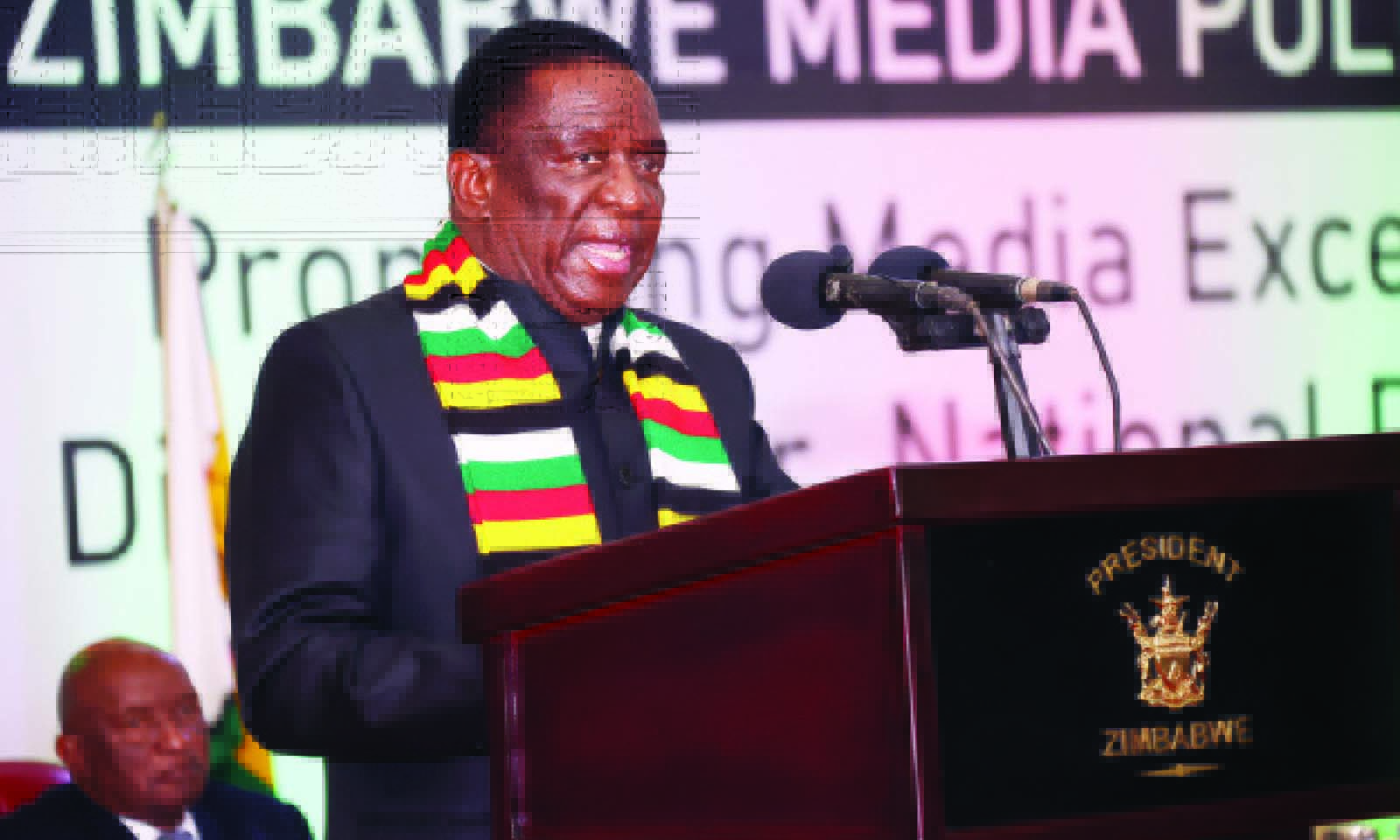
Nqobile Bhebhe
IN a landmark move to overhaul and professionalise Zimbabwe’s media sector, the Government has rolled out a comprehensive new Media Policy Framework aimed at improving ethical standards, enhancing professional development, and strengthening the regulation of the country’s information industry.
The policy, launched by President Mnangagwa last week, seeks to transform the media landscape into a credible, inclusive, and development-oriented sector that promotes national values and upholds Zimbabwe’s sovereignty.
It places strong emphasis on capacity building, quality assurance for media practitioners, and penalties for violations of media ethics and standards, in a bid to foster a responsible and credible media landscape that supports national development and democratic consolidation.
Under the new dispensation, a Media Fund will be established to capacitate media practitioners through training and professional development. The fund will be financed through annual levies paid by registered media service providers, as prescribed by law. The collected resources will be channelled towards training programmes, workshops, fellowships, and capacity-building initiatives, all designed to enhance the skills base, knowledge, and professional aptitude of journalists across the country.
“Government will establish a media fund to promote the development and upskilling of media practitioners, as well as capacity building, financed through annual levies on registered media outlets,” reads part of the report. “The media fund is designed to support the growth and development of the sector. Every registered media service will be required to contribute a prescribed annual levy to the fund. The collected funds will be used to support the development and upskilling of media practitioners, likely through training programmes, workshops, and other capacity-building initiatives. By investing in the growth and development of media practitioners, the fund aims to enhance the overall quality and credibility of the media landscape.”
In tandem with this, the Government is working towards the establishment of a National Employment Council (NEC) for the Media Industry. The NEC will bring together media employers’ organisations, media workers’ unions, relevant Government ministries, and labour experts to address employment standards, working conditions, and social protection for journalists.

To bolster professionalism, a quality assurance framework for journalism training will be introduced and co-ordinated by the Zimbabwe Media Commission (ZMC) through a newly formed multi-agency committee. The committee will collaborate with key higher education oversight institutions such as the Zimbabwe Council for Higher Education (Zimche) and the Higher Education Examinations Council (Hexco), as well as tertiary institutions and professional bodies. The aim is to ensure that all journalism and media training institutions meet a consistent standard and that graduates from these institutions are fully equipped to contribute meaningfully to the media sector.
As part of its regulatory mandate, the ZMC will develop, in collaboration with media stakeholders, a robust code of conduct for journalists. Where consensus cannot be reached, the Commission will enforce its own professional standards. The code will be anchored on universally accepted journalistic values including truth and accuracy, independence and impartiality, respect for privacy, and accountability.
The Zimbabwe Media Commission Act (Chapter 10:35) provides the legislative backbone for enforcing professional discipline, with investigative and corrective measures available for cases of misconduct or unethical behaviour. To ensure fairness and industry participation, the Commission will adopt a co-regulation model, allowing media practitioners to take part in self-regulation under the oversight of the ZMC.
To safeguard the public interest and preserve media integrity, the policy outlines specific penalties for violations of ethical and regulatory standards. The policy states that the ZMC is empowered to take corrective and punitive action where necessary, including loss of licences or accreditation, content removal or blocking of offending material, mandatory publication of apologies and corrections, and disqualification from national media awards. Legal proceedings in cases of defamation, privacy violations, false reporting, and unauthorised copyright usage form part of the penalties.
While penalties are integral to the regulatory framework, the Government has reiterated that the new policy does not seek to criminalise media operations, but rather to promote accountability and ensure that journalism serves the public good. “However, the use of penalties and disincentives for the media is by no means an attempt to criminalise the operations of Zimbabwe’s media,” the policy notes.
The executive summary notes that the policy is a comprehensive framework designed to promote a vibrant, diverse, and inclusive media in Zimbabwe. The Policy aims to foster an environment that supports access to information and the growth of a competitive and innovative media industry. It is anchored on six strategic pillars that aim to promote a vibrant, diverse, and independent media sector.
The first pillar, Economic Sustainability, focuses on revitalising the media sector’s financial stability by diversifying revenue streams, establishing the Media Fund, and encouraging media outlets to explore alternative revenue sources. The remaining pillars include Digital Transformation and Innovation, which aims to address digital challenges and promote innovation; Media Development and Capacity Building, which focuses on supporting community radio stations and freelance content producers; Media Sovereignty and Regulation, which seeks to establish a balanced regulatory framework; Access to Information and Knowledge, which aims to promote inclusive access to information; and Local Content Promotion, which aims to promote local content and counter foreign dominance.
Broadly, the Policy aims to achieve the following objectives: to unwaveringly defend Zimbabwe’s image, sovereignty, and territorial integrity; to fully implement, achieve, and actualise all Constitutional provisions that promote the growth and development of a vibrant, diverse media industry in Zimbabwe; to develop and enforce comprehensive codes of ethics, raising standards of media practices in Zimbabwe; and to promote professionalism and capacitate the media industry.
It also seeks to advance and protect Zimbabwe’s national interests, promoting the country’s economic, cultural, and political well-being; to assert and maintain Zimbabwe’s media sovereignty, ensuring the country’s independence and self-determination in the production, dissemination, and regulation of media content.
The Policy Vision is to create a vibrant, diverse, and inclusive media sector that promotes local narrative shaping, empowers Zimbabweans to participate in national development, and advances national interests for the achievement of an upper-middle-income society by 2030.
Its Mission is to foster a vibrant media sector that promotes national consciousness, defends, upholds, and promotes Zimbabwe’s interests and aspirations worldwide, while showcasing its rich cultural heritage.