Tinaye Agere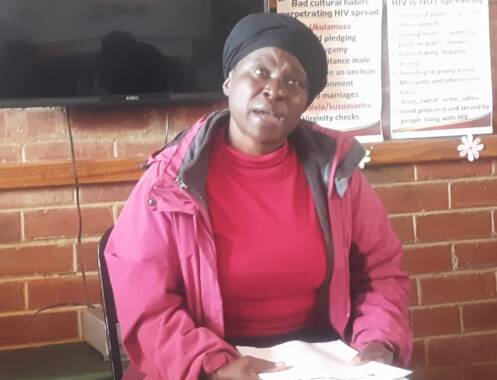
Fatima Bulla-Musakwa
THE involvement of boys in menstrual health management has contributed to a marked reduction in stigma for girls in schools through comprehensive sexuality education.
Comprehensive sexuality education is being spearheaded by the Ministry of Primary and Secondary Education, with the United Nations Population Fund (UNFPA) having assisted in drawing up the syllabus.
The initiative is supported by the Health Resilience Fund (HRF) from the British Government, Ireland, the European Union and GAVI, the Vaccine Alliance.
Through engaging boys to share information on menstrual health and sewing reusable pads at schools, the programme seeks to thwart harmful gender stereotypes against girls.
Boys have also become advocates for girls while fostering a culture of respect and empathy in schools.
This has created a more inclusive and supportive environment which is encouraging girls to consistently come to school, a positive step towards achieving equitable quality education for all.
Mawaba Primary School, one of the success models among the 15 schools implementing the programme in Bulawayo Province, has fused boys to be part of the supportive structure set up at the learning institution.
Speaking to journalists who are on a field visit with the UNFPA, Mawaba Primary School’s health patron, Ms Definy Mlilo said students were being taught about sexual health, while girls are being trained on the proper usage and disposal of pads as part of the initiative.
“We also teach the boys to support the girls so that they do not become a laughing stock when they spoil their uniforms during menstruation,” she said.
“Instead, the boys should show concern to the girls, they can report the incidents to the teachers or some of the big sisters at the schools so that the girls can get their toiletries and go and clean themselves up.”
The school has tasked senior girls known as ‘big sisters’ to be the go-to people when there is a need for younger girls to access sanitary pads, toiletries and an iron.
In that designated room, a girl can clean herself up and return to class.
The school also provides sanitary pads to girls from vulnerable backgrounds three times per term or whenever the need arises.
Through the Guidance and Counselling learning area, comprehensive sexuality education aims to empower young people with correct knowledge, attitudes, skills and values to make informed sexual and reproductive health choices that contribute to the reduction of teenage pregnancy and sexually transmitted infections.
UNFPA worked with the Ministry of Primary and Secondary Education on the curriculum Development Unit to review, edit, validate and finalise Forms 1 and 2 modules as well as ECD A and Grade Two modules.
Review and finalisation of Forms 3 and 4 modules, as well as the Grade Three module, is ongoing.
In addition, a supplementary learner and teacher handbook that integrates menstrual health management and other topics was produced.
The materials will guide the delivery of standardised age-appropriate comprehensive sexuality education across all the 10 000 schools in Zimbabwe.
The syllabus covers a lot of topics as it seeks to address challenges faced by child-headed families, poor disciplinary measures taken by families, child marriages, child labour as well as drug and substance abuse.
Bulawayo Province Schools Inspector, Ms Lavinia Moyo, said the initiative has been very effective as all the learners in the school got the opportunity to be exposed to the comprehensive topics.
“We are advocating for guidance and counselling to be taught in all schools. It is good that under the heritage-based curriculum, it comes as part of social sciences. I want to believe that the social sciences paper will force the schools to take up guidance and counselling as a learning area,” Ms Moyo said.
Currently, comprehensive sexuality education is examinable in all the 6 798 primary schools and discussions are underway to make it examinable in the 2 980 secondary schools.
Last year, an estimated 500 000 learners across the country’s 10 provinces were recruited into Child Protection Committees to acquire knowledge on the subject.


 Online Reporter